 Folks, it's confession time. Remember how enthusiastic I was about The Five Tibetans? Well... er...
You see, there I was: out doing some family shopping with my wife and our one-and-a-half-year-old son during my long vacation at the Christmas holidays. I was wandering down an aisle of the drug store, pushing a shopping cart with my adorable son in the seat (the mention of the adorable son is supposed to elicit sympathy, you should realize), idly looking at this and that while Szilvi grabbed diapers, body lotion, whatnot. I was just minding my own business when all of a sudden I was ambushed, and ruthlessly attacked by a DVD, and it twisted my arm behind my back until I went to the cashier and bought it! Well,... Ok, wasn't quite like that. The end cap of one aisle had a small pile of discounted DVDs on it, in which I found a Hungarian-dubbed version of David Carradine's Tai Chi for the Body. It was ridiculously cheap. So I said to myself, why the heck not. I watched the odd episode of Kung Fu when I was a kid. Carradine's been practicing martial arts most of his life. He must know what he's doing. So I bought it.
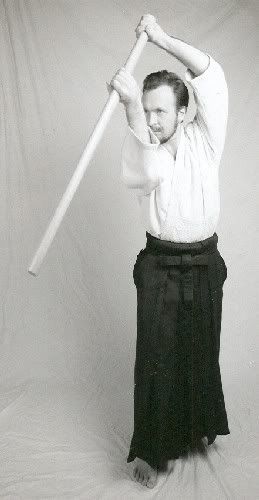
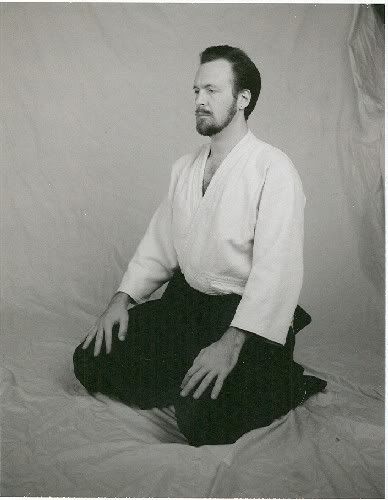
I wouldn't have dared to attempt learning tai chi from a video, if it weren't for the fact that I practiced aikido for eight years and did some cross-training in tai chi during that time. When I was a brown belt (second and first kyu) I decided that tai chi would help improve my technique. I took a class in which I learned a 24-move Yang-style form. It took me days of searching videos on the internet to find the form I learned, because there are so many, but when I was just about ready to give up I finally discovered it. If you look at the top video on this page, you can see the form, although I could never do it as smoothly as this guy. It did really improve my aikido, too. I can't resist a little digressive anecdote. At maybe the second or third tai chi lesson, the teacher asked me if I practiced aikido. When I confirmed her suspicions, she smiled and said she could see that I moved like an aikidoist the moment I started doing tai chi motions. It was like I was speaking a foreign language with a heavy accent.
Anyway, I thought I could learn from a DVD because I already had plenty of experience with such aspects of martial technique as moving from tan tien (center), extending chi, coordinating movement and breath, shifting weight from leg to leg, and relaxing while in motion.
When I got it home I popped the disk into the laptop and was seriously peeved to find they didn't keep the original English-language version on the DVD. (Usually I can buy any Hungarian DVD of an English-language film, and the original is still available in the menus. Must be a copyright issue.) But then I started doing the exercises, despite the fact that the voice-over was in Hungarian (instead of Mr Carradine's dulcet tones), and I really started digging it.
Carradine is at the front of a room with three other people behind him: a very young woman who moves like a beginner, a middle-aged woman who has more grace and confidence, and a middle-aged Asian man, who is suspiciously smooth. It turns out that the Asian man is Arnold Tayam, Carradine's sifu. He's a martial artist, ki gong master and physician, with decades of experience in each. As the video rolls, the camera concentrates less and less on Carradine, and more and more on Tayam. Star power sells the DVD, but Tayam provides the quality content.
The presentation is very well thought out. It starts with stretches, then moves on to stances. After that it demonstrates simple techniques that you can repeat over and over. In the end, it takes all the little pieces you learn throughout the lesson, and ties them together into a short Chen tai chi form (a routine, or as the Japanese would call it: a kata). I haven't started working on the complete form yet. I'm still practicing all the little pieces and stances.
I was so jazzed about learning this stuff that I began doing it the very next morning for my morning routine, and... well... I dropped the Five Tibetans like a rock.
Why? Well, for one, I just find getting back to tai chi to be much more satisfying. Slowly flowing through those graceful figures while deeply pulling air in and out of the lungs all the way down to the diaphragm is much more harmonious than doing what amounts to repetitive glorified calisthenics that just move from one position to another and back again. Despite the fact that the Tibetans have a positive effect, they become a boring chore after a while.
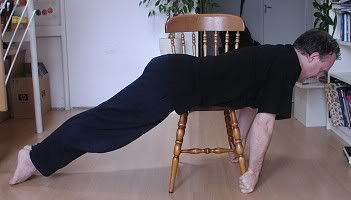
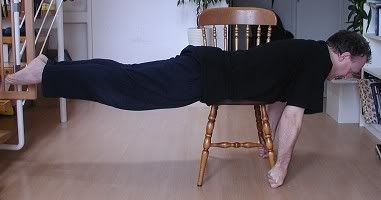
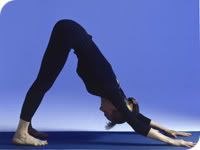
And another is that one has to weigh the positive effects of the Tibetans against the negative. I began noting sensations that struck me as symptoms of repetitive motion syndrome. The downward dog to upward dog motion was making the carpal area of my right hand sore. I've seen ads on the Internet for cork blocks with handles one can hold while doing those yoga poses to avoid this stress, so it must be a common problem. It also struck me as odd how much counter exercise was needed to strengthen the lower back muscles to withstand the stress of the Tibetans put on them.
It's true that I felt good after doing the Tibetans, but it was a sort of heart-pumping, muscles-throbbing, lungs-gasping kind of feeling. With the tai chi, after 45 minutes of smooth movement and deep breathing I have an energized "electrical" feeling. And it seems to last longer.
I may or may not experiment with the Tibetans again in the future, but for now I want to do something that's more interesting and fills me with a sense of cosmic beauty. Now pardon me while go reel some silk.