Showing posts with label relationships. Show all posts

September 3, 2008

Getting Coaxed Out of Blog Sabbatical


Well, folks, I still don't feel like addressing the most immediate issues in my life, and I still don't feel comfortable blithely talking about other things either.

But there's a voice out there in Blogdom that won't let me sink into complete silence. Bless her.

In a recent posting, Hellibrarian placed me among the ranks of people she wished to thank for various things, referring to me as her "blogger conscience." I decided to talk a little about the history of our writing relationship, but when I sat down to the computer, I quickly checked my feed reader and discovered that she'd (quite synchronistically) already alluded to our early "writing buddy" days in her posting today. And she claims to not believe in "psychic dialoging."

Hell and I met back in the autumn of 1992, when Budapest was still "The Wild East". We were both on the founding staff of The Budapest Sun, and shared one of the most amazing experiences a beginning writer could ever have. We got paid peanuts, and had more fun than most people can possibly even imagine. There was something about the times and about the mix of characters who worked at that paper that made the experience nothing less than magical: every day we wondered what would happen next.

We both moved onto other jobs (her with Where Magazine, me with The Hungarian Press Agency) but we continued to support each others' creative endeavors, which can quickly get buried in the day-to-day spade work that makes up ninety-nine-percent of all journalism work.

Hell and I would meet at the Astoria Hotel (pictured on her blog), which has a cafe with the most amazing Art Nouveau interior, and for the longest time had very affordable coffee and pastries. And it was the kind of place where they didn't mind if you hung around for hours. We would get comfortable, order coffee and pastries, shoot the breeze for a while, and then get out the notebooks. We'd choose a topic and (Natalie Goldberg style) decide how long we'd write (anywhere from ten minutes to half an hour). And then we'd just let our pens race across the pages with no inhibitions. No talking. No pausing. Just writing. After the session was over, we'd read our essays to one another.

Ah! Fond memories.

In that spirit, when Hell has lagged in the maintenance of her blog, I've prodded her some, and reminded her that people with the writing bug just can't be happy unless they're doing a certain amount of writing. And now, when I'm lapsing into silence, Helen is there to remind me of the same.

Bless you.

August 20, 2008

Bringing Mysticism to the Office

The following article will appear (in Hungarian) in A Rózsakeresztes Tükör (The Rosicrucian Mirror), the offical newsletter of the Rákóczy Pronaos, a subordinate body of The Rosicrucian Order AMORC.


Have you gotten very frustrated or angry with some situation or other at work recently? Do you have a colleague who really irritates you? Perhaps someone who has decided they are your enemy, and does dishonest or unethical things to sabotage your projects or your reputation? Do you feel you are stuck in a soul-killing job with no chance of moving on to something better? Do you sometimes feel you aren't smart enough, fast enough, young enough, or skilled enough to do your job properly? Are you afraid of losing your job? Do you have troubles communicating with people at work?

Have you thought of applying mystical principles to any of these problems? No? Why not?

Rosicrucianism is a mystical philosophy, but what has always distinguished this philosophy is its emphasis on the need to apply the mystical principles it teaches to everyday life. When the Rosicrucian student looks closely at the challenges his life presents him with, he can easily discover situations that can be positively influenced by employing methods he has learned from the Teachings. He can use breathing techniques to stay calm in times he knows will be stressful. Visualization can attract objects and/or circumstances he needs for his or someone else's evolution. Meditation can bring understanding to puzzles we must always solve to progress in life.

But somehow, it seems more natural to apply these things to our personal lives, to our family relationships, to our friends, and to our home. But where we work seems to be a different matter.

But it shouldn't be.

Part of this attitude is a result of the nature of work ever since the Industrial Revolution. There was a time when one's work was something one inherited from one's family. If your father was a farmer, then you were a farmer. If your father had a trade (blacksmith, shoemaker, carpenter, etc.) then you learned that trade. And work wasn't separated from life the way it is today. Children played at the edge of the fields their parents where cultivating, and when they were old enough, they worked alongside them. The trademan's shop would be part of the family house, and the mother and children would come and go all day long.

Nowadays, we often have the attitude that a job is something we do just for money. It isn't our land we are cultivating; it isn't our goods we are producing in the shop; it's not in our name we are rendering the service. We feel detached from our work. We feel it has little to do with our "real life". We feel it is unrelated to who we really are.

Nonetheless, we spend upward from 40 hours a week at work. We spend the majority of our energy on work five days a week, and we often spend more time with our colleagues than we do with our families. And the people we spend time with at work are "real" people. They are souls; sparks from the divine fire, just like ourselves. If we pay attention to them, we will realize that every day at work presents us opportunities to serve these various people, even the ones who are hostile to us. No. Especially the ones who are hostile to us!

Regarded in the right way, we realize that wherever we work we will find challenges that offer us the opportunity to grow as spiritual beings. If we approach work this way, it no longer seems a dreary, boring, tedious place where we feel the life draining from us every hour we spend there. The workplace is transformed, as is our relationship with everyone and everything there.

Techniques for transforming our work experience

One quick way to transform work is to start the workday with an invocation. It can be a very simple invocation (or prayer, if you prefer this word). All it has to do is serve to raise your consciousness and make you aware that the time spent at work is as much a part of your mystical quest as any other part of your life. Here's an example:

Work Invocation
God of my heart:
May the still, small voice within guide my actions as I work today.
May it point out every opportunity to learn new lessons from the situations I encounter.
May it show me every chance to serve that comes my way.
May it help me to engage myself in my work with interest and enthusiasm, and may it help me guard against laxity and apathy.
May I be inspired to do my work with dignity and honor.
So mote it be!

Saying your invocation at your desk, and then spending a minute or two in meditation will make a big difference to the way you vibrate within your work environment. Even if you don't have much privacy, you can still say it to yourself silently and close your eyes for a moment afterwards.

Another technique addresses the problem of being overwhelmed by events at work and not being able to stay focused on the most important tasks. The modern workplace is full of distractions: ringing phones, e-mail alerts, colleagues popping in the door at any moment. It can be difficult to stay on track and do the things we planned. Sometimes we can come to the realization at the end of the day that we haven't done any of the things we planned. We let ourselves get distracted.

In this case, it can be useful to use a little time when we are away from work to project our energy into the future. During a few moments on the weekend, or in the evening, when you are calm and clear-minded, go into your sanctum and picture yourself at work calmly and efficiently performing the tasks you have decided are important and need to be completed. Naturally, you should be specific, and imagine yourself doing only those tasks you want to focus on. Of course it is important to inject emotion into the visualization: feel the joy of accomplishing important work. If you do this a few times before you go to work, you will find that it becomes easier to stay focused on the tasks you visualized, and that the tasks are accomplished more easily. This is an important mystical technique: preparing for stressful situations while we are still calm and clear-minded.

Although our workplaces are filled with electronic communications devices, there is still a place for old-fashioned communication: no I don't mean face-to-face communication, I mean psychic communication. There are various reasons why people in professional situations might miscommunicate. They are distracted by their personal feelings for one another. They're distracted by the pressures of the office. One or more of the people in the conversation are blinded by their feelings of superiority or inferiority. The list could go on, but suffice it to say, there are many reasons why verbal communication isn't always as effective as one would like. For this reason, it is often good to send someone a psychic message before you talk to them. Using the methods taught by our order, you can telepathically tell them the essence of the message you wish to give them days or hours before you say it to them personally (or on the phone, or by e-mail). It is likely they won't consciously recall the psychic message, but when you speak to them, the message will already seem familiar to them, and they will be more likely to understand what you wish to say. And they will be more likely to be receptive to you message, especially if you visualized them as being receptive. And repeating a message psychically after you have spoken to someone helps to make the impression of what you said go deeper.

Visualization can also help smooth out conflict in the workplace. If disharmony arises between you and another person in the workplace, it can be very useful to spend time each day visualizing love, in the form of pink light, emanating from your heart, and surrounding, nurturing and protecting that person. Naturally, it can't only be a sterile visualization: in order for it to be effective, you really have to feel love for this person. That's the challenging part of the exercise. But the results can be miraculous.

Meditation can, naturally, be used as a tool for solving problems one encounters at work. Once you have worked on a problem with your conscious objective mind as far as you can go, send the problem, in the form of a simple question, into your subconscious, and wait for your inner self to suggest the solution to you.

As suggested in the invocation, it is important to see the workplace as a school, just like the rest of life. When difficult and puzzling situations arise, it can be rewarding to ask yourself what the lesson is that can be learned from it. The workplace is especially fertile ground for this, because we are forced by circumstances to deal with things we might isolate ourselves from in home life, and among friends and acquaintances. But at work, you can't avoid them. You just have to deal with them.

Work can be very draining and tiring. Remember the exercise that comes in the very first monograph that every member is mailed? It's a technique for reviving yourself with psychic energy when you are tired. Have you ever used it at work? Why not? And that's not the only technique in the monographs for increasing one's available energy. Perhaps it would be better to use one of these techniques the next time you are tempted to grab another cup of coffee.

The same goes for techniques we learn for staying calm under stress. The techniques are there. We can only blame ourselves if we don't use them.

Conclusion

The workplace is an excellent opportunity to use the techniques we acquire through AMORC's teachings. Applying the teachings counteracts the feelings of helplessness the modern workplace can often impose on employees, by letting us demonstrate that we can have a positive influence on events at work. Not only can they make professional life a bit easier and more successful for us, they also make us more effective members of the teams we belong to, and a source of health and harmony to the entire community we work in.

August 6, 2008

... while you're making other plans

Yup! That's when life is happening.

So there we were, on vacation with another family in an area of Hungary which is about as rural as you can get, and pretty much as far away from home as you can get. It had been a grand week away from the rat race, with a family our family dearly enjoys spending time with. A week filled with common meals, cooked together and served at a long table under a shelter with a terra cotta roof. A week of afternoon coffee in comfortable chairs under tall shade trees, reading, talking and watching the children erect huge sand castles in the oversized sand box. A week of going out after the children were in bed and lying on a bench to watch the stars (which you just can't do in Budapest).

It was Saturday night. We were partially packed, and the plan was to leave late the next morning. I'd taken Monday off, so I'd even have a day to get my head ready for the working grind that was to resume on Tuesday.

That was the plan, anyway.

Szilvi got me out of bed before midnight to inform me that she was bleeding. Very lightly, but there was some blood, nonetheless. And she'd been getting contractions that were too frequent, and too intense. The baby isn't due until the middle of September.

Thank God for mobile (cellular to you Yanks) phones! Szilvi called the doctor who has attended all the home births of all our children. She said we needed to get to a hospital so they could give Szilvi a steroid shot that ripens the fetus's lungs in case there's a premature birth.

Great! The last place I want anyone I love is in a Hungarian hospital. It's not just that they are severely underfunded and underequipped. That could be dealt with. But the truth is that Hungary's health-care system is one of the last bastions of totalitarian mentality. Please leave your civil liberties and your individuality at the door. You have just become an object. You have no input into the decisions being made regarding you, and you have no right to information beyond what they want you to know. Democracy never made it into these walls.

But, OK, we had to do it.

The ordeal at the hospital was tolerable. An ultrasound revealed a tiny tear in the placenta, but no continued bleeding. Szilvi got the steroid shot, and an anti-spasmodic shot to stop all contractions. Szilvi was placed on 24-hour observation, and was put on a drip IV against the contractions. I had to go back to the vacation house alone. I had to be there when our two-year-old son woke up.

The next day I quickly took a few bags full of supplies to Szilvi (remember I said the hospitals are underfunded?) and was informed that if by midnight (i.e. 24 hours after being checked in) there was no evidence of bleeding or contractions Szilvi might be released. But then again, she might not be. Blood tests showed she's anemic (which we knew; she's always been anemic), and that might be reason to keep her. Whatever. The doctors were being cagey.

Should we stay another night at the vacation house? Should we go ahead and go home and come back for Szilvi when she's released? I kept wandering around the house and half-heartedly packing (packing for a family of six is serious business!) and not figuring out what to do. Finally it hit me that I could take the children back to Budapest and leave them in Szentendre with their grandmother. A call to grandma (Did I say Thank God for cell phones?) confirmed that I could do that. Packing began in earnest. I made it clear to my older sons that my being without their mother made it imperative that they take responsibility and help me. To my delight, they responded; especially Alex, the older one. He really took responsibility for his youngest brother.

We left after dark, and formed a two-car caravan with the other family. I made sure my sons had the phone numbers of the parents in the other car, and vice-versa. Alex was very proud to be my copilot; handing out food and drinks, looking for road signs, fielding phone calls from the other car.

We arrived in Budapest real late. At grandma's I bedded down with my two-year old. He was confused. That morning his mother had disappeared without a trace or without an explanation. Then we left the vacation house without her, and then we went to grandma's. Poor kid's head was spinning. The next morning, he rolled over, put his hand in the hair at the back of my head (which he often does with his mother) and softly uttered the one word: "Mommy." My heart melted. This kid needed his mother.

Szilvi was released the next day, and the father of the family we vacationed with drove me down to pick her up (he has a bigger, more comfortable car).

On the way home (have I mentioned Thank God for cell phones?) I called my office and arranged to take the rest of this week off. Szilvi's doctor told her to spend a few days in bed, after which she would be severely limited in what kind of physical activity she could engage in. The usual cooking and housework were out of the question. So I'm doing the housework, and Szilvi's mother will be coming over every day once I start working again next week.

Life truly is what's happening while you're making other plans.

May 1, 2008

The Two Gates

Szilvi and I have recently gone through a life-changing experience. I wrote the following essay in order to explain it as clearly as I could to my family.

Your mind turns its attention, at some point in your life, away from the portal through which souls enter this world and becomes increasingly aware of that other portal through which souls depart again. I'm not talking about the moment you first truly realize your mortality sometime in your twenties, when you understand that this life won't last forever, and that you will have to make some choices that narrow your possibilities for the rest of this life. No, I'm talking about the point at which you cannot deny that your years in this body have reached well beyond half of the statistical average lifespan for your gender, social stratum, and geographical location. It's just a fact: you are closer to the exit, than you are to the entrance. It doesn't mean you need to fret or panic, but it does mean that if you are wise, you should slowly begin to prepare for it.

This has nothing to do with being morbid, or having a death obsession. As a matter of fact, due to my adherence to a Rosicrucian philosophy, I avoid using the words death, and dying, because they tie you to a limited, materialistic conception of human experience. The truth is, we never die, only these bodies we inhabit while in this world. I may have misgivings about the physical pain involved, and I may have some fears about what it's like to get old and weak and forgetful, but I don't really fear death itself. I know I existed before this life, and I'm certain I'll continue to exist after this particular incarnation. That's not really an issue.

But there is the matter of gracefully living out the rest of this life. I've always been what they call a "late bloomer"; slower to mature than my peers.

So I find it hard to understand why I, at this stage of my life, am still intimately involved with the gate that lets souls in. This was the question raised inside me when, not more than a few weeks ago, we determined that Szilvi was pregnant. As usual, it caught us by surprise. I'm not going to go into the gritty details, but it's not as if we don't use contraception. We always have. Nonetheless, none of our children were planned; none of the four of them, and soon to be five (six, counting my child from my first marriage). Their conceptions have always beat the odds, which if calculated, were always several thousand-to-one. These souls really wanted to be born into this family, into this time, into this milieu. If you accept the idea of reincarnation, it follows that souls choose the time, place and circumstances of their birth. These children chose us. The corollary is that we, unconsciously wanted all these children. I love every last one of them with all my heart. I can't imagine what my life would be like without any one of them.

But the news was overwhelming. When we discovered that we would be having a third child (Abigail) and a fourth (Timothy), I somehow managed to get over the shock rather quickly and adopt a positive, accepting attitude to the new situation. But this time I felt overwhelmed. No! It can't be! We can't have a fifth child! Out of the question! It didn't take much discussion after the line turned blue on the home pregnancy test. There's no place in our lives for a fifth child. We would just have to abort it.

A grey gloom subtly and immediately engulfed Szilvi's and my lives. We tried (or at least I tried) to be cheerful and matter-of-fact about the situation. Szilvi accepted the reasoning I had stated that first evening. It goes like this:

It's one thing to be an irresponsible young person who thinks abortion is just an unpleasant way to fix the consequences of your reckless behavior, but it is quite another for a responsible married couple who are already bearing more than their share of society's burden by conscientiously raising several young children as well as they can. We are nothing if not responsible parents. We should not feel we have to justify ourselves. That was the reasoning I was going by.

Despite the fact that my job provides my family with wonderful medical insurance, naturally such a procedure isn't covered, so Szilvi began the laborious process of dealing with the state health-care bureaucracy. First she had to go to a doctor to confirm she was pregnant, which had to be verified with an ultrasound. The radiologist, unaware of our intentions, cheerfully announced she saw a nice healthy baby. Great. With those papers in handSzilvi had to go a counselling agency, which -- once they heard we had four children -- didn't do the hard-sell to try to make her change her mind. There was a three-day waiting period, after which you can go back and get a "permit" to schedule the procedure at a hospital. WhenSzilvi got the papers, the soonest she could get an appointment at the hospital was eight days after that. It would be a Friday. It would be an ambulatory procedure: go in in the morning, come home in the evening.

All this time, it played on our minds. It was agony waiting.

And now we had a week and a half to wait. How do you just go on living your life with an event like that pending?

At one point, I took a day off from work to go with Szilvi and Abigail to the Obuda Waldorf Kindergarten for the annual Mardi Gras party. Szilvi was helping out with food and decorating, and she couldn't do that while she was taking care of Timothy. In Hungary, Waldorf families tend to be bigger than average. I'm not sure why that is, perhaps it has to do with the fact that they tend to be above the median income level. There are several families in our children's classes with four or more children. So as I made small talk and ate at the party, I kept watching the kids, and the parents, and I found myself entertaining the thought: what's the difference between four and five children? Can it be that much harder? They say the big jump is between two and three. We could do it, couldn't we? Of course, I didn't share any of these thoughts withSzilvi.

When we got home, Szilvi and I got into an argument. I accused her of making me feel guilty by making long faces and moping around the house. It came out in the conversation that she thought we'd made our decision too hastily. She thought we should at least talk about it and consider all the possibilities. I didn't want to consider! I'd decided. I was pissed off. We discussed the rightness/wrongness of abortion. I said I didn't have the same scruples that Christians do, since I was convinced of the truth of certain mystical doctrines that say the soul does not inhabit the body until the body takes its first breath. Until then, it's the power of the mother's soul that animates the body.Szilvi was not so convinced of that.

At some point in the conversation Szilvi mentioned a dream she'd had before she knew she was pregnant. In the dream Abigail had been saved from drowning, and when an ambulance arrived, they wanted to take her away for observation, butSzilvi vehemently resisted them taking Abigail away from her. Szilvi felt/suspected this dream had been a warning not to let "them" take away her daughter; her unborn daughter. After we'd both calmed down I proposed that we use our inner resources to help us get clarity. We would incubate dreams to address our problem, and see what they told us. We gave ourselves five days to make the "final" decision.

The dreams obviously addressed our question, but the answers were riddles. We did dreamwork together several times that week, and came to the conclusion (well, I guess I came to the conclusion) that there was nothing in the dreams screaming out not to go through with this. At this point we still had several days to go before the Friday morning appointment. The mood got darker, despite my efforts to take it matter-of-factly. I began spending lots of time during the day staring out my window at the office, and often closed my eyes in silent prayer, asking The Master Within to bring me peace and balance.Szilvi got more silent and brooding with each day. The fact that we weren't telling the children what was going on made things even worse. How do you explain something like this to a child? Especially your own children! You can just imagine them having nightmares about what would have happened had you decided to abort them. No. We weren't telling the children.

For the day of the procedure, I arranged to to take vacation time so I could take Abigail to and from kindergarten and spend the day with Timothy. I don't even recall what we were going to tell the children. Something vague about having to see the doctor. I took the Thursday off as well, to be emotionally supportive ofSzilvi.

I have to explain that in Hungary there is a particular means of paying money that goes into public funds. It's called a cheque, but it doesn't work like a check in Western countries. You pay it in the post office, and you get a stub that shows you've paid that amount to a certain beneficiary. With this, you can prove to an authority that you've paid. This was how the fee for the procedure had to be paid, which meant someone had to pay the fee at the post office at least the day before, which meant Thursday, soSzilvi could present the stub on Friday.

Thursday was a black day, no matter how cheerful I tried to be. Szilvi was listless. I told her she had to maintain her routines if she didn't want to go crazy. She did, reluctantly. Finally, it came time for me to take a walk to the post office. I was getting ready to leave whenSzilvi made the remark, "Could you arrange for a small tornado to rip that cheque out of your hands, and take it off to Utah." I was stunned. What did that remark mean? I thought we'd made up our minds. Well,Szilvi said, she still wasn't quite sure. She knew I was sure. I started getting really agitated. I guess I was even beginning to yell. What the hell kind of thing was that to say just as I'm going out the door! You don't decide one thing and feel inside you should do something else! Get it together! What are we doing here? I thought we had this decided days ago!

And then I yelled: Go get your dream journal! Let's get this matter clear! She looked at me incredulously. What good would that do, she asked. We've been over it all already, haven't we?

"Go get your dream journal! I'm not going to do something just because we're drifting into it. I want to be sure."

So we went over the dreams, hers and mine, one by one. I was pacing up and down the kitchen floor like a cat in a zoo cage, talking my thoughts out loud, going over every image, event and configuration in those dreams; drawing associations, speculating on the messages. Somehow, I saw those dreams differently in that moment than I'd seen them all along. I was becoming convinced the message was: we were capable of raising another child.

I confessed to Szilvi what had been going through my head all those days I'd stared out the window of my office. It had to do with faith. Faith in myself. Faith in providence. Faith in the powers I claim to know all human beings possess. When we found out thatSzilvi was pregnant with Timothy, it took a huge leap of faith to go through with it. But we did. We moved heaven and earth to find the resources and make the arrangements to get a bigger apartment suitable for our family. But we did it. It wasn't easy, but through the power of visualization, creative effort, and shear will power, we moved into a new apartment weeks before Timothy was born. BothSzilvi and I were somewhat amazed at what we were capable of doing when we had to do it.

And now we had learned there was another baby coming.

As we went over the dreams, there were a few that disturbed me. One in particular seemed to have a message for me. In this dream,Szilvi and I are visiting a museum that's been made out of the home of an Israeli man killed in a suicide bombing. The house has been preserved the way it was when he was alive. The upstairs of the house was reminiscent of the attic study I had during my last year as an undergraduate. There were all kinds of projects lying around, and things he collected: evidence of an intellectually active and curious human being. There was a low bed on the floor (as there had been in my study) consisting of a just a mattress or perhaps box springs as well, but certainly no frame. On the bed was a strange wooden tray, about the length of my torso, roughly carved by hand. It was like a giant trencher or meat serving dish. I knew this was there because the man had suffered from a bad back. There was a blanket on the bed, carelessly tossed aside, making it look like someone had just been taking a nap. I decided to try the tray out, and lay down on it. I could tell that it must have been comfortable for the man, but it was just too small and confining for me.

It struck me that this man was my former self: a man with the time and leisure for numerous intellectual pursuits. And he had a bad back. He didn't have a strong enough spine! And now, the comfortable way he compensated for his weak spine was too small and confining for me!

This and other dreams convinced me that I'd been trying to dodge my responsibility. I had no excuse thinking I didn't have the power to handle the situation.

I got the cheque, and held it in my hand. I told Szilvi that I'd never accuse her of saddling me with too many children if she promised never to complain that they were too much of a burden. She readily agreed. I took a dinner plate off the shelf, and a box of matches.

"Are you certain this is what you want to do?"

Szilvi, looking at me in wide-eyed disbelief, nodded. I struck a match and touched the flame to the corner of the thick paper of the cheque, and the dry material caught quickly. Very soon, it was a tiny black object on the plate.

I knew we'd done the right thing, because for the first time in weeks, Szilvi and I were happy that afternoon. We smiled and laughed, and started talking about having a baby. God knows we'd been through this often enough already. We have lots of practice. I recall that when Timothy was born, the very next daySzilvi and I were in the familiar routine of feeding, changing, naps, and carrying him around. It becomes second nature. And as for the material and financial matters involved in having one more child; we just have to believe in our power to make our way in the world.

Indeed, I am closer to the door from which souls leave this world than to the one where they enter, but that's no reason for me not to look back and watch as the miracle of birth continues to happen, as it always has, and always will.
February 11, 2008

Evolving a Relationship to Fairy Tales (Part IV)

It wasn't only Bettelheim who influenced me to read traditional fairy tales to my children. Once my children started going to Waldorf kindergarten and Waldorf school, I was made even more aware of the importance of fairy tale narratives in children's lives. Fairy tales are actually a major element of the Waldorf curriculum for the first several years. The teachers tell the children fairy tales -- by heart, so as to make it an oral/aural experience again. The children make drawings of scenes and characters from the tales. Sometimes they act the tales out in class. I knew that, being a "Waldorf parent", I was in contact with a state of mind much closer to what I'd longed for since my youth: a mystical and spiritual mode of relating to the tales. Waldorf pedagogy is based on a spiritual concept of the human race (in German: das Menschenbild). This conception involves not only who we are now, in this physical body, in the early 21st century, but also who we are in other dimensions of being (with our various other energy bodies), where we came from, what we are evolving into, and our relationship to other visible and invisible beings. What is taught in Waldorf schools never loses sight of this big picture, and it endeavours to nurture the entire human being, not just the rational intellect.


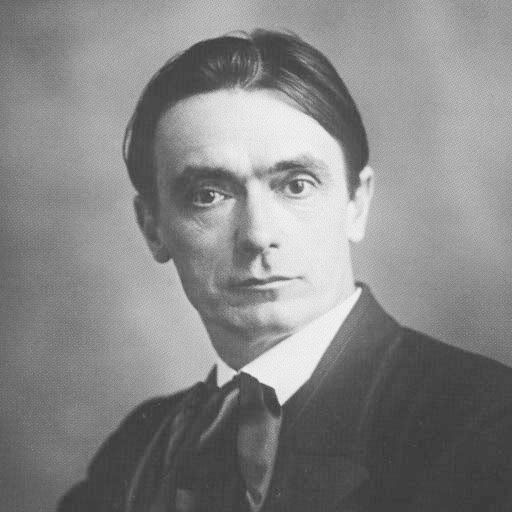
References to the nature of fairy tales and myths, and how to put them to use, are scattered throughout the voluminous works of Rudolf Steiner. You will notice that the ways the Waldorf schools use them in their curriculum avoid outright interpretation of meaning, or moralizing. The emphasis on using them instead of interpreting them is the same attitude advocates of dreamwork take toward dreams. The efficacy of the tales (as in Bettelheim's practice) is in experiencing them as deeply as possible.


In an essay on the methods of Rosicrucian initiation, Steiner speaks of the need to experience the symbols of esoteric teachings rather than intellectualize about them. He says:


"But now the pupils of this Master went further still; they learned to feel the inside, the inner nature, of the bones. Therewith they were able to experience a last example of what was practised in manifold ways in the ancient Mystery Schools, they learned to experience symbols by making their own organism into these symbols; for only so can symbols be really and truly experienced. Explanation and interpretation of symbols is really nonsense; so too is all theorising about symbols. The true attitude to symbols is to make them and actually experience them. It is the same as with fables and legends and fairy tales. — These should never be received merely abstractly, one must identify oneself with them. There is always something in man whereby he can enter into all the figures of the fairy tale, whereby he can make himself one with the fairy tale. And so it is with these true symbols of olden times, which come originally from spiritual knowledge..."


Steiner dismisses the notion that fairy tales are merely products of the imagination or the "folk fantasy" as the folklorists would call it. Like Jung, Steiner relates fairy tales to dreams, or more specifically to that more refined variety of "dream" called the psychic experience. According to Steiner, before the human race became what we are today -- that is, oriented toward a brain-centered awareness that focuses on a logical conception of the objective world through the five physical senses -- people experienced life with a natural clairvoyance that left them open to impressions coming from their other senses.* They experienced things that Jung would have called "archetypal." These experiences involved matters and themes that are more universal than the particular and specific experiences of the material world, which are tied to the conditions of time and space.


Steiner compares the conscious experience of hearing and experiencing a fairy tale (as opposed to the long-term process it effects on our deeper, subconscious level) to the pleasant tastes and sensations of eating nutritious food. Although they are a very important part of the process of properly feeding our bodies, they are only the obvious and superficial characteristics of food. It is only once the food is broken down, transformed and assimilated that we enjoy the full value of it. And all these things happen without our conscious awareness. Likewise, he says, it is only as we live with the tales and assimilate them into our beings on subconscious levels that we enjoy their full value.


Steiner points out a motif that can be found, in one form or another, in many, if not in the majority of fairy tales: the bewitched realm, person or object. The world is turned upside down. The prince appears to be a beast. The palace appears to be a humble cottage. This he says, reflects the illusory appearance of things in our waking state, where we are dominated by the veils of the material world. If we can view the same beings, objects and phenomena from another level of consciousness (i.e. while dreaming, or in a state of "astral" projection), then we will see that what we observe with our physical senses is not a clear or true perception. Bewitchment, then, is confinement to, or entrapment in, the material world. If the protagonist persists in doing what is right, which is achieved through following the dictates of the heart, then the spell is broken, and he/she gains the ability to see things as they really are, that is: to pierce the veil.


Another motif he points out is the "soul shepherd"; the old man, old woman, or other conspicuous stranger the protagonist meets who sends him/her on the quest. This contact, he says, awakens the deeper forces within the protagonist and makes the world take on its strange appearance.


Steiner's assertions present further arguments for why fairy tales can't be replaced by either fluffy-light children's literature or by the conspicuously and often ham-handedly didactic materials parents, schools and popular media present to children (often with the best of intentions, I acknowledge). Fairy tales embody truth. Truth, in this case, means an accurate reflection of the nature of being on the visible and invisible planes. They are appropriate for children, and for people of all ages, he says, because "they are able to combine the richest spiritual wisdom with the simplest manner of expression." This simple expression, clothed in the images of a simpler, pre-industrial life, interacting with our sublime inner realities, "brings the roots of human life together with those of cosmic life."


(*I am aware that some readers might find Steiner's claim that the human race once had clairvoyant abilities which have been lost to be an example of what Ken Wilber calls the "pre/trans fallacy." But I don't really think this applies here. He is not idealizing a previous state of the race, but acknowledging that certain developments in human consciousness came at the expense of other aspects of our beings. These abilities are merely suppressed and latent in the average person at this stage of our development, but will have to be recovered and integrated with our newly-won rational abilities before the race can advance to its next stage.)

February 5, 2008

Evolving a Relationship to Fairy Tales (Part I)

(This is the first in a series of postings on various ways of looking at, and working with, fairy tales. Instalments will be published every two to three days.)

The material that makes up the following series of postings was originally written without any references to myself or to my own experiences, but after getting about half way through the project, it became apparent that the essay wasn't really jelling properly. I began to suspect that it needed the context of how my perspective has shifted over time in order to give it focus and direction. So, I went back through and inserted the personal aspect as delicately as possible, and only as much as needed. It's not that my perspective is so important, or any more important than anyone else's. It was just necessary to give the reader a pair of eyeballs to see this subject through. It was Hellibrarian's comment on my last posting about a fairy tale gave me the angle I was after by mentioning "the field of fairy tales as literature."

This story begins when, at the age of eighteen, I rediscovered a lovely cloth-covered hardback German-language edition of Grimm's Fairy Tales on a shelf in my parents' house. The beautiful beige volume with watercolor illustrations stirred memories of childhood, at which time I couldn't read German yet, but often leafed through it looking at the paintings. I began to read the rediscovered treasure, and noticed that there was a different pleasure in reading the tales as an adult than as a child. Part of my new perspective came from being a student of mysticism and the occult. There was a man twelve years my senior who played the role of spiritual mentor in my youth. He owned a vast library including " many a quaint and curious volume of forgotten lore", to which I had full access. From this perspective I saw the fairy tales as magic universes full of secret coded messages that could only be unlocked with the proper key. I analyzed the stories (as well as I could) pseudo-kabbalistically, and semi-Freudianly (We all know a little Freud, after all. It's in the food we eat.) But as charming as that all was, I knew there had to be more. There must be more one can get out of them.

A few years later I was studying German as an undergraduate. That's where I got exposed to fairy-tales-as-literature. To many people's minds, the phrase fairy-tales-as-literature seems to ennoble what are commonly thought of as "merely" children's' stories. After all, literature is part of what we regard as "high culture." The Grimm’s tales are associated with those towering figures of philological scholarship, the Brothers Grimm, who dedicated their lives to the documentation of the German language in the Deutsches Woerterbuch (The German Dictionary). The dictionary was a nationalistic project, meant to support the various efforts being made at that time to somehow weave the dozens of principalities from the defunct Holy Roman Empire back into some semblance of unity. The Grimms thought that could be achieved through cultivation of the common language.

Because the prime motivation for collecting these "German" fairy tales was actually a political/linguistic project, this left its stamp on how they were regarded in the 19th century. Indeed, the Grimms were not the only scholars collecting fairy tales and myths (i.e. folklore) in the German-speaking realm during that period. Dozens of collections were published by as many collectors. Much of the early scholarship and commentary on fairy tales retained this focus on fairy-tales-as-folklore. The commentaries dealt with geographical origins, and ethnic heritages. If there were similarities between tales collected in disparate locations, the question was how the oral tradition had travelled, and which cultures communicated with which others. Regarded as folklore, fairy tales were seen as “memes” passed from one generation to the next, like the best way to skin a deer, or the most efficient way to build a house.

Let me tell you an anecdote that sheds a little light on the limitations of fairy-tales-as-literature or folklore, that is, the academic approach. While a graduate student at UC Davis, I attended a seminar in German Romantic literature. Four of us met weekly in the professor's office. As we discussed fictional works of such writers as E.T.A. Hoffmann, Clemens Brentanno and Novalis, it became obvious to me that I saw things in some of these stories that the other students (or the professor, for that matter) didn't see, due to my background in esoteric literature. Most of the time I would keep this to myself, but at other times, when they were getting all wrapped up in (i.e. sidetracked by) some theoretical approach, I would reveal to them which legend or mystical doctrine was being referred to in a story that shed light on the author's intentions. On one occasion the conversation had taken some pretty absurd turns before I decided to inform them that the reference to mandrake root in one story had to do with the fact that European lore says the mandrake root has magical powers due to its being shaped like the human body. I further told them it was believed the root screams when it is pulled out of the ground, and it is fatal to hear this scream. For this reason they harvested it by tying a rope to it and getting some beast of burden to pull it out while the humans jammed their ears shut. After relating this information, there was a short silence. Then Brigitte, one of my fellow students squinted at me and asked, "Where the hell do you know these things from?"

My point is that scholars of Romantic literature often fail to understand that there's a dimension of that literature you can't understand unless you take the authors' obsessions with certain metaphysical ideas seriously, and not smile indulgently at their quaint superstitions. Novalis, for instance, made an intensive study of the works of Jakob Boehme. How can you grasp what's going on in Novalis's works without understanding his mystical view of the world? The same goes for fairy tales. The academic approach often leaves something to be desired. The mystical side of me was left dissatisfied.

The discipline of folklore studies has its uses, but fairy tales are much more than folklore. And as flattering a designation as "literature" is, fairy tales are also much more than that.

November 15, 2007

I wasn't expecting THAT!


If imitation is the greatest form of flattery, then parodying the hell out of someone must be the greatest form of... love? I hope so.

Once I got over the "Oh my God!" reaction, I couldn't stop chuckling about this posting on a friend's blog.

I consider myself well roasted, or should I say toasted?


October 7, 2007

A ritual is what it means to us

I was asked to write the following article for A Rózsakeresztes Tükör (The Rosicrucian Mirror), the official newsletter of the Rákoczy Atrium Group of Budapest, an affiliated body of the Hungarian Administration of the Rosicrucian Order, AMORC. It was translated into Hungarian for publication, but I thought a few English-speaking readers of this blog might be interested in reading it as well.

Since it was written with members of the Order in mind, it makes a few assumptions about previous knowledge of the readers that necessitate a brief introduction for the context of this blog.

First of all, AMORC has only existed in Hungary since 1994, since such non-socialist, international organizations were forbidden before 1990, and all forms of spiritual practice were discouraged (to put it lightly). AMORC has had its hands full with translating the vast volumes of correspondence lessons and with all the other administrative tasks involved in trying to establish and grow a large and sophisticated organization. Translating and organizing some of the more "minor" rituals and activities have been on the back burner for a long while.

Szilvi and I knew the Appelation Rite existed and was performed in other jurisdictions, and we asked if it would be possible to perform it for our youngest child. It took the better part of a year to arrange it.

The references to all the AMORC rituals I have seen is relevant in this country, where the overwhelming majority have not seen many of these rituals. It would be no big deal in North America, or even in Francophone Africa, where the order has been operating for a long time, and twenty-five-year-plus members are not a rarity.

Tata is a little city where the AMORC administration is located, and the only working temple in Hungary.

And with that introduction, let us proceed to the article.

A child, a family, a community is initiated

By Theo Huffman

With the exception of a Rosicrucian funeral -- and naturally all the initiations I haven't received yet -- I've seen just about every ritual performed by AMORC. I've helped perform the pyramid ceremony. I've seen installations of officers. I've seen the sanctifying of a temple. I've even seen a Rosicrucian wedding. But I'd never seen the appellation rite. I'd often wondered what it would be like.

I'll confess that I was just a little skeptical. Let me see if I can explain why.

The first thing you need to know is that I was raised a devout Catholic, and every Catholic knows there are seven sacraments (baptism, communion, confession, confirmation, marriage, holy orders and last rights).

The second is that The Rosicrucian Order AMORC hasn't always had the stable, highly-developed form it has today. When H. Spencer Lewis[1] accepted the task of creating a visible Order in the physical world to embody the work of an invisible fraternity which has existed for thousands of years, it was the ultimate creative challenge. Carrying out this work in a world totally transformed by mankind's technologies since the days of the Fama Fraternitatis was only possible for someone who had the courage to experiment with new ways of bringing esoteric knowledge to those who wanted and needed it.

And H. S. Lewis was a real experimenter. Many of those experiments developed into the teachings and ritual we know today as our traditional Order. But many of the experimental projects, such as the creation of a "universal Rosicrucian language" (sort of like Esperanto) were found to be unworkable, and consequently abandoned. And among these abandoned projects was the creation, in the late 1920s, of a Rosicrucian church, called "The Pristine Church of the Rose Cross." Dr. Lewis served as the bishop of this church. The church only lasted a few years, the Order's first years at Rosicrucian park. After this, it was decided that the energies spent on the church would be better invested on other aspects of the Order.

So, I suspected the appellation rite might be a legacy of the early AMORC's experimentation of trying to create a church, which necessitated it to have its versions of the seven sacraments. I have to smile a little when I think of one of our Rosicrucian friends calling it a "Rozsakeresztelo~"[2].

But I was pleasantly surprised.

When we arrived at the administration in Tata, and as the enthusiastic members arrived, as well as our two invited guests, Timothy was quite shy, and clung to me. I think he was well aware that all this commotion centered on him. And the energy was especially intense, since this was the first time the ritual would ever be performed in Hungary.

Szilvi and I were asked to wait alone in a room with our son Timothy while everyone else entered the temple and prepared for the ritual. When the door opened and the Outer Guardian[3] asked us to come with him, I got my first hint that this was an initiation.

Although the appellation rite is open to non-members who are invited by the parents, (unlike most other AMORC rituals) I still feel it would not be right to describe something that happens in the temple in too much detail. It is something to be experienced in the temple, not something to be described to people in the mundane world, or "the outer darkness" as we call it when we are in the temple.

Timothy continued to be very apprehensive as we entered the temple and took our seats. I'll confine my remarks about the ritual to a few observations. It bears no resemblance to a baptism at all. It is truly a Rosicrucian initiation. The child is initiated by means of a symbolic journey through three stations of the temple, which to my mind is an allegory of birth. Timothy cried at the first station, since we had to put him down to sit on his own. And this seems appropriate. There is always crying at birth, isn't there? At the second station, among other wonderful events, the child gets a kiss on the cheek from the Colombe.[4] Timothy was so surprised, and so delighted, his eyes lit up like candles as he watched her walk away. Is there anything sweeter than an encounter with the Inner Self?

Finally, it really emphasizes the point that this is an initiation when, at the third station, the parents are asked to take an oath. What did we promise? You'll have to come to the next appellation rite to find out!

The mood afterwards was very joyous and light. Timothy was suddenly more open and social, and like everyone else, he was very happy to be able to indulge in cake and cookies. And perhaps this was a moment that was somewhat "church-like." The community had gathered to observe a milestone in the lives of one of its families. That's a point I shouldn't miss. This ritual was very important to our other three children. To see Timothy acknowledged by the Rosicrucian community, and to see their parents take a vow regarding Timothy, was surely an important spiritual experience for them, too.

Szilvi and I were both convinced that Timothy was "different" after the ritual; somehow more aware, more present in the world. And this I take as one more confirmation that the appellation rite is not just a pseudo-baptism. It is a true Rosicrucian initiation.

1. H. Spencer Lewis (1883–1939) was the founder and first Imperator (supreme officer) of AMORC.

2. A subtle play on words in Hungarian. Keresztelő in Hungarian means baptism. Rózsakereszt means rosy cross. Put them together and you have a "rosy baptisim".

3. A traditional ritual officer

4. A role played in ritual by a girl in white robes and headdress. Her name comes from the Latin columba, meaning: dove.

September 22, 2007

Surprise Consultation

The Firm had fully taken over the resort hotel by Friday night. Dance music flooded the foyer, and bodies bobbed in colored, dim lighting. The Firm is a wealthy and powerful multinational (about as multinational as they get; with offices in almost every country of the world), and when it takes its personnel out of town for all-company functions, it does it in a big way.

After these several hundred souls had been crammed into an auditorium as the captive audience of endless presentations for a large part of the day (and cursing the fiends who created Power Point), and then wined and dined at The Firm's expense, everyone was releasing their tensions (not only of the day, but accumulated over months!) in the massive party, as the free booze flowed.

In a big way: the entire cavernous hotel lobby had been redecorated and re-lit. A stage had been built on one end for the featured band. A wooden dance floor had been constructed to protect the permanent floor.

The party had a 60s theme. Lots of mini dresses and mini skirts. Multi-colored polka dots everywhere.

Wandering among the crowd with my glass of dry red, I stumbled upon the encampment of my colleagues. The lawyers in this firm tend to be clique-ish, and don't mix much with the other professionals. They had commandeered several long couches and long tables next to a large-screen TV running with the sound muted. It was showing a war movie, and no one was paying much attention. Many of the combatants were wearing those unmistakable Afghan hats.

As I approached them, he saw me and made eye contact. He (let's call him Peter) jumped up from the couch and came to meet me before I got very close to the rest of them. Peter had an urgent expression on his face.

"I want to ask you something," he said, leaning close to compensate for the loud music.

"My God! That sounds awfully serious," I half joked.

"Oh, it's not about you. It's about me."

"That still sounds serious."

You see: Peter and I aren't close in any way. We see each other at the office, and he lingers a minute or two to talk when he has to come consult with me about a document of his I'm editing, but the fact that I'm not a lawyer, and that I'm not Hungarian, and that I'm twice his age, and countless other factors, make it a distant (if friendly) relationship. I recall when he started at The Firm several years back, I noted that he was a strikingly handsome man, as far as I am a judge of masculine beauty. And his soulful eyes told me that he was likely sensitive and passionate. At any rate, it came as a surprise that he wanted to pour his heart out to me. And I could feel in my bones that's what was coming.

He looked into my eyes, almost pleadingly, and asked, "What do you do when a woman breaks your heart?"

I paused, aware of his eyes fixed on me. He really wanted an answer. Not a time to be flippant or dismissive. I thought, as well as one can in an environment of throbbing pop music, and a million LCDs depicting a night battle in rugged hills, complete with flashing explosions (certain clues told me what was being depicted was the siege of Tora Bora).

There was no doubt Peter had picked the right person to ask. My second wife shattered my heart so thoroughly, it took me years to gather all the pieces together again. And it took the flames evoked in that broken heart by my current wife and the children she bore me (not to mention being reunited with my first child) to fuse it back into one piece.

Is that why he came to me? Had someone in The Firm told him about my history? (Not likely, since I don't really talk about such things at work.) Or was it just that I'm old enough to be "fatherly" to him?

I knew what he wanted to know was how one got over it. And I didn't really have an answer for that. My experience was that the only thing that really made a difference was time.

He must have read my mind.

"I guess," he said, "It's just a matter of time."

I nodded. He nodded, sighed, looked down at the floor, his shoulders drooping.

"Who broke your heart?" I regretted the indiscretion as soon as I'd said it.

"I think you know."

"No, I don't."

Within a few seconds I reviewed memories of people I'd seen him socializing with. Two candidates came to mind. I'm not innocent enough to be shocked, but I was surprised, since one is married and the other has a very significant other.

He was about to turn and walk away when something occurred to me.

"There is one more thing," I said.

His eyes opened a bit wider.

"I know you probably don't feel like it now, but once you get over the initial hurt, you have to forgive her."

He didn't say anything. He just continued looking at me. He was trying to understand.

"If you don't forgive her, it will eat you up from inside. It can destroy you."

He was still silent; still watching. I decided I'd gone this far, I may as well go a little farther. The soldiers on the screen had gotten the signal to advance; scores of men with weapons running up the side of a mountain.

"My father never found it in himself to forgive my mother after she left him. I watched what it did to him. I think it slowly destroyed him. He never really got it together again. He never really learned to trust anyone or love anyone again."

Peter was nodding and his eyes had that distant look of internal reflection.

We stood there a bit longer, our drinks in our hands. On the screen, it was the morning after the battle. Some middle-aged soldiers with CIA written all over them (metaphorically that is) were combing a rubble-and-body-strewn cave for useful intelligence. One of them freaked out when he found a dialysis machine.

"That's about all the wisdom I can muster at this point," I said.

He smiled. "Thanks," he said.

He drifted back to his pals, and I walked over to one of the lawyers who's closer to my age, cocked my head in the direction of the dance floor and said, "Let's go dance." We left the legal eagles and the war in southern Asia behind, to lose ourselves in the rhythms of hundreds of bodies forgetting the pressures and the heartbreaks of daily life on this planet. Dance. Forgive. Learn to love again.

July 12, 2007

Virtually Gathering Around the Digital Camp Fire

(or: What Exceedingly Strange But Wondrous Things These 21st Century Relationships Are)

I just recently read a very interesting novel by the German writer Thommie Bayer. What struck me after getting about forty or so pages into Singvogel (sorry folks, only available in German) is that the vast majority of the "action" in this novel takes place as the first-person narrator is sitting at the computer all alone in his writing studio (he's a screenwriter). We hear the narrator's internal monologue while he's reading and answering e-mails (we also get to read the e-mails), doing research on the Internet, and while he's working. One could easily imagine that reading about a guy sitting at his computer would be dull. But whats' surprising is that it isn't. An incredible number of things "happen" while he electronically communicates with friends in various cities, and with his wife who commutes to another city.

But it gets better. He gets an unsolicited e-mail from a woman who's seen a film he wrote. A lively and intimate correspondence begins. But wait! It gets even more complex: he starts getting e-mails from the woman's jealous boyfriend. And as I read about this dynamic, unpredictable, and very engaging life getting played out on the Internet, the realization hit me: Oh my God! This really is what 21st century life is like!

Well, at least for some of us. But that "some of us" is actually quite a few of us. Those legions of men and women who go to an office and work in front of the ubiquitous "one-eyed monster" all day. And even the ones who stay home have unlimited, always-on, broadband now.

If there is one thing that typifies to me the watershed that came with the dawn of the 21st century, it is the way that social interaction has been transformed by the Internet.

It used to be, going back to prehistoric times, that the way people met people was face to face. At school, in church, at work, at parties, in the neighborhood. But now a surprising number of relationships start on Internet forums, chat rooms, blogs, or some other digital format used on the Internet.

Currently, of all the women who play significant roles as friends in my wife's life, easily 9/10ths of them are women she met in mother/baby forums when she was pregnant. There is a core of them who met on one particular forum topic, realized after a time that they were a compatible group, and formed a private forum of their own. This group has been together for six years now. Since they met on a Hungarian language forum, and they're mostly from Budapest, they began arranging to meet in person. They even have a monthly "women's night" when they get together at someone's house for dinner.

And they forum together daily.

I have a group of friends I met on a forum for Rosicrucian mysticism that I was moderating. After two and a half years, the forum became unstable and politics broke it up. A core group decided it was time to form a private forum. I wonder how often this happens: a core group meets on a public forum and recognise their compatibility, so they form a new, private forum?

My friends are spread across several continents, so we can't meet personally, like my wife's pals. But we're still close. We know a lot about each other, and we've gone through many experiences together. We often mention how odd it is that we feel as close or closer to one another as we do to the people (colleagues, for instance) we see physically every day.

Watching what my wife's forum does has led me to the conclusion that forums are sort of a "feminine" mode of communication. It's all about networking and the group. Her forum doesn't even really bother with lots of topics and threads. They just write everything into the same thread and share everything with each other. It's as if they were all sitting in the same room and knitting or spinning wool and having a conversation as a group.

The implications for how the organisation of society will change are staggering. It's (at the risk of being cliche) revolutionary. The ways people have met one another since time immemorial are no longer the rule. The way relationships develop over time is also new. And the nature of the groups we organise ourselves into are new, as well. Welcome to the Aquarian age.

This doesn't mean that traditional relationships are suddenly obsolete. The typewriter didn't make the pen obsolete. It's a new layer of our society. And one that permeates through old boundaries. Forums can be totally international, cutting across all sorts of boundaries of class, race, religion and education. But we will always need the people who are physically near us and will always long to physically meet some of the people we have met through the Internet.

I'll wrap up with an anecdote. My wife was contacted by a woman whom someone had recommended to read my wife's blog, because my wife writes a lot about being the parent of children who go to Waldorf school. This woman asked if she could publish some of my wife's postings as articles in the newsletter she edits for the Waldorf school her son goes to. We met (face to face) through a home-birth associated gathering (our children and their daughter were born at home) and later at a Waldorf-associated gathering. Last week we were invited to visit them at their house on the Hungarian "great plain".

We drove south of Budapest onto the puszta, the famous Hungarian great plain that separates the rest of Europe from the "Balkans". Though I've driven across the great plain many times, this was the first chance I'd ever had to stay there. We spent two nights at the farmhouse of these friends we'd met through the Internet. Saturday morning I went jogging, and it was wonderful. The soil there is almost pure sand, so jogging on the dirt roads is like jogging on the beach. Where there is forest, it's scrubby and thin, and where there is no forest, it's all tough stringy plants that can take sun and dry heat. It reminded me of California's Sacramento Valley, actually. And the stars at night! We were vast distances from any city lights. I don't remember the last time I saw the Milky Way from horizon to horizon. And the stars have colors! I'd forgotten that.

We spent time cooking and enjoying good meals together, and our children played together doing the sorts of things they don't have the opportunity to do in the city.

We've invited them to come visit us in Budapest.

It all started on the Internet, but it's developed into a real flesh-and-blood relationship between people who can look one another in the eyes, clasp one another's hands, share a satisfying meal. But I can guarantee you we never would have met one another ten years ago. And I never would have had the same opportunity to learn the bit of practical geography that came with that visit.

Amazing, this medium. And the transformation is only really beginning.