Showing posts with label fairy tales. Show all posts

March 15, 2009

The Subversive Discourse of Fairy Tales

I have a friend (more my wife's friend than mine) who has lived her life following Thoreau's "different drummer". She speaks several languages, has lived in several countries, trained as a Waldorf teacher, and did her student teaching abroad. She does not lead an oppulent life, and has sacrificed dearly for going her unique path. She works hard to provide the life she thinks her young son deserves. And despite the obvious virtues of her character, I understand that her parents have little respect for who she is or what she has done in life.

I was reminded of her, and of people with similar burdens, when I recently read the fairy tale "The Beauty and the Horns" from The Laughing Prince: A Book of Jugoslav Fairy Tales. In this tale, a rich man tells his only son that he will bequeathe his entire estate to his son as long as the son promises not to go in search of a fabled woman named "Peerless Beauty," no matter how beautiful anyone tells him she is. He should, instead, settle down with a hard-working girl from his own village, like a sensible boy. Well, some time after his father's death, the youth gets more and more curious about this Peerless Beauty, so he begins to ask around. All the older men he speaks to give him the same advice his father had. But that only makes him more determined. He ends up blowing his fortune and ruining his life in the pursuit of Peerless Beauty (who tricks and deceives him, mercilessly). But he persists and eventually wins her over, and in the process breaks the enchantment she is under, and wins back his fortune. He ends up happier than he ever would have been if he'd just settled for what was "sensible."

The message of this tale (and others) is remarkable when you consider the milieu it comes from. Just image Balkan peasants and burghers telling this tale at the hearth on a cold winter's eve. Now these are the very people who would tell their own children to be "sensible," and to forgo what Joseph Campbell famously called "following your bliss." Why were these people telling a story that was obviously in conflict with their conservative values? They didn't want their children running off chasing dreams when they came of age, did they? So what gives?

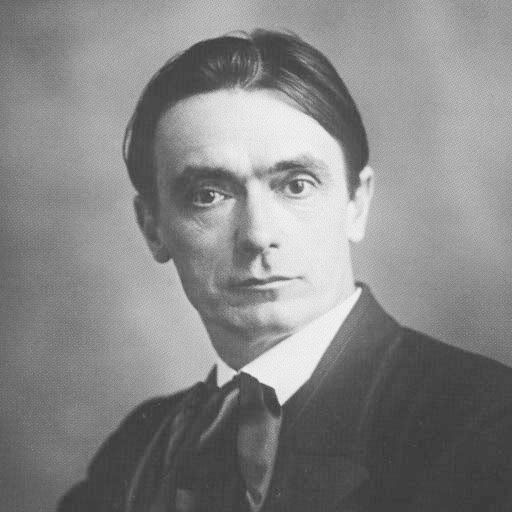
My theory: this message was planted in the collective subconscious by The Hierarchy. Who is The Hierarchy? They are those human souls who have advanced beyond the level of "normal" human consciousness -- many of them no longer needing to incarnate in a physical body -- and are working in unison for the evolution of the race. The Hierarchy is constantly influencing the actions of the human race through our subconscious, suggesting ideals to be striven for, and giving us inspirations to bring to fruition. These impulses are often expressed in the works of more enlightened artists and scientists. Rudolf Steiner said that fairy tales were retellings of psychic experiences in a symbolic form. They are a form of folk art appropriate for people of all ages and from all srata of society. The perfect medium for The Hierarchy.

This tale emphasizes the necessity of following our inner strivings to attain something we intuitively know is perfect and beautiful (Peerless Beauty). This is none other than our inner self, our soul, our divine spark (our daemon, Holy Guardian Angel, Inner Master, etc., etc). The mundane world frowns on people who pursue their inner reality rather than riches and worldly power. Don't get me wrong! I'm not talking about running off, joining a monastery, and taking vows of poverty. I'm talking about priorities. It's what is referred to in the Gospel of Mark in the rhetorical question "For what does it profit a man to gain the whole world, and forfeit his soul?" In the end, the young hero wins everything back: he gets the girl (his anima, if you will), and regains his fortune and power. How? By answering the inner call; by not giving in to the cowardly desire to stay comfortable and safe, and to sit on the bags of gold his father left him; by not doing what the crowd thinks is "sensible."

I have, myself, done many things that my family, friends and colleagues thought were... well... crazy. Most times they worked out fabulously. Occasionally I fell on my face (or other parts of my anatomy). I recall when I was contemplating a particularly risky move in my life (coming to Hungary with almost no money in my pocket and only vague employment prospects), a good friend said to me, "If you don't do this now, when you have the chance, will you be able to live with yourself the rest of you life, wondering what would have happened if you'd done it?" That was enough to convince me. Living with that sort of doubt forever after sounded like hell itself. (Thanks Geoff F. !)

And there are times I have been more "sensible." When it was the right time to be sensible, it worked out just fine. Other times, I've hated myself afterwards for being a chicken shit. Life is meant to be lived boldly.

The message of fairy tales is often at odds with the values of the people who retold them. But then, most people are innocent enough, or jaded enough to believe they are "just stories."

I think the friend I mention at the beginning of this essay is a brave woman.

March 12, 2008

Developing a relationship to fairy tales - closing remarks (part 2)


(To interpret, or not to interpret?)

Why is it important that these stories are a mixed bag, and don't neatly fit the categories scholarship has created for them? Because seen in this way, one can appreciate that all of the approaches I've mentioned so far in this essay, as well as many others I haven't mentioned, are legitimate in their own rite.

But precisely because there are many different kinds of narratives lumped together under the rubric of "fairy tales," one has to be careful which methods one applies to which fairy tales.

Again, there's an apt comparison to dreams and dreamwork. When working with a dream, it is essential that the dreamer feels deeply within his intuition to determine what kind of dream is in question (I credit Robert Moss and his book Conscious Dreaming for making this clear to me).

Let's say that you dream your uncle Charlie comes to you and tells you that your boss has a sharp sword in his office and he plans to cut off your head the next time you go there. In order to begin working with this dream, the dreamer has to decide whether it is a) transpersonal, b) prescient, or c) psychological (or another type of dream, but this covers the big categories). The dreamer has to ask himself: do I really feel that uncle Charlie came to me? Or does the image of Charlie represent something? If he feels it really was Charlie (i.e. a transpersonal dream), then it would be foolish to try interpreting Charlie as a symbol. One would miss the entire point! If one feels Charlie is a symbol, or represents a principle or "archetype" (i.e. it's a psychological dream) then one would apply other tools. The dreamer would also have to ask himself "do I feel this dream is speaking of the future?" If yes (i.e. it's a prescient dream), then the manner of treating this dream would, again, be different.

Using the wrong tools on a given dream yields dubious results. The same applies to fairy tales, especially considering the types of fairy tales that Rudolf Steiner and Werner Zurfluh are talking about. If the narrative speaks of a hero who must cross a threshold into another world, and the terms of the story indicate that what follows is the hero's psychic experience, it does very little good to get out all the tools of literary analysis and try to interpret this passage or the subsequent passage (dealing with the hero's adventure beyond the threshold) with post-modern, post-colonial, feminist, queer, hermeneutic, Jungian, Freudian, structuralist or any other type of criticism. It just misses the point.

And another parallel between dreamwork and "fairy tale work": It's very important that you base your own understanding of a fairy tale on your own experience. There is great danger in abdicating to so-called experts one's own right to decide the significance and meaning of aesthetic artifacts. Just because someone has degrees from respected institutions doesn't automatically give them insight into matters as deep as the ancient stories told by our race, nor into the meaning of creative inspirations from sources deep within our beings. The modern world regards the word inspiration, which means "to breathe in the spirit", as a quaint, colorful, but ultimately antiquated metaphor. Creativity is believed to arise in the physical brain. The average educated person believes that all the meanings of artistic creations can be found by means of various intellectual, analytical processes. And this is patently untrue. There are some things the objective mind cannot penetrate. Let's look again at that remark Rudolf Steiner made about symbols:

"Explanation and interpretation of symbols is really nonsense; so too is all theorising about symbols. The true attitude to symbols is to make them and actually experience them. It is the same as with fables and legends and fairy tales. — These should never be received merely abstractly, one must identify oneself with them. There is always something in man whereby he can enter into all the figures of the fairy tale, whereby he can make himself one with the fairy tale. And so it is with these true symbols of olden times, which come originally from spiritual knowledge..."

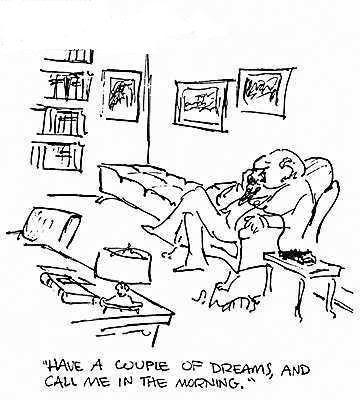
Many people are confused when you tell them that you should not focus your efforts on interpreting fairy tales, just as they have troubles understanding how you deal with dreams without immediately jumping to the interpretation. That's what the intellectual culture we've been brought up in tells us to do. Everyone has seen films in which there is someone lying on a couch and telling their dream to a shrink, and the shrink tells that person what the dream means, right? Your English teacher in high school (or English professor in college) gives you a poem or a story, and you're supposed to analyse it and interpret it, right? So, naturally, when you get something as highly symbolic as a fairy tale, which anyone with a couple of live nerve endings and a remnant of the natural in-born sense of awe knows is just pregnant with significance and meaning, what do you think you're supposed to do with it? Interpret it, of course! Wrong.

What can you do instead of interpret? If you have graphic skills, you can take a page out of the Waldorf school book and draw or paint the motifs of a fairy tale. You can act them out with friends and family playing different roles (OK, I admit I've never tried this with fairy tales. But I have tried acting out dreams with friends. Powerful stuff!) You could simply review the dream in your mind and then journal about the episodes in your life it reminds you of. You can use a tale, a part of a tale, or even just an image in the tale as the subject of a meditation. The possibilities are up to your own creativity. But the most important thing is to read them repeatedly. If you have children the right age to tell fairy tales, you are blessed. You don't have to contrive a reason for reading them, nor to justify the time you spend reading them. And there is also something special about reading them out loud. You get to experience the tales as a fringe benefit of doing service for your children. And never doubt for a moment: reading fairy tales to your children is a great service.

One last remark. I apologize to anyone who takes umbrage at my sometime somewhat dismissive attitude to the discipline of psychology. As the old joke goes: some of my best friends as psycholgists (I just wouldn't want my daughter to marry one!). The reason for this is that, despite an increasing number of enlightened individuals among their ranks, there is still a frightening number of them who fail to be human when examining the human mind, and who feel it is their duty to destroy and discredit anything that supports a viewpoint based on the divine nature of man's essence (the soul), mistakenly believing they are fighting superstition and ignorance, when indeed they are only showing their intolerance and ignorance of things beyond the ken of their particular sub specialty.

The blinders that give many psychologists tunnel vision is a combination of materialism and the limits imposed on them by the scientific method. Materialism is a state of mind that refuses to acknowledge anything beyond the physical senses (or the measurement instruments that represent an extension of our senses). Unfortunately, dealing with the products of the subconscious and the imagination does not always yield easily repeatable results. Instinct, emotion and intuition are equally as important as reason and logic. And although many psychologists would like to stake out the territory of fairy tales and dreams as their own, in which non-shrink dilettantes dabble at their peril, they forget that dealing with these worlds is much more an art than a science. And these realms are everyone's birhtright.

March 3, 2008

Developing a relationship to fairy tales - closing remarks

(Some observations about the arbitrariness of genre)

Although it's obvious that I think certain modes of dealing with fairy tales completely miss the boat at times, upon reflection, I can't truly assert that those approaches are either without value, or that they have not contributed something important to my understanding of fairy tales or to the understanding of fairy tales in general.To begin with, let's posit that there's something akin to dreamwork that applies to fairy tales; let's call it "fairy tale work." One of the central tenets of dreamwork is that one shouldn't rush jump straight to interpretation. One needs to absorb the tale, play with the tale, live the tale. Only when one has finally experienced the tale on several different levels should one venture to say what it "means." One thing that has to be kept in mind when talking about fairy tales (and when talking about all literature for that matter) is that all categorization of literature into genre and sub genres is arbitrary. To get a sense of just how arbitrary, indulge me in considering the following potted history of literature.

Story telling began around the campfire 150,000 years ago. After the tribe had sated itself on whatever beast they had roasted that night, Ogg, Igg and Oog would perform a dramatic re-enactment of catching a particularly worthy antelope: the world's first narrative. The story would have everything. There would be the foreshadowing of the place and time they found the magical creature through omens along the trail. There would be the enchanted moment when they beheld the beautiful animal, and it looked back at them, and consciousness beheld consciousness. There would be the tests of strength, endurance and courage the hunters underwent, as they chased the wounded prey across the landscape and almost got hopelessly lost (or they actually did get lost but magical beings and powers aided them in returning to the tribe).But was that the only kind of tale told around the fire? Well, no.

In succeeding generations Org, appointed by the elders to remember everything that happens to the tribe, as well as all the stories he was told by elders before they croak of, would give recitals of certain stories of particular importance to the tribe, including Ogg's famous story of stalking the enchanted antelope. Org's stories tended to be what we would call history, or legend nowadays.

Big Mama, Ogg's main woman (monogamy hadn't quite caught on just yet), would sometimes be called on to tell about the visits she got during the night from the Sky Mother, whose tits are the stars and whose womb is the waxing and waning moon. Sky mother would tell her which plants to use to cure various illnesses tribe members suffered from. Sky mother tended to talk in riddles, so the tribe would have to play around with Big Mama's dreams to figure out which plant Sky Mother meant and how they were supposed to prepare it. Very often the solution was a horrible pun that made the whole tribe groan and then giggle. Sky Mother has a strange sense of humor.

Then again, there were the tales told by Jackal, the tribe's shaman. These tales were always fantastic, and involve travelling to other worlds; some of them are like the world the tribe knew, and some were very different than their world, inhabited by gods, people and beings unlike anything they knew.In his tales there were heroes who leave their tribes to find women and treasures they have seen in their dreams. To triumph in his quest, the hero (or heroine) must bravely fight battles with creatures unlike any beasts the tribe knew from it's world, and the hero must perform tasks requiring great skill and cunning.Once Jackal told about visiting a world of people with white skin who live in square boxes and travel inside things that look like shiny turtles with clear ice on the sides they can see through. There were so many things in this story that no one could understand, like the giant seed pods these people hold to their ears to talk to other people who are far away. Jackal said he didn't understand this world either, but he went there and watched how people do things if he needed ideas for how to make better tools. He said he couldn't go there very often because it drained his spirit; although the people in this world are god-like, it was clear to him that most of them are lonely, and afraid of each other.

Oops. Got carried away there. But my point is this: although it's the shaman's tales that would most easily be classified as fairy tales, the historian's tales as "legend", Big Mama's tales as some sort of "religious" text, and the hunter's tales as something else, all of them would cross lines into one another. The hunter's tales have elements of the religious tales, the historian might relate an important ancestor's encounter with with a supernatural being, or his voyage to another world, which are more fairy tale-like.

The same goes for the collections of folk tales created in the 19th century. When some philologist doing field work found a peasant who was willing to offer up some of the yarns common people told each other around the hearth (a modernized form of the campfire, mind you!), there was no telling what she/he might tell the scholar. It might be a ghost story. It might be a local myth. It might be a legend connected to a local landmark. It might be a fable. And many times it was some mixture of these "genres." Many times it's not exactly clear what category a narrative fits into, but it has to be put into some pigeonhole or other.

And the picture is further muddled by the fact that various collectors attempted to edit and rewrite some tales. It is evident when reading some collections that editors made attempts to "prettify" some tales, and to make the language, plotting and other elements more consistent with the standards of the current literary (read: high culture) texts of the time.

(Next: to interpret or not to interpret)

February 13, 2008

Evolving a Relationship to Fairy Tales (Part VI)

(Werner Zurfluh, Part II)

There are two ways in which Zurfluh's work relates to fairy tales.


Zurfluh claims that collections of traditional fairy tales contain numerous examples of slightly coded instructions regarding the virtues of maintaining awareness in the "realms of the night". And, indeed, if you examine the vast treasure of recorded fairy tales, you'll find that a great many of them hinge on things which occur around the time a character in the tale falls asleep. An inordinate amount – one might even say a suspicious amount – of sleeping goes on in fairy tales. But you never notice until your attention is drawn to this fact.


A case in point: last night I read my children "Habetrot and Scantlie Mab" (from More English Fairy Tales, ed. Joseph Jacobs, 1894). Wouldn't you know that the main character "falls asleep" by a knoll while despairing over how to perform a task her mother has set her? She "wakes up" to the voices of some people in a cave she can see through a hole in a rock. These people are performing the task for her. This motif -- a task being performed for someone while they sleep -- occurs again and again in traditional fairy tales.


Zurfluh argues that the tales teach the technique of maintaining awareness, and not going "unconscious," as one slips into "the realms of the night". He draws attention to the Grimm’s tale "The Worn-Out Dancing Shoes", in which a soldier takes on the challenge of finding out where seven princesses are slipping away to at night, despite being under lock and key. The princesses have foiled previous attempts by giving their chaperon a glass of drugged wine before bed. By means of a trick (a sponge tied under his chin) he only pretends to drink the wine and fall asleep, but stays awake, and fakes snoring. In this way he is able to follow the princesses into the fantastic world reached by a ladder under one of their beds. Zufluh says this is an admonishment to maintain continuity of ego while falling asleep. There are many more tales in which the characters achieve amazing feats when they fall asleep, or deliberately don't fall asleep.


Another thing he tells us to pay attention to is passages in tales in which the hero arrives at a gate, a wall, a border or any other symbolic threshold. This, he says, is the transition into the other world, at which one must maintain awareness, or risk falling into an ordinary, non-lucid dream state. The hero is usually armed with a magic word, a power object or some other means of passing through the barrier. On the day I read those remarks in Zurfluh, that evening I read my children "The Three Heads of the Well” (English Fairy Tales, Ed. Joseph Jacobs, 1890). In this story, after the heroine proves that she has a good heart by sharing her meager travel provisions with a hungry old man, the man tells her, "There is a thick thorny hedge before you, which you cannot get through, but take this wand in your hand, strike it three times, and say, 'Pray, hedge, let me come through,' and it will open immediately." (I suspect this could be adapted as a visualization for breaking through into the other world with awareness intact. I'll let you know if it works!)


These practices were known in ancient times because, he says, ancient societies always had a certain class of people, mostly known as shamans and priests, who were privy to this knowledge. It later became necessary to code this information because of the persecution of the church, which regarded such practices as witchcraft and sorcery. But once one knows what one is looking for, he says, the message in fairy tales about lucid dreaming is fairly obvious. And I agree.

The other connection between Zurfluh and fairy tales is his perspective on the source of fairy tale content. He is very much in agreement with Steiner that they are retellings of psychic experiences. In his essay "Über den Ursprung der Märchen" ("On the Origins of Fairy Tales"), Zurfluh says that it’s a mistake to look for the origins of fairy tales in historical or folkloristic terms. He regards all arguments over the comparisons of various versions of tales, most of which have only been committed to writing during the last few centuries, to be very academic. He asserts that fairy tales originate in the experiences of those individuals who manage, through hard effort and training (meditation, dream recording, cultivating proper sleep conditions) to penetrate into the realms of the night with their awareness intact, which consequently means they return from such experiences with memory of them intact.

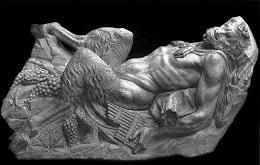
In this essay, he presents a passage from his journal which records his experience of visiting the "Land of the Fauns." He is of the view that the beings he encountered were the actual fauns of classical myth, and that this land (this "plane") exists apart from the material plane. Anyone who develops the proper skills and discipline can visit this world, or any of the other worlds depicted in myths and tales, because they really exist.


And so I've brought you to the point I've reached at this point in my relationship with fairy tales. I'm very pleased that my youthful suspicions concerning their importance to spiritual growth have panned out. Since, besides the other three children who still live under my roof, I still have a 1 1/2-year-old boy, I look forward to reading fairy tales nightly for many years to come. And now that I have been given so many keys from the researches of others, I fully expect that relationship to continue growing and changing.

(Next: conclusions and finals words)

Evolving a Relationship to Fairy Tales (Part V)


(Werner Zurfluh, Part I)

My research into the more mystical aspects of fairy tales led me to the work of Werner Zurfluh, an intriguing explorer of consciousness. The majority of his previously-published German-language works are available on the internet in html format (unfortunately little of it translated into English, and the translations are of substandard quality). Though he is very well-versed in the literature of mysticism, meditation and eastern philosophy, and despite the fact that his works are heavily annotated, the power of what he says in his writings comes from the fact that it is based on his own inner experiences, and does not rely on anyone else’s authority. A large portion of the text consists of extracts from his journals.


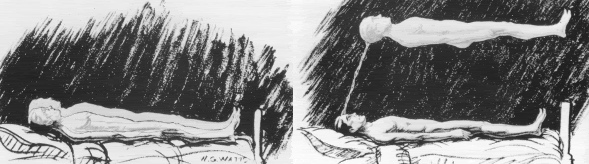
Zurfluh, as a child, was prone to Out of Body Experiences (OBEs), or what is also called astral projections, and he had many of them until he was a young adult. During his student years, he noted that due to the stress of intellectual work these experiences stopped and his internal experience became confined to "conventional" dreams. He resigned himself to the situation and later began occupying himself with Jungian interpretation of his dreams. With time, however, he came to the conclusion that this was the wrong way to go about things.


Zurfluh's main theme, in almost all of his published writing, emphasizes the importance of striving for personal experience of those states of mind called dreams (especially lucid dreams), astral projection, and OBEs. Because of his own background as a biology teacher and due to several years of study at the Carl Jung Institut in Switzerland, he spends a lot of his time arguing against the tenets of mainstream materialistic science and psychology, including depth psychology. He is critical of today's science because of its inability to work with, acknowledge, or even entertain the possibility of anything that cannot be measured with state-of-the-art instruments (in spite of the fact that "science" acknowledges all sorts of things now that could not be measured as recently as a decade ago), and he faults depth psychology for still falling into the Aristotelian trap of analysing and categorizing internal experiences in ways that kills them and makes them empty shells like so many mounted butterflies.


In his works he sites hundreds of pages of dream-, lucid dream- and OBE experiences that show a progression over time (many years, in fact). At first he utilized the standard sort of Jungian analysis on his dreams, and the symbols and sequences yielded exactly the type of results a Jungian analyst would expect. But with time, and by applying the lessons these experiences were teaching him, he began to understand that these "internal" experiences are, to a surprising extent, subject to the "observer effect". When he was expecting content that lent itself to Jungian analysis, that is exactly what he got.

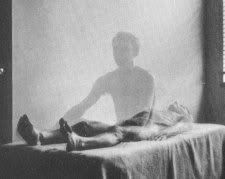
But once he had spent more time simply observing, and putting his efforts into being as aware as possible in whatever state of consciousness he happened to be, the nature of his experiences changed dramatically, and he began to understand that these states are not just subjective (i.e. just going on in your head), nor purely objective (i.e. something you are perceiving which exists outside of you), but a subtle interaction of the two. Fact is, he says, sometimes the things one encounters in these experiences are astral beings. They might be other people journeying in those worlds, or other kinds of beings which have been called spirits, elementals, genies, djinn, demons, angels, fairies and many other things throughout the ages. It's not appropriate to treat these like some aspect of yourself, as many depth psychologists might advise, because then you will not really find out what they wish to communicate to you.

So, rather than torture the symbols of dreams for hidden meanings -- using the logic of the material world to analyze and interpret otherworldly experience -- he determined that it was more important to make every effort possible to maintain the continuity of ego (Kontinuierlichkeit des Ichs) while entering the "realms of the night," as he calls them. One must, as much as possible, maintain an awareness of one's own identity, as well as an awareness of the otherworldly nature of one's state of consciousness when one leaves the ordinary waking state. This seems paradoxical to those who have not had this experience: being "awake" while one is asleep. His techniques encompass both what is known as astral projection, and what dreamworkers refer to as working with hypnagogic imagery.

(Next: Werner Zurfluh on fairy tales)


February 11, 2008

Evolving a Relationship to Fairy Tales (Part IV)

It wasn't only Bettelheim who influenced me to read traditional fairy tales to my children. Once my children started going to Waldorf kindergarten and Waldorf school, I was made even more aware of the importance of fairy tale narratives in children's lives. Fairy tales are actually a major element of the Waldorf curriculum for the first several years. The teachers tell the children fairy tales -- by heart, so as to make it an oral/aural experience again. The children make drawings of scenes and characters from the tales. Sometimes they act the tales out in class. I knew that, being a "Waldorf parent", I was in contact with a state of mind much closer to what I'd longed for since my youth: a mystical and spiritual mode of relating to the tales. Waldorf pedagogy is based on a spiritual concept of the human race (in German: das Menschenbild). This conception involves not only who we are now, in this physical body, in the early 21st century, but also who we are in other dimensions of being (with our various other energy bodies), where we came from, what we are evolving into, and our relationship to other visible and invisible beings. What is taught in Waldorf schools never loses sight of this big picture, and it endeavours to nurture the entire human being, not just the rational intellect.


References to the nature of fairy tales and myths, and how to put them to use, are scattered throughout the voluminous works of Rudolf Steiner. You will notice that the ways the Waldorf schools use them in their curriculum avoid outright interpretation of meaning, or moralizing. The emphasis on using them instead of interpreting them is the same attitude advocates of dreamwork take toward dreams. The efficacy of the tales (as in Bettelheim's practice) is in experiencing them as deeply as possible.


In an essay on the methods of Rosicrucian initiation, Steiner speaks of the need to experience the symbols of esoteric teachings rather than intellectualize about them. He says:


"But now the pupils of this Master went further still; they learned to feel the inside, the inner nature, of the bones. Therewith they were able to experience a last example of what was practised in manifold ways in the ancient Mystery Schools, they learned to experience symbols by making their own organism into these symbols; for only so can symbols be really and truly experienced. Explanation and interpretation of symbols is really nonsense; so too is all theorising about symbols. The true attitude to symbols is to make them and actually experience them. It is the same as with fables and legends and fairy tales. — These should never be received merely abstractly, one must identify oneself with them. There is always something in man whereby he can enter into all the figures of the fairy tale, whereby he can make himself one with the fairy tale. And so it is with these true symbols of olden times, which come originally from spiritual knowledge..."


Steiner dismisses the notion that fairy tales are merely products of the imagination or the "folk fantasy" as the folklorists would call it. Like Jung, Steiner relates fairy tales to dreams, or more specifically to that more refined variety of "dream" called the psychic experience. According to Steiner, before the human race became what we are today -- that is, oriented toward a brain-centered awareness that focuses on a logical conception of the objective world through the five physical senses -- people experienced life with a natural clairvoyance that left them open to impressions coming from their other senses.* They experienced things that Jung would have called "archetypal." These experiences involved matters and themes that are more universal than the particular and specific experiences of the material world, which are tied to the conditions of time and space.


Steiner compares the conscious experience of hearing and experiencing a fairy tale (as opposed to the long-term process it effects on our deeper, subconscious level) to the pleasant tastes and sensations of eating nutritious food. Although they are a very important part of the process of properly feeding our bodies, they are only the obvious and superficial characteristics of food. It is only once the food is broken down, transformed and assimilated that we enjoy the full value of it. And all these things happen without our conscious awareness. Likewise, he says, it is only as we live with the tales and assimilate them into our beings on subconscious levels that we enjoy their full value.


Steiner points out a motif that can be found, in one form or another, in many, if not in the majority of fairy tales: the bewitched realm, person or object. The world is turned upside down. The prince appears to be a beast. The palace appears to be a humble cottage. This he says, reflects the illusory appearance of things in our waking state, where we are dominated by the veils of the material world. If we can view the same beings, objects and phenomena from another level of consciousness (i.e. while dreaming, or in a state of "astral" projection), then we will see that what we observe with our physical senses is not a clear or true perception. Bewitchment, then, is confinement to, or entrapment in, the material world. If the protagonist persists in doing what is right, which is achieved through following the dictates of the heart, then the spell is broken, and he/she gains the ability to see things as they really are, that is: to pierce the veil.


Another motif he points out is the "soul shepherd"; the old man, old woman, or other conspicuous stranger the protagonist meets who sends him/her on the quest. This contact, he says, awakens the deeper forces within the protagonist and makes the world take on its strange appearance.


Steiner's assertions present further arguments for why fairy tales can't be replaced by either fluffy-light children's literature or by the conspicuously and often ham-handedly didactic materials parents, schools and popular media present to children (often with the best of intentions, I acknowledge). Fairy tales embody truth. Truth, in this case, means an accurate reflection of the nature of being on the visible and invisible planes. They are appropriate for children, and for people of all ages, he says, because "they are able to combine the richest spiritual wisdom with the simplest manner of expression." This simple expression, clothed in the images of a simpler, pre-industrial life, interacting with our sublime inner realities, "brings the roots of human life together with those of cosmic life."


(*I am aware that some readers might find Steiner's claim that the human race once had clairvoyant abilities which have been lost to be an example of what Ken Wilber calls the "pre/trans fallacy." But I don't really think this applies here. He is not idealizing a previous state of the race, but acknowledging that certain developments in human consciousness came at the expense of other aspects of our beings. These abilities are merely suppressed and latent in the average person at this stage of our development, but will have to be recovered and integrated with our newly-won rational abilities before the race can advance to its next stage.)

February 9, 2008

Evolving a Relationship to Fairy Tales (Part III)

We can't move on from the subject of psychological interpretations of fairy tales before addressing Bruno Bettelheim. A controversial figure during his lifetime, and even more so afterwards, Bettleheim bucked the trend of the times when he published his book The Uses of Enchantment in 1976. The pacifism of the 1960s had made parents and teachers increasingly squeamish about the rough-edged dark side of fairy tales. All sorts of nasty, violent things happen in their narratives: people have eyes cut out, heads cut off, are burnt up alive in fires and are even cooked and eaten. The evil characters in these stories are truly heartless and despicable. Publishers put out sanitised and softened versions of the classic tales, leaving out such graphic details as the part of "Little Red Riding Hood" where the hunter cuts the wolf open with an ax and extracts a miraculously unscathed grandmother. I recall an illustrated version in which Granny is stuffed in the closet, and there isn't even a hunter. Many parents at the time thought it was kinder and more enlightened to spare their children these "primitive" and "barbaric" tales (meanwhile letting them watch the Vietnam war on the news every evening) in favor of what they thought to be more appropriate contemporary children's books. And children's books of the time also reflected the desire of the era to break from what people saw as oppressive paternal traditions. And as history has revealed, that era's legitimate desire to overthrow tradition and the status quo in the name of freedom and progress often resulted in the baby being thrown out with the bath water.

Bettelheim said, in no uncertain terms, that this trend was robbing children of the very thing they need. He saw the tales as a sort of safe laboratory in which children could confront the problems of life. Since they remain on the oral level, and the children aren’t force fed ready-made imagery as they would be by films or television. The children have the advantage of imagining the elements and occurrences of the tales in the manner and intensity their psyches are ready to handle. It's not like watching a movie in which the dragon is far scarier than the child is ready to deal with. And, of course, the story is told in a the safe environment of the home, in the presence of a trusted, protecting adult.

Bettelheim says the child gets the chance to "rehearse" challenging and threatening situations internally, and develop the strength to handle them when the situations arise later in their lives. The modern kind of fluffy children's literature, he says, doesn't have the genuine content for them to chew on, and adult literature (not to mention adult media) is too strong and too life-like to be of use to them.

Bettelheim also says you should never be so ham-handed as to explain a story to a child, since its impact on the child is through imagery and emotion, not intellect. He also says that one doesn't need to choose stories to read to children out of any intentional therapeutic design. One simply reads the stories at random, and the child itself knows when it has been affected by a story. If something is stirred inside the child (i.e. if something is an issue they need to deal with), it will want to hear it again. Sometimes it can request to hear the same story many times over while it is grappling with the problem. And then, suddenly, one day it doesn't want to hear it anymore, which means it’s gotten what it need and it's time to move on.

I've observed some of this in my own children, to whom I've read Grimm’s, and other traditional fairy tales every night (with the occasional other book thrown in here and there) for many years. Indeed, there are stories they want to hear several times, and you can see from the expressions on their faces that they are working through something as they listen. And sometimes the impact can be intense. I've witnessed fairy tale events make a child burst into tears. There's obviously something being worked out in that child's psyche! And this is where the anti-fairy tale contingent would say the child is being traumatized by the story. But, in my "unprofessional" opinion, I can see the benefit of this controlled, limited exposure to the problems and challenges of life.

And it hasn't only been the children who are affected by the tales I read. On more than one occasion I have felt myself mysteriously moved by one of the tales I was reading to the children, although I didn't know, on the rational level, why. Two that come to mind are "Jorinda and Joringel" and "Hans the Hedgehog." I have promised myself I will make them the subject of deep meditations some day. I know they will yield deep levels of self knowledge for me. And due to my knowledge of Western esoteric traditions, I can't help noticing that some stories are like alchemical formulas ("The Poor Miller's Boy and the Cat"), some are like initiation rituals, ("The Queen Bee"), and some seem to be metaphysical teachings in parable ("The Old Man Made Young Again").

February 8, 2008

Evolving a Relationship to Fairy Tales (Part II)

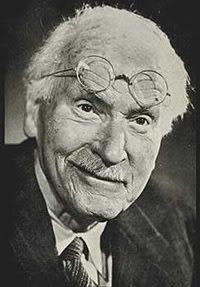
My leanings in academic pursuits, and my interest in mysticism inevitably led me to become acquainted with the ideas of Carl Jung. In the early 20th century, the world of psychoanalysis brought new dimensions to the understanding of fairy tales for the mainstream educated reading public. Freud and Jung -- especially Jung -- declared them to be phenomena arising from that "new" part of the mind they were telling the world about: the subconscious. (As an aside: the subconscious had been known and used as a tool for centuries by the esoteric schools. Buddhism understood it perfectly. Freud just gave it an acceptable "scientific" framework for working it into the Western paradigm.) This put fairy tales in close association with that other expression of the subconscious: dreams. As a matter of fact, Jung said that fairy tales were a product of the collective unconscious, which made them, more or less, the collective dreams of entire cultures, but in fairy tales the archetypes retain clearer, purer expression without the idiosyncratic complexes of individuals' dreams.

On the one hand, it is quite liberating to look at fairy tales as the workings of the human race's collective mind, since it moves beyond a materialist, empirical preoccupation with ethnic, geographical and linguistic origins (i.e. Someone, somewhere thought this story up, and it's been passed on across time and space ever since.) Jung says that fairy tales come from within us: they are an expression of a very deep part of our being.

But on the other hand, as interesting an exercise as Jungian analysis of fairy tales can be (identifying the roles played in them by such archetypes as "The Old Man" who always appears at difficult junctures in the hero's quest, or the talking animals who advise the hero), for an esoteric student, there is something dissatisfying about the fact that it remains psychology. What's this supposed to do for non-psychologists? True, one can use the Jungian system as a framework for aesthetic criticism (of literature, visual art, cinema, etc.), but the question still remains: what does this mean to my quest? It's fine to know what these stories "mean" in some abstract sense, but what are we supposed to do with that knowledge?

February 5, 2008

Evolving a Relationship to Fairy Tales (Part I)

(This is the first in a series of postings on various ways of looking at, and working with, fairy tales. Instalments will be published every two to three days.)

The material that makes up the following series of postings was originally written without any references to myself or to my own experiences, but after getting about half way through the project, it became apparent that the essay wasn't really jelling properly. I began to suspect that it needed the context of how my perspective has shifted over time in order to give it focus and direction. So, I went back through and inserted the personal aspect as delicately as possible, and only as much as needed. It's not that my perspective is so important, or any more important than anyone else's. It was just necessary to give the reader a pair of eyeballs to see this subject through. It was Hellibrarian's comment on my last posting about a fairy tale gave me the angle I was after by mentioning "the field of fairy tales as literature."

This story begins when, at the age of eighteen, I rediscovered a lovely cloth-covered hardback German-language edition of Grimm's Fairy Tales on a shelf in my parents' house. The beautiful beige volume with watercolor illustrations stirred memories of childhood, at which time I couldn't read German yet, but often leafed through it looking at the paintings. I began to read the rediscovered treasure, and noticed that there was a different pleasure in reading the tales as an adult than as a child. Part of my new perspective came from being a student of mysticism and the occult. There was a man twelve years my senior who played the role of spiritual mentor in my youth. He owned a vast library including " many a quaint and curious volume of forgotten lore", to which I had full access. From this perspective I saw the fairy tales as magic universes full of secret coded messages that could only be unlocked with the proper key. I analyzed the stories (as well as I could) pseudo-kabbalistically, and semi-Freudianly (We all know a little Freud, after all. It's in the food we eat.) But as charming as that all was, I knew there had to be more. There must be more one can get out of them.

A few years later I was studying German as an undergraduate. That's where I got exposed to fairy-tales-as-literature. To many people's minds, the phrase fairy-tales-as-literature seems to ennoble what are commonly thought of as "merely" children's' stories. After all, literature is part of what we regard as "high culture." The Grimm’s tales are associated with those towering figures of philological scholarship, the Brothers Grimm, who dedicated their lives to the documentation of the German language in the Deutsches Woerterbuch (The German Dictionary). The dictionary was a nationalistic project, meant to support the various efforts being made at that time to somehow weave the dozens of principalities from the defunct Holy Roman Empire back into some semblance of unity. The Grimms thought that could be achieved through cultivation of the common language.

Because the prime motivation for collecting these "German" fairy tales was actually a political/linguistic project, this left its stamp on how they were regarded in the 19th century. Indeed, the Grimms were not the only scholars collecting fairy tales and myths (i.e. folklore) in the German-speaking realm during that period. Dozens of collections were published by as many collectors. Much of the early scholarship and commentary on fairy tales retained this focus on fairy-tales-as-folklore. The commentaries dealt with geographical origins, and ethnic heritages. If there were similarities between tales collected in disparate locations, the question was how the oral tradition had travelled, and which cultures communicated with which others. Regarded as folklore, fairy tales were seen as “memes” passed from one generation to the next, like the best way to skin a deer, or the most efficient way to build a house.

Let me tell you an anecdote that sheds a little light on the limitations of fairy-tales-as-literature or folklore, that is, the academic approach. While a graduate student at UC Davis, I attended a seminar in German Romantic literature. Four of us met weekly in the professor's office. As we discussed fictional works of such writers as E.T.A. Hoffmann, Clemens Brentanno and Novalis, it became obvious to me that I saw things in some of these stories that the other students (or the professor, for that matter) didn't see, due to my background in esoteric literature. Most of the time I would keep this to myself, but at other times, when they were getting all wrapped up in (i.e. sidetracked by) some theoretical approach, I would reveal to them which legend or mystical doctrine was being referred to in a story that shed light on the author's intentions. On one occasion the conversation had taken some pretty absurd turns before I decided to inform them that the reference to mandrake root in one story had to do with the fact that European lore says the mandrake root has magical powers due to its being shaped like the human body. I further told them it was believed the root screams when it is pulled out of the ground, and it is fatal to hear this scream. For this reason they harvested it by tying a rope to it and getting some beast of burden to pull it out while the humans jammed their ears shut. After relating this information, there was a short silence. Then Brigitte, one of my fellow students squinted at me and asked, "Where the hell do you know these things from?"

My point is that scholars of Romantic literature often fail to understand that there's a dimension of that literature you can't understand unless you take the authors' obsessions with certain metaphysical ideas seriously, and not smile indulgently at their quaint superstitions. Novalis, for instance, made an intensive study of the works of Jakob Boehme. How can you grasp what's going on in Novalis's works without understanding his mystical view of the world? The same goes for fairy tales. The academic approach often leaves something to be desired. The mystical side of me was left dissatisfied.

The discipline of folklore studies has its uses, but fairy tales are much more than folklore. And as flattering a designation as "literature" is, fairy tales are also much more than that.

November 16, 2007

The Wanderer steps forth

The other night I was reading "The History of Tom Thumb" to my children out of Joseph Jacobs's English Fairy Tales (1890), which begins:

"In the days of the great Prince Arthur, there lived a mighty magician,called Merlin, the most learned and skilful enchanter the world has ever seen.

This famous magician, who could take any form he pleased, was travelling about as a poor beggar, and being very tired, he stopped at the cottage of a ploughman to rest himself, and asked for some food."


The moment I read those words, I was thunderstruck. The realization hit me: Merlin is Odin.

I almost wanted to stop reading just to let this, and its implications sink in, but I didn't, because there are few sins greater than to interrupt a child's fairy tale.

Now, I know I could probably find this notion in any number of dusty tomes by scholars of literature, mythology or folklore. But I don't recall ever having read this. No, I don't even feel like looking it up. In that one moment, the energy of the archetype reached through several levels of being and zapped me right where I sat among my pajama-clad children.

And from that moment forward, I will always be certain: Merlin is Odin.