Showing posts with label contemporary society. Show all posts

May 13, 2010

On this historic occasion...


Tomorrow is the first session of Hungary's new parliament. There's a lot of hope riding on the next prime minister's shoulders. He better not screw up.

On this occasion, I would like to offer up an essay-disguised-as-a-story that I wrote three years ago, called The Parliament-opening Speech You'll Never Hear a Prime Minister Give.

Enjoy!

March 29, 2010

The Big Lie

As I was just about to leave for work this morning, my wife pointed to the computer screen to show me the headline to a breaking news story: Suspected Suicide Bombers Hit Moscow Metro Stations.

Here we go again. I left for work, and haven't even read the news in the meantime. I know what to expect. Don't you? Oh come now! It's so predictable. All information will be controlled by the authorities, since they will seal off the stations and commit all officials to secrecy. The news media will parrot and paraphrase and rehash and over analyze the paltry tidbits of disinformation the Russian government spoon feeds them.

Public opinion will be manipulated by emotional interviews with eyewitnesses and friends and relatives of the victims.

The "investigation" will conclude that it was done by Chechen "terrorists". Or, if there is another Russian republic in need of suppressing, it will be Islamic terrorists from that republic, and the whole thing will justify the Russian government: 1. weeding out whatever democracy and freedom had managed to sprout in Russian society 2. sending troops to kick some provincial butts, and 3. increasing the military budget and military influence. Same old story.

Coincidence that this happens days after the US and Russia announce a new arms treaty? That gives the White House cover for not shouting too loud about whatever the Russian government does in response. Wouldn't want to spoil the treaty before it's signed, would we?

I used to scoff at the conspiracy theories concerning 911. Especially because some of the things people said were so absurd. One of the favorites among Hungarian anti-Semites was that no Jews showed up to work in the World Trade Center on the morning of September 11th, because they had been warned by Israeli contacts. Sure.

But then came the bombing of the London Metro. When I read that on the very morning of the bombing a consulting firm was conducting terrorist scenario exercises in the Metro, rehearsing incidents alarmingly similar to the ones that actually occurred, my suspicions were raised. And the more I read and learn, the suspicions just won't go away.

Don't believe what the news media tell you! Take it all with a huge grain of salt! Also consider that the majority of conspiracy theories are a bunch of bullshit. That doesn't mean that some of them aren't true.

I don't think 7 World Trade Center fell without a little well-planned help.

What does one do with these suspicions? How does one act in this context? That's a puzzle this pansophist philosopher is still working on.

Don't believe me! Think for yourself!


August 20, 2008

Bringing Mysticism to the Office

The following article will appear (in Hungarian) in A Rózsakeresztes Tükör (The Rosicrucian Mirror), the offical newsletter of the Rákóczy Pronaos, a subordinate body of The Rosicrucian Order AMORC.


Have you gotten very frustrated or angry with some situation or other at work recently? Do you have a colleague who really irritates you? Perhaps someone who has decided they are your enemy, and does dishonest or unethical things to sabotage your projects or your reputation? Do you feel you are stuck in a soul-killing job with no chance of moving on to something better? Do you sometimes feel you aren't smart enough, fast enough, young enough, or skilled enough to do your job properly? Are you afraid of losing your job? Do you have troubles communicating with people at work?

Have you thought of applying mystical principles to any of these problems? No? Why not?

Rosicrucianism is a mystical philosophy, but what has always distinguished this philosophy is its emphasis on the need to apply the mystical principles it teaches to everyday life. When the Rosicrucian student looks closely at the challenges his life presents him with, he can easily discover situations that can be positively influenced by employing methods he has learned from the Teachings. He can use breathing techniques to stay calm in times he knows will be stressful. Visualization can attract objects and/or circumstances he needs for his or someone else's evolution. Meditation can bring understanding to puzzles we must always solve to progress in life.

But somehow, it seems more natural to apply these things to our personal lives, to our family relationships, to our friends, and to our home. But where we work seems to be a different matter.

But it shouldn't be.

Part of this attitude is a result of the nature of work ever since the Industrial Revolution. There was a time when one's work was something one inherited from one's family. If your father was a farmer, then you were a farmer. If your father had a trade (blacksmith, shoemaker, carpenter, etc.) then you learned that trade. And work wasn't separated from life the way it is today. Children played at the edge of the fields their parents where cultivating, and when they were old enough, they worked alongside them. The trademan's shop would be part of the family house, and the mother and children would come and go all day long.

Nowadays, we often have the attitude that a job is something we do just for money. It isn't our land we are cultivating; it isn't our goods we are producing in the shop; it's not in our name we are rendering the service. We feel detached from our work. We feel it has little to do with our "real life". We feel it is unrelated to who we really are.

Nonetheless, we spend upward from 40 hours a week at work. We spend the majority of our energy on work five days a week, and we often spend more time with our colleagues than we do with our families. And the people we spend time with at work are "real" people. They are souls; sparks from the divine fire, just like ourselves. If we pay attention to them, we will realize that every day at work presents us opportunities to serve these various people, even the ones who are hostile to us. No. Especially the ones who are hostile to us!

Regarded in the right way, we realize that wherever we work we will find challenges that offer us the opportunity to grow as spiritual beings. If we approach work this way, it no longer seems a dreary, boring, tedious place where we feel the life draining from us every hour we spend there. The workplace is transformed, as is our relationship with everyone and everything there.

Techniques for transforming our work experience

One quick way to transform work is to start the workday with an invocation. It can be a very simple invocation (or prayer, if you prefer this word). All it has to do is serve to raise your consciousness and make you aware that the time spent at work is as much a part of your mystical quest as any other part of your life. Here's an example:

Work Invocation
God of my heart:
May the still, small voice within guide my actions as I work today.
May it point out every opportunity to learn new lessons from the situations I encounter.
May it show me every chance to serve that comes my way.
May it help me to engage myself in my work with interest and enthusiasm, and may it help me guard against laxity and apathy.
May I be inspired to do my work with dignity and honor.
So mote it be!

Saying your invocation at your desk, and then spending a minute or two in meditation will make a big difference to the way you vibrate within your work environment. Even if you don't have much privacy, you can still say it to yourself silently and close your eyes for a moment afterwards.

Another technique addresses the problem of being overwhelmed by events at work and not being able to stay focused on the most important tasks. The modern workplace is full of distractions: ringing phones, e-mail alerts, colleagues popping in the door at any moment. It can be difficult to stay on track and do the things we planned. Sometimes we can come to the realization at the end of the day that we haven't done any of the things we planned. We let ourselves get distracted.

In this case, it can be useful to use a little time when we are away from work to project our energy into the future. During a few moments on the weekend, or in the evening, when you are calm and clear-minded, go into your sanctum and picture yourself at work calmly and efficiently performing the tasks you have decided are important and need to be completed. Naturally, you should be specific, and imagine yourself doing only those tasks you want to focus on. Of course it is important to inject emotion into the visualization: feel the joy of accomplishing important work. If you do this a few times before you go to work, you will find that it becomes easier to stay focused on the tasks you visualized, and that the tasks are accomplished more easily. This is an important mystical technique: preparing for stressful situations while we are still calm and clear-minded.

Although our workplaces are filled with electronic communications devices, there is still a place for old-fashioned communication: no I don't mean face-to-face communication, I mean psychic communication. There are various reasons why people in professional situations might miscommunicate. They are distracted by their personal feelings for one another. They're distracted by the pressures of the office. One or more of the people in the conversation are blinded by their feelings of superiority or inferiority. The list could go on, but suffice it to say, there are many reasons why verbal communication isn't always as effective as one would like. For this reason, it is often good to send someone a psychic message before you talk to them. Using the methods taught by our order, you can telepathically tell them the essence of the message you wish to give them days or hours before you say it to them personally (or on the phone, or by e-mail). It is likely they won't consciously recall the psychic message, but when you speak to them, the message will already seem familiar to them, and they will be more likely to understand what you wish to say. And they will be more likely to be receptive to you message, especially if you visualized them as being receptive. And repeating a message psychically after you have spoken to someone helps to make the impression of what you said go deeper.

Visualization can also help smooth out conflict in the workplace. If disharmony arises between you and another person in the workplace, it can be very useful to spend time each day visualizing love, in the form of pink light, emanating from your heart, and surrounding, nurturing and protecting that person. Naturally, it can't only be a sterile visualization: in order for it to be effective, you really have to feel love for this person. That's the challenging part of the exercise. But the results can be miraculous.

Meditation can, naturally, be used as a tool for solving problems one encounters at work. Once you have worked on a problem with your conscious objective mind as far as you can go, send the problem, in the form of a simple question, into your subconscious, and wait for your inner self to suggest the solution to you.

As suggested in the invocation, it is important to see the workplace as a school, just like the rest of life. When difficult and puzzling situations arise, it can be rewarding to ask yourself what the lesson is that can be learned from it. The workplace is especially fertile ground for this, because we are forced by circumstances to deal with things we might isolate ourselves from in home life, and among friends and acquaintances. But at work, you can't avoid them. You just have to deal with them.

Work can be very draining and tiring. Remember the exercise that comes in the very first monograph that every member is mailed? It's a technique for reviving yourself with psychic energy when you are tired. Have you ever used it at work? Why not? And that's not the only technique in the monographs for increasing one's available energy. Perhaps it would be better to use one of these techniques the next time you are tempted to grab another cup of coffee.

The same goes for techniques we learn for staying calm under stress. The techniques are there. We can only blame ourselves if we don't use them.

Conclusion

The workplace is an excellent opportunity to use the techniques we acquire through AMORC's teachings. Applying the teachings counteracts the feelings of helplessness the modern workplace can often impose on employees, by letting us demonstrate that we can have a positive influence on events at work. Not only can they make professional life a bit easier and more successful for us, they also make us more effective members of the teams we belong to, and a source of health and harmony to the entire community we work in.

August 6, 2008

... while you're making other plans

Yup! That's when life is happening.

So there we were, on vacation with another family in an area of Hungary which is about as rural as you can get, and pretty much as far away from home as you can get. It had been a grand week away from the rat race, with a family our family dearly enjoys spending time with. A week filled with common meals, cooked together and served at a long table under a shelter with a terra cotta roof. A week of afternoon coffee in comfortable chairs under tall shade trees, reading, talking and watching the children erect huge sand castles in the oversized sand box. A week of going out after the children were in bed and lying on a bench to watch the stars (which you just can't do in Budapest).

It was Saturday night. We were partially packed, and the plan was to leave late the next morning. I'd taken Monday off, so I'd even have a day to get my head ready for the working grind that was to resume on Tuesday.

That was the plan, anyway.

Szilvi got me out of bed before midnight to inform me that she was bleeding. Very lightly, but there was some blood, nonetheless. And she'd been getting contractions that were too frequent, and too intense. The baby isn't due until the middle of September.

Thank God for mobile (cellular to you Yanks) phones! Szilvi called the doctor who has attended all the home births of all our children. She said we needed to get to a hospital so they could give Szilvi a steroid shot that ripens the fetus's lungs in case there's a premature birth.

Great! The last place I want anyone I love is in a Hungarian hospital. It's not just that they are severely underfunded and underequipped. That could be dealt with. But the truth is that Hungary's health-care system is one of the last bastions of totalitarian mentality. Please leave your civil liberties and your individuality at the door. You have just become an object. You have no input into the decisions being made regarding you, and you have no right to information beyond what they want you to know. Democracy never made it into these walls.

But, OK, we had to do it.

The ordeal at the hospital was tolerable. An ultrasound revealed a tiny tear in the placenta, but no continued bleeding. Szilvi got the steroid shot, and an anti-spasmodic shot to stop all contractions. Szilvi was placed on 24-hour observation, and was put on a drip IV against the contractions. I had to go back to the vacation house alone. I had to be there when our two-year-old son woke up.

The next day I quickly took a few bags full of supplies to Szilvi (remember I said the hospitals are underfunded?) and was informed that if by midnight (i.e. 24 hours after being checked in) there was no evidence of bleeding or contractions Szilvi might be released. But then again, she might not be. Blood tests showed she's anemic (which we knew; she's always been anemic), and that might be reason to keep her. Whatever. The doctors were being cagey.

Should we stay another night at the vacation house? Should we go ahead and go home and come back for Szilvi when she's released? I kept wandering around the house and half-heartedly packing (packing for a family of six is serious business!) and not figuring out what to do. Finally it hit me that I could take the children back to Budapest and leave them in Szentendre with their grandmother. A call to grandma (Did I say Thank God for cell phones?) confirmed that I could do that. Packing began in earnest. I made it clear to my older sons that my being without their mother made it imperative that they take responsibility and help me. To my delight, they responded; especially Alex, the older one. He really took responsibility for his youngest brother.

We left after dark, and formed a two-car caravan with the other family. I made sure my sons had the phone numbers of the parents in the other car, and vice-versa. Alex was very proud to be my copilot; handing out food and drinks, looking for road signs, fielding phone calls from the other car.

We arrived in Budapest real late. At grandma's I bedded down with my two-year old. He was confused. That morning his mother had disappeared without a trace or without an explanation. Then we left the vacation house without her, and then we went to grandma's. Poor kid's head was spinning. The next morning, he rolled over, put his hand in the hair at the back of my head (which he often does with his mother) and softly uttered the one word: "Mommy." My heart melted. This kid needed his mother.

Szilvi was released the next day, and the father of the family we vacationed with drove me down to pick her up (he has a bigger, more comfortable car).

On the way home (have I mentioned Thank God for cell phones?) I called my office and arranged to take the rest of this week off. Szilvi's doctor told her to spend a few days in bed, after which she would be severely limited in what kind of physical activity she could engage in. The usual cooking and housework were out of the question. So I'm doing the housework, and Szilvi's mother will be coming over every day once I start working again next week.

Life truly is what's happening while you're making other plans.

July 30, 2008

You Call THAT Summer Reading?

Although four days ago I escaped the urban circus of Budapest for the idyllic peace of a farm house in southeastern Hungary, far, far from TV cables and internet connections and subway trains and all the other features of my harried life (which I love, but gets a bit much after a while), through the miracles of online technology this posting is being published on my appointed publishing day, thereby keeping my promise to grace the world with another dose of my prose every Wednesday. (Note to self: I should suggest to Google that they develop an application called iStiff, which sends an indistinguishable virtual image of a nine-to-five employee to the office through the internet every weekday morning, while the real employee stays home and putters around the house, blogs, meets friends at cafes, etc. Sounds like the Next Big Thing, huh?)

As this digital missive is being released into cyberspace, its flesh-and-blood author will have already spent days breathing fresh air, taking walks in the woods, watching his kids play with farm animals, cooking meals for ten (we'll be there with another family with children), watching the stars in a clear sky free of city lights, and... READING!

Now, being a corporate editor, reading on vacation is a bit like a busman's holiday, but as any professional reader (or college student) will tell you, there's a world of difference between reading what you have to, and reading what you want to.

Admittedly, being on vacation with that many children doesn't really allow for that much reading time, which is why I have to make every minute of it count. So... no mental-chewing-gum potboilers for me. Why waste that quality time away from the frenetic life, while my blood pressure is down and my brain waves smoothed out to gentle curves? No, I'm going to bring along two books that are definitely not what most folks would consider light beach reading.

The first is a novel. I don't read many novels anymore. First of all, I don't have time for them. I recall when I was younger, being very disdainful of people who say they don't have time to read. But, now I'm in that position. A full-time job, four kids and a commitment to spiritual exercises doesn't leave much time for other things. And the truth is, I do read. But shorter stuff I can squeeze in while commuting or eating lunch: articles on subjects I'm interested in, short stories (especially from my favorite speculative fiction site Strange Horizons). I read chapters from e-books on subjects I'm researching. But novels, no. You have to have long stretches of time to read novels. Reading a three-hundred page novel at a rate of four pages a day is very frustrating.

So, there's this six-hundred-page book I started,...uh,... a year ago on a bus ride to a company outing. I got one or two chapters read on the bus. Then I struggled for a few weeks at three or four pages a day and gave up. Around Christmas I took the time to plow through half of the book, and gave up when vacation was over. At this point I still have 170 pages of Gustav Meyrink's The Angel of the Western Window left.

Many of you will know the name Meyrink as the author of The Golem, but far fewer people know that Meyrink was actually an initiate of the western esoteric tradition, and that he wrote a number of esoterically significant novels. The plot of Angel takes place in two different time periods. One is the lifetime of Dr John Dee (1527-1608), and the other is the lifetime of the first-person narrator, a bachelor gentleman in Vienna in the early twentieth century. We slip into John Dee's time whenever the narrator reads Dee's diaries. I won't spoil the story for you (because you really should read it), but suffice it to say that the interaction between these two times and personalities becomes very bizarre and intricate.

Dr Dee was the Renaissance man's Renaissance man. There's hardly an art or science this man didn't dabble in, if not excel at or pioneer, including magic. And this novel is very much about the magical side of Dee. And the sweep of the novel is incredible: England and Wales, Emperor Rudolf's Prague (including Rudolf himself), Vienna, and more.

I've really worked myself up! I can't wait to get back to it.

The other book I'm taking along is a very thin, but very dense volume by Dr John Dee himself: The Hieroglyphic Monad. I've been wanting to delve into this book for some time now, but just haven't felt the time was right. This is the type of book Georg Kuhlewind would designate a "contemplative book". That means that, unlike a light novel, or an instruction book, or a magazine article, it is meant to be absorbed a few sentences at a time. The prime example of such a book, according to Kuhlewind, is the Gospel of John. One should, he says, read a sentence or two, and then deeply meditate on them to see what they evoke from deeper levels of consciousness. I'm certain this is how the Monad is meant to be read. It is divided up into 24 short theorems, each short enough to read in a few minutes. So, in the afternoons, after lunch has been served and the children are playing in the yard, or in the barn, I plan to drag a comfortable lawn chair out under a tree in the yard, sample a theorem, and then slowly sip my tea and contemplate.

Slowly. Patiently.

July 24, 2008

Stream of Consciousness on the Yugoslav Wars

At the end of my last posting, I wrote a short laundry list of dramatic ideological shifts: times that looked very different when those who lived through them looked back on them. The impetus for this exploration was the way the ideological purge of post-war Japan is portrayed in Ishiguro's An Artist of the Floating World.

Before I move on to the topics I planned to explore, I'd like to reflect on the Surprise that came in yesterday's news: that they'd finally arrested Radovan Karadzic. Talk about your anticlimaxes! How does this relate to my theme? Well, in an odd sort of way. Serbia is a country that hasn't really undergone the post-defeat purge. And so you have a small part of the population that feels repentant about what happened there in the 1990's, and a large part of the population that still feels defiant and justified for its ultranationalist atrocities.

This posting is going to be a bit "stream of consciousness" because I find that the recent news is dredging up lots of memories and sentiments, and I'm not sure what conclusions to draw from them yet, but I'd like to relate my second-hand relationship to the wars Serbia waged. You may recall that last week I wrote "As in another well-known Ishiguro novel - The Remains of the Day - the story of an intense era with reverberations well into our own time is not told on the grand scale of historic figures and events, but on the level of less prominent people and their personal lives. One gets the sense that the grand historical and political life of the world is made up of the sum of millions of personal lives." Indeed, these wars had their effects on my little life. And now that the war-criminal architects of those conflicts are finally being brought to justice, I find myself reflecting on how my life felt the echoes from their deeds, distantly, but distinctly.

I was planning, in the summer of 1991, to move to Europe for a while. I religiously read Die Zeit, every week in an effort to brush up my German, and to tune into the European news and media. German media was very keen on reporting the developments in the incipient Croatian War of Independence. Germany had, after all, made the controversial move of being the first country to recognize the newly declared Republic of Croatia. I recall sitting in a greasy-spoon diner in Knights Landing, California reading an article by a Croatian woman who described how unprepared she was when the war began. She called her mother and asked her what kind of supplies to buy, and drawing on her experience from the second world war her mother rattled off the list "oil, flour, salt, candles, potatoes, bacon, sausages, pasta, rice, tea, coffee, soap." I will say more about this article in a minute.

Part of my complicated motives for coming to Hungary sixteen years ago was to try my hand at making a living as a writer. I even imagined that once I'd established a base in Budapest, I might slip down to Croatia and do some reporting. It all seemed so interesting and "real" when I read about it in Die Zeit. It was the sort of stuff that would inspire a budding Hemmingway. But once I got comfortable here, I (sanely!) decided I wasn't meant to meddle in that world, especially when I heard the tales of the people who did venture down there to report about it.

I recall the young freelancer (who incidentally shares my not-all-that-common surname) who stayed in my apartment twice between jaunts down to Croatia. One evening he sat in my living room telling me how two nights before he'd spent in the cellar with a Croatian family while they endured the nightly shelling by the Serbian Army. No, I thought, not my cup of tea.

When I was working at the Budapest Sun, there was a freelancer named Julius Strauss who regularly did stints in the Balkans to report for the Telegraph. One evening at the watering hole around the corner from the Sun offices, Julius told us about driving up a Bosnian hillside toward the war front in a rented Jeep full of reporters, and being informed by the Bosnian Serb Army that their presence wasn't appreciated by raining shells around them. I was quite certain that was not an experience I needed in my life.

I was the book reviewer at the Budapest Sun, and one day a local English-language bookstore sent me a book called Balkan Express by a Croatian journalist named Slavenka Drakulic. Among the essays in that book I found the one I'd read in the rural California diner two years before in Die Zeit. I liked the book so much that I pestered some publishers to send me more of her books. I gave a glowing review to a darkly passionate novel of hers entitled Marble Skin. Not long after that I met her at a book festival in Budapest. I brought along copies of her books to sign. When I told her who I was, she gave me a big kiss. Her publisher had sent her a copy of my review, and she said it was one of the most flattering things she'd ever read about her writing (which is pretty amazing, considering some of the gushing reviews of her work I've read).

The apartment I rented in those days looked out over the Danube river toward Margaret Island (a locale I couldn't even dream of affording nowadays). Over time it occurred to me that the flags on the ships that passed by were always from countries north of Hungary. Due to the war, the river was unnavigable because of sunken boats and bombed bridges, for years. No boats from Serbia, Romania, Bulgaria. Perhaps a little thing to me. But once I noticed it, I thought about it every day when I watched the boats pass by my balcony window.

There was a photographer who briefly worked for the Budapest Sun in the early nineties who had fled from Vojvodina, the ethnic Hungarian region of northern Serbia. One day we were talking in a cafe. He reached over to get something out of his camera bag. I briefly caught sight of a nine millimeter automatic among his cameras. That's the only time in my sixteen years in Hungary I've seen a firearm anywhere besides on a policeman's belt. Though a dear man in most ways, he was paranoid and uptight. I could feel the war craziness in him.

My wife had a Serbian office mate at the advertising firm she worked at many years ago. She invited us to come over for a few drinks with her and her husband. Things were going quite smoothly until the subject of Kosovo came up. They had been living in Belgrade during that war. Addressing me as the only American in the room, his eyes suddenly got wild, and he shouted, "Why on earth did you have to bomb us?" I tried to politely say a few things about atrocities, but I could tell he hadn't been convinced yet that that wasn't all just Nato propaganda. "But why did you have to bomb us?"

It's hard to describe what it was like to live in a country at peace and in relative prosperity, knowing that barbarous butchery and cruel terror were transpiring less than a day's drive away. I think Hungarians tried to forget what was happening in the country next door. But there were always reminders.

There was an odd incident one Saturday morning in the early nineties. I was awoken in the first hour of daylight by the sound of an explosion. Turns out it had been many miles away at the St Matthias Church on Castle Hill. People got a bit nervous when news reports said the bomb site had been marked with Serbian nationalist symbols. But people realized soon that a) Serbia had enough on its hands without involving Hungary, and b) Hungary was quickly falling within the sphere of influence of the EU and Nato. Serbia wouldn't dare.

And so, you see, despite the fact that I didn't experience that war first hand, and that I have yet to go to the former Yugoslavia, my life was affected in many ways.

As I said before, the grand historical and political life of the world is made up of the sum of millions of personal lives

July 16, 2008

Reflections on Ishiguro's "Floating World"

It is a perennial puzzle of mankind: how do we judge the acts of individuals and societies once the times have changed? Certain ways of thinking and patterns of accepted behavior predominate for years, for decades, even several generations, but inevitably comes the sea change. Live long enough and you see it happen. Kennedy is shot and the world goes into mourning. Iranian militants take American diplomats hostage, and the world goes paranoid. The Berlin Wall falls, and the Cold War is over. In retrospect you look back and realize that things were no longer the same afterwards. And you also realize that what you think, what you believe, and what you feel is no longer the same.

I just recently read Kazuo Ishiguro's novel An Artist of the Floating World, which deals with just such a situation. The first person narrator, a painter who was an influential pro-imperialist propagandist, tells the story of his life in the first few years after Japan's surrender to the allied armies. Here is a society that is coming to terms with what it thought, felt and believed only a few years prior, and how it must accommodate a new reality as an occupied land. It is a society going through an inevitable post-defeat process: the purge.

Purging is the act of ridding a system of undesirable elements or properties. The victor does not want to be confronted with the need to fight this enemy again. But any reflection on history will yield the conclusion that purging is a tricky thing to carry out. And it might even be argued that it can never be carried out justly, or that it doesn't actually work.

The Romans didn't fool around when they purged. When they were forced to defeat the pesky Carthagians a second time - actually having to fight them on their home soil, and nearly being defeated at one point - they killed the men, made the women and children slaves, took their capital city apart (not one stone standing on another) and sowed their fields with salt. Let that be a lesson to everyone. Don't mess with the Romans! International law frowns on such behavior nowadays. They call that genocide now. People get dragged into international court for that sort of thing.

The Counter-Reformation (and the ever-popular Inquisition) was a purge. There's another example of methods that don't quite meet public approval anymore. And, well, it didn't really work, did it? Protestantism just kept spreading anyway.

The treaties of Versailles and Trianon are another example of a purging. The idea was to make the enemy too resource poor to be a threat anymore. Well, we know how that worked out, right?

Ethnic Cleansing (a term brought to prominence by the Balkan Wars) is another type of purge. Nato finally stepped in an put a stop to that.

In Ishiguro's book, the narrator's friends and former students must deal with the Japanese world's equivalent of denazification. Through his eyes, one can see how ambiguous it all seems. One does what one feels is one's duty, and devotes one's energy and talent to a cause, then one day the tables turn, and what you and your society used to regard as a virtuous activity is now considered a crime. Although the narrator is retired and financially set, his former students and colleagues are finding it either difficult or impossible to get work in a world where everyone's political background is being screened before they can be employed in positions with any authority.

As in another well-known Ishiguro novel - The Remains of the Day - the story of an intense era with reverberations well into our own time is not told on the grand scale of historic figures and events, but on the level of less prominent people and their personal lives. One gets the sense that the grand historical and political life of the world is made up of the sum of millions of personal lives. In the same sense, each of us has to deal with the big questions and the big political realities of our day as they manifest in our own lives and in our individual choices and decisions. But what we don't always consider is how the way we choose to live our lives is our own accommodation to the predominant ideas and ideologies of our times. And we certainly don't consider that we will regard our own actions differently once the tide turns.

In the next few postings I will explore these themes further, using Ishiguro's book and particular dramatic societal shifts to find some philosophical truth underlying the phenomenon of being a human being in a constantly shifting ideological environment, with the concomitant changes in values that brings.

Some of the big shifts I want to look at:

  • The sixties and aftermath
  • The purges of the Bush II years
  • Post-Nazi Europe
  • Post-Communist Germany vs Post-Communist Hungary
  • What will happen once Bush II is gone?

Am I getting ambitious enough?

May 1, 2008

The Two Gates

Szilvi and I have recently gone through a life-changing experience. I wrote the following essay in order to explain it as clearly as I could to my family.

Your mind turns its attention, at some point in your life, away from the portal through which souls enter this world and becomes increasingly aware of that other portal through which souls depart again. I'm not talking about the moment you first truly realize your mortality sometime in your twenties, when you understand that this life won't last forever, and that you will have to make some choices that narrow your possibilities for the rest of this life. No, I'm talking about the point at which you cannot deny that your years in this body have reached well beyond half of the statistical average lifespan for your gender, social stratum, and geographical location. It's just a fact: you are closer to the exit, than you are to the entrance. It doesn't mean you need to fret or panic, but it does mean that if you are wise, you should slowly begin to prepare for it.

This has nothing to do with being morbid, or having a death obsession. As a matter of fact, due to my adherence to a Rosicrucian philosophy, I avoid using the words death, and dying, because they tie you to a limited, materialistic conception of human experience. The truth is, we never die, only these bodies we inhabit while in this world. I may have misgivings about the physical pain involved, and I may have some fears about what it's like to get old and weak and forgetful, but I don't really fear death itself. I know I existed before this life, and I'm certain I'll continue to exist after this particular incarnation. That's not really an issue.

But there is the matter of gracefully living out the rest of this life. I've always been what they call a "late bloomer"; slower to mature than my peers.

So I find it hard to understand why I, at this stage of my life, am still intimately involved with the gate that lets souls in. This was the question raised inside me when, not more than a few weeks ago, we determined that Szilvi was pregnant. As usual, it caught us by surprise. I'm not going to go into the gritty details, but it's not as if we don't use contraception. We always have. Nonetheless, none of our children were planned; none of the four of them, and soon to be five (six, counting my child from my first marriage). Their conceptions have always beat the odds, which if calculated, were always several thousand-to-one. These souls really wanted to be born into this family, into this time, into this milieu. If you accept the idea of reincarnation, it follows that souls choose the time, place and circumstances of their birth. These children chose us. The corollary is that we, unconsciously wanted all these children. I love every last one of them with all my heart. I can't imagine what my life would be like without any one of them.

But the news was overwhelming. When we discovered that we would be having a third child (Abigail) and a fourth (Timothy), I somehow managed to get over the shock rather quickly and adopt a positive, accepting attitude to the new situation. But this time I felt overwhelmed. No! It can't be! We can't have a fifth child! Out of the question! It didn't take much discussion after the line turned blue on the home pregnancy test. There's no place in our lives for a fifth child. We would just have to abort it.

A grey gloom subtly and immediately engulfed Szilvi's and my lives. We tried (or at least I tried) to be cheerful and matter-of-fact about the situation. Szilvi accepted the reasoning I had stated that first evening. It goes like this:

It's one thing to be an irresponsible young person who thinks abortion is just an unpleasant way to fix the consequences of your reckless behavior, but it is quite another for a responsible married couple who are already bearing more than their share of society's burden by conscientiously raising several young children as well as they can. We are nothing if not responsible parents. We should not feel we have to justify ourselves. That was the reasoning I was going by.

Despite the fact that my job provides my family with wonderful medical insurance, naturally such a procedure isn't covered, so Szilvi began the laborious process of dealing with the state health-care bureaucracy. First she had to go to a doctor to confirm she was pregnant, which had to be verified with an ultrasound. The radiologist, unaware of our intentions, cheerfully announced she saw a nice healthy baby. Great. With those papers in handSzilvi had to go a counselling agency, which -- once they heard we had four children -- didn't do the hard-sell to try to make her change her mind. There was a three-day waiting period, after which you can go back and get a "permit" to schedule the procedure at a hospital. WhenSzilvi got the papers, the soonest she could get an appointment at the hospital was eight days after that. It would be a Friday. It would be an ambulatory procedure: go in in the morning, come home in the evening.

All this time, it played on our minds. It was agony waiting.

And now we had a week and a half to wait. How do you just go on living your life with an event like that pending?

At one point, I took a day off from work to go with Szilvi and Abigail to the Obuda Waldorf Kindergarten for the annual Mardi Gras party. Szilvi was helping out with food and decorating, and she couldn't do that while she was taking care of Timothy. In Hungary, Waldorf families tend to be bigger than average. I'm not sure why that is, perhaps it has to do with the fact that they tend to be above the median income level. There are several families in our children's classes with four or more children. So as I made small talk and ate at the party, I kept watching the kids, and the parents, and I found myself entertaining the thought: what's the difference between four and five children? Can it be that much harder? They say the big jump is between two and three. We could do it, couldn't we? Of course, I didn't share any of these thoughts withSzilvi.

When we got home, Szilvi and I got into an argument. I accused her of making me feel guilty by making long faces and moping around the house. It came out in the conversation that she thought we'd made our decision too hastily. She thought we should at least talk about it and consider all the possibilities. I didn't want to consider! I'd decided. I was pissed off. We discussed the rightness/wrongness of abortion. I said I didn't have the same scruples that Christians do, since I was convinced of the truth of certain mystical doctrines that say the soul does not inhabit the body until the body takes its first breath. Until then, it's the power of the mother's soul that animates the body.Szilvi was not so convinced of that.

At some point in the conversation Szilvi mentioned a dream she'd had before she knew she was pregnant. In the dream Abigail had been saved from drowning, and when an ambulance arrived, they wanted to take her away for observation, butSzilvi vehemently resisted them taking Abigail away from her. Szilvi felt/suspected this dream had been a warning not to let "them" take away her daughter; her unborn daughter. After we'd both calmed down I proposed that we use our inner resources to help us get clarity. We would incubate dreams to address our problem, and see what they told us. We gave ourselves five days to make the "final" decision.

The dreams obviously addressed our question, but the answers were riddles. We did dreamwork together several times that week, and came to the conclusion (well, I guess I came to the conclusion) that there was nothing in the dreams screaming out not to go through with this. At this point we still had several days to go before the Friday morning appointment. The mood got darker, despite my efforts to take it matter-of-factly. I began spending lots of time during the day staring out my window at the office, and often closed my eyes in silent prayer, asking The Master Within to bring me peace and balance.Szilvi got more silent and brooding with each day. The fact that we weren't telling the children what was going on made things even worse. How do you explain something like this to a child? Especially your own children! You can just imagine them having nightmares about what would have happened had you decided to abort them. No. We weren't telling the children.

For the day of the procedure, I arranged to to take vacation time so I could take Abigail to and from kindergarten and spend the day with Timothy. I don't even recall what we were going to tell the children. Something vague about having to see the doctor. I took the Thursday off as well, to be emotionally supportive ofSzilvi.

I have to explain that in Hungary there is a particular means of paying money that goes into public funds. It's called a cheque, but it doesn't work like a check in Western countries. You pay it in the post office, and you get a stub that shows you've paid that amount to a certain beneficiary. With this, you can prove to an authority that you've paid. This was how the fee for the procedure had to be paid, which meant someone had to pay the fee at the post office at least the day before, which meant Thursday, soSzilvi could present the stub on Friday.

Thursday was a black day, no matter how cheerful I tried to be. Szilvi was listless. I told her she had to maintain her routines if she didn't want to go crazy. She did, reluctantly. Finally, it came time for me to take a walk to the post office. I was getting ready to leave whenSzilvi made the remark, "Could you arrange for a small tornado to rip that cheque out of your hands, and take it off to Utah." I was stunned. What did that remark mean? I thought we'd made up our minds. Well,Szilvi said, she still wasn't quite sure. She knew I was sure. I started getting really agitated. I guess I was even beginning to yell. What the hell kind of thing was that to say just as I'm going out the door! You don't decide one thing and feel inside you should do something else! Get it together! What are we doing here? I thought we had this decided days ago!

And then I yelled: Go get your dream journal! Let's get this matter clear! She looked at me incredulously. What good would that do, she asked. We've been over it all already, haven't we?

"Go get your dream journal! I'm not going to do something just because we're drifting into it. I want to be sure."

So we went over the dreams, hers and mine, one by one. I was pacing up and down the kitchen floor like a cat in a zoo cage, talking my thoughts out loud, going over every image, event and configuration in those dreams; drawing associations, speculating on the messages. Somehow, I saw those dreams differently in that moment than I'd seen them all along. I was becoming convinced the message was: we were capable of raising another child.

I confessed to Szilvi what had been going through my head all those days I'd stared out the window of my office. It had to do with faith. Faith in myself. Faith in providence. Faith in the powers I claim to know all human beings possess. When we found out thatSzilvi was pregnant with Timothy, it took a huge leap of faith to go through with it. But we did. We moved heaven and earth to find the resources and make the arrangements to get a bigger apartment suitable for our family. But we did it. It wasn't easy, but through the power of visualization, creative effort, and shear will power, we moved into a new apartment weeks before Timothy was born. BothSzilvi and I were somewhat amazed at what we were capable of doing when we had to do it.

And now we had learned there was another baby coming.

As we went over the dreams, there were a few that disturbed me. One in particular seemed to have a message for me. In this dream,Szilvi and I are visiting a museum that's been made out of the home of an Israeli man killed in a suicide bombing. The house has been preserved the way it was when he was alive. The upstairs of the house was reminiscent of the attic study I had during my last year as an undergraduate. There were all kinds of projects lying around, and things he collected: evidence of an intellectually active and curious human being. There was a low bed on the floor (as there had been in my study) consisting of a just a mattress or perhaps box springs as well, but certainly no frame. On the bed was a strange wooden tray, about the length of my torso, roughly carved by hand. It was like a giant trencher or meat serving dish. I knew this was there because the man had suffered from a bad back. There was a blanket on the bed, carelessly tossed aside, making it look like someone had just been taking a nap. I decided to try the tray out, and lay down on it. I could tell that it must have been comfortable for the man, but it was just too small and confining for me.

It struck me that this man was my former self: a man with the time and leisure for numerous intellectual pursuits. And he had a bad back. He didn't have a strong enough spine! And now, the comfortable way he compensated for his weak spine was too small and confining for me!

This and other dreams convinced me that I'd been trying to dodge my responsibility. I had no excuse thinking I didn't have the power to handle the situation.

I got the cheque, and held it in my hand. I told Szilvi that I'd never accuse her of saddling me with too many children if she promised never to complain that they were too much of a burden. She readily agreed. I took a dinner plate off the shelf, and a box of matches.

"Are you certain this is what you want to do?"

Szilvi, looking at me in wide-eyed disbelief, nodded. I struck a match and touched the flame to the corner of the thick paper of the cheque, and the dry material caught quickly. Very soon, it was a tiny black object on the plate.

I knew we'd done the right thing, because for the first time in weeks, Szilvi and I were happy that afternoon. We smiled and laughed, and started talking about having a baby. God knows we'd been through this often enough already. We have lots of practice. I recall that when Timothy was born, the very next daySzilvi and I were in the familiar routine of feeding, changing, naps, and carrying him around. It becomes second nature. And as for the material and financial matters involved in having one more child; we just have to believe in our power to make our way in the world.

Indeed, I am closer to the door from which souls leave this world than to the one where they enter, but that's no reason for me not to look back and watch as the miracle of birth continues to happen, as it always has, and always will.

April 24, 2008

The V-word

I never told anyone about this until I confessed it to Szilvi last week.

I've always disliked the word "vegan". Dislike is too mild: I detest it, revile it, can barely get myself to form it on my lips.

This is going to take a lot of explaining. Where should I start?

What’s forced the issue is that our youngest child, Timothy, developed eczema. It was just sort of rash-y, and vaguely reddish and irritated for months, but something kicked it into overdrive a few weeks back and he started getting these angry, dry red patches on his arms and legs. And he’d scratch himself to bleeding when his clothes were off. Doctor’s recommendation: stop feeding him dairy products (and nuts and several other things, while we’re at it). Since he’s not even two yet, and we eat our meals as a family, that meant that we ALL were going to stop eating dairy products, since Timothy would throw a shit fit if he saw someone eating yoghurt or putting sour cream on their food when he can’t have any.

Now, our family is already vegetarian to begin with (another V-word). This is a step in a more severe direction.

Szilvi and I have been vegetarians for twelve years, and I still haven’t warmed up to that word. I’m never comfortable with telling someone, "I’m a vegetarian." How ridiculous to define someone by what they don’t eat. I don’t eat meat. Does that make me “something”? Is there a word for people who don’t drink tomato juice? How about a word for people who don’t sleep late on weekends? (OK, they're called parents.)

The vegetarian thing was slow in developing. Back in the 80s, when I lived in northern California, I developed some digestion problems. Severe digestion problems. I began thinking I should write a will. That was when, under the guidance of my herbalist/acupuncturist, I began conscientiously deciding what to eat, instead of just stuffing my face with whatever came to hand. I began eating more brown rice, and more raw and steamed vegetables. Among the things I began eating less of was meat. I didn’t stop eating meat, or really consider it, because my favorite cuisine was Chinese. And the Chinese do love their pork. So I wasn’t eating slabs of beef steak, just slivers of pork to go with the asparagus in Cheng Tu sauce (for instance). All-in-all, my meat consumption fell drastically.

Fast forward to being a young married couple in Hungary. Szilvi was never a real meat lover, so she and I didn’t eat much meat to begin with, and she even encouraged me to try making my favorite Chinese dishes without the meat. But when we went to visit relatives – even the ones who knew we tried to eat a light diet – they would put heaps of meat on the table, and we’d feel obliged to eat it. And then I’d feel sick afterwards. I’d complain to Szilvi. One day she informed me that the solution to this problem was simple. “We just tell everyone we’re vegetarians!”

Wow! That sounded drastic. But I saw her point: it really was the only solution. And, well, it wasn’t hard at all. I can honestly say that I haven’t missed eating meat at all. Now, you should observe that we didn’t stop eating meat on moral grounds. It was actually a choice based on health concerns. Granted, after you live for years without eating flesh you do look at meat very differently, and do begin to see the taking of life for the sake of pleasure to be, well, wasteful and selfish. But that’s not how it started with us.

Oddly, I actually even experimented with cutting dairy foods out of my diet when I was in my twenties as a way to cut calories. And that was before I became a veg-… veg-… you, know, one of those people who don’t eat meat. I’ve actually even thought of going that route for years, but it just seemed too difficult in a family with four children.

So back to our immediate situation. If you’re already a lacto-ovo vegetarian (another really silly term pigeon-holing people by what they do/don’t eat), and you stop eating dairy products and eggs, well that makes you a… a… Oh my God! I just can’t say it!

On her blog, Szilvi remarked that she was surprised (shocked! alarmed! is more like it) to hear me say that when, after a few months, we begin reintroducing some of the sensitizing foods into Timothy’s (and the family’s) diet, I might like to – in her words – “stay on a vegan diet.”

Egad! She said it! About me! Somebody called me a vegan! OH NO! I’ve become one of THEM!

OK. Let’s talk about why I hate this word.

Where did this word come from anyway? It first started becoming commonly used in the mid nineties, and usually in reports about the animal rights movement. There’s something weird about how its spelling and pronunciation defy all rules of English orthography and phonics. Why the long e (veeegun) and not a short e as in all other words that come from the same Latin root. Why a hard g and not a soft g. It’s a downright dumb sounding word. It makes me feel illiterate to say it. This incongruence with authentic English words gives it the stink of a neologism, and a clumsy one at that. And the kind of neologism that makes my skin crawl at the suspicion it was coined by someone with little reverence for the English language and a big fat agenda. When I went to search for an etymology, my suspicions were confirmed. It is, indeed a coined word. Somebody foisted this monster on us.

And now by simply choosing not to eat dairy products, this foul locution has been used in connection with my name. Theo the vegan. That stings.

Earlier I mentioned how the v-word made it's way into common usage with the rise of the animal rights movement. Whether or not one sympathizes with their aims (for the most part I do, especially when it comes to their stance on laboratory animals), or with some of their tactics (letting domesticated animals free is actually pretty stupid), I can't help recalling being seriously repelled by self-righteous twenty-somethings being interviewed at animal rights demonstrations declaring their superiority over the rest of humanity because they were (gulp, here goes!) vegans. What put me off was their revolutionary fervor that showed not one bit of sympathy for the fact that our society has century-old customs and practices that make meat eating an integral part of the culture. It takes serious introspection and afterwards personal strength (to withstand the constant, if most of the time subtle, criticism one has to endure) in order to make the decision to change one's diet that drastically. You can't just bully people into understanding the politics and ethics of our eating habits. It takes time to understand it. You can't expect people to accept such big changes overnight.

And, again, my choice isn't really political. It's a practical choice regarding my health. I have lots of children I want to see grow up. I have lots of things I still want to get done in this life. I just can't afford to get sick and feeble. That's the main reason why I made these choices.

There are spiritual reasons, too. But I take that up in a later posting.

I guess I better get used to the fact that, like it or not, the way I eat now fits the definition of ... of... (just say it!) vegan. I'll just have to get used to it.

March 12, 2008

Developing a relationship to fairy tales - closing remarks (part 2)


(To interpret, or not to interpret?)

Why is it important that these stories are a mixed bag, and don't neatly fit the categories scholarship has created for them? Because seen in this way, one can appreciate that all of the approaches I've mentioned so far in this essay, as well as many others I haven't mentioned, are legitimate in their own rite.

But precisely because there are many different kinds of narratives lumped together under the rubric of "fairy tales," one has to be careful which methods one applies to which fairy tales.

Again, there's an apt comparison to dreams and dreamwork. When working with a dream, it is essential that the dreamer feels deeply within his intuition to determine what kind of dream is in question (I credit Robert Moss and his book Conscious Dreaming for making this clear to me).

Let's say that you dream your uncle Charlie comes to you and tells you that your boss has a sharp sword in his office and he plans to cut off your head the next time you go there. In order to begin working with this dream, the dreamer has to decide whether it is a) transpersonal, b) prescient, or c) psychological (or another type of dream, but this covers the big categories). The dreamer has to ask himself: do I really feel that uncle Charlie came to me? Or does the image of Charlie represent something? If he feels it really was Charlie (i.e. a transpersonal dream), then it would be foolish to try interpreting Charlie as a symbol. One would miss the entire point! If one feels Charlie is a symbol, or represents a principle or "archetype" (i.e. it's a psychological dream) then one would apply other tools. The dreamer would also have to ask himself "do I feel this dream is speaking of the future?" If yes (i.e. it's a prescient dream), then the manner of treating this dream would, again, be different.

Using the wrong tools on a given dream yields dubious results. The same applies to fairy tales, especially considering the types of fairy tales that Rudolf Steiner and Werner Zurfluh are talking about. If the narrative speaks of a hero who must cross a threshold into another world, and the terms of the story indicate that what follows is the hero's psychic experience, it does very little good to get out all the tools of literary analysis and try to interpret this passage or the subsequent passage (dealing with the hero's adventure beyond the threshold) with post-modern, post-colonial, feminist, queer, hermeneutic, Jungian, Freudian, structuralist or any other type of criticism. It just misses the point.

And another parallel between dreamwork and "fairy tale work": It's very important that you base your own understanding of a fairy tale on your own experience. There is great danger in abdicating to so-called experts one's own right to decide the significance and meaning of aesthetic artifacts. Just because someone has degrees from respected institutions doesn't automatically give them insight into matters as deep as the ancient stories told by our race, nor into the meaning of creative inspirations from sources deep within our beings. The modern world regards the word inspiration, which means "to breathe in the spirit", as a quaint, colorful, but ultimately antiquated metaphor. Creativity is believed to arise in the physical brain. The average educated person believes that all the meanings of artistic creations can be found by means of various intellectual, analytical processes. And this is patently untrue. There are some things the objective mind cannot penetrate. Let's look again at that remark Rudolf Steiner made about symbols:

"Explanation and interpretation of symbols is really nonsense; so too is all theorising about symbols. The true attitude to symbols is to make them and actually experience them. It is the same as with fables and legends and fairy tales. — These should never be received merely abstractly, one must identify oneself with them. There is always something in man whereby he can enter into all the figures of the fairy tale, whereby he can make himself one with the fairy tale. And so it is with these true symbols of olden times, which come originally from spiritual knowledge..."

Many people are confused when you tell them that you should not focus your efforts on interpreting fairy tales, just as they have troubles understanding how you deal with dreams without immediately jumping to the interpretation. That's what the intellectual culture we've been brought up in tells us to do. Everyone has seen films in which there is someone lying on a couch and telling their dream to a shrink, and the shrink tells that person what the dream means, right? Your English teacher in high school (or English professor in college) gives you a poem or a story, and you're supposed to analyse it and interpret it, right? So, naturally, when you get something as highly symbolic as a fairy tale, which anyone with a couple of live nerve endings and a remnant of the natural in-born sense of awe knows is just pregnant with significance and meaning, what do you think you're supposed to do with it? Interpret it, of course! Wrong.

What can you do instead of interpret? If you have graphic skills, you can take a page out of the Waldorf school book and draw or paint the motifs of a fairy tale. You can act them out with friends and family playing different roles (OK, I admit I've never tried this with fairy tales. But I have tried acting out dreams with friends. Powerful stuff!) You could simply review the dream in your mind and then journal about the episodes in your life it reminds you of. You can use a tale, a part of a tale, or even just an image in the tale as the subject of a meditation. The possibilities are up to your own creativity. But the most important thing is to read them repeatedly. If you have children the right age to tell fairy tales, you are blessed. You don't have to contrive a reason for reading them, nor to justify the time you spend reading them. And there is also something special about reading them out loud. You get to experience the tales as a fringe benefit of doing service for your children. And never doubt for a moment: reading fairy tales to your children is a great service.

One last remark. I apologize to anyone who takes umbrage at my sometime somewhat dismissive attitude to the discipline of psychology. As the old joke goes: some of my best friends as psycholgists (I just wouldn't want my daughter to marry one!). The reason for this is that, despite an increasing number of enlightened individuals among their ranks, there is still a frightening number of them who fail to be human when examining the human mind, and who feel it is their duty to destroy and discredit anything that supports a viewpoint based on the divine nature of man's essence (the soul), mistakenly believing they are fighting superstition and ignorance, when indeed they are only showing their intolerance and ignorance of things beyond the ken of their particular sub specialty.

The blinders that give many psychologists tunnel vision is a combination of materialism and the limits imposed on them by the scientific method. Materialism is a state of mind that refuses to acknowledge anything beyond the physical senses (or the measurement instruments that represent an extension of our senses). Unfortunately, dealing with the products of the subconscious and the imagination does not always yield easily repeatable results. Instinct, emotion and intuition are equally as important as reason and logic. And although many psychologists would like to stake out the territory of fairy tales and dreams as their own, in which non-shrink dilettantes dabble at their peril, they forget that dealing with these worlds is much more an art than a science. And these realms are everyone's birhtright.

February 13, 2008

Evolving a Relationship to Fairy Tales (Part VI)

(Werner Zurfluh, Part II)

There are two ways in which Zurfluh's work relates to fairy tales.


Zurfluh claims that collections of traditional fairy tales contain numerous examples of slightly coded instructions regarding the virtues of maintaining awareness in the "realms of the night". And, indeed, if you examine the vast treasure of recorded fairy tales, you'll find that a great many of them hinge on things which occur around the time a character in the tale falls asleep. An inordinate amount – one might even say a suspicious amount – of sleeping goes on in fairy tales. But you never notice until your attention is drawn to this fact.


A case in point: last night I read my children "Habetrot and Scantlie Mab" (from More English Fairy Tales, ed. Joseph Jacobs, 1894). Wouldn't you know that the main character "falls asleep" by a knoll while despairing over how to perform a task her mother has set her? She "wakes up" to the voices of some people in a cave she can see through a hole in a rock. These people are performing the task for her. This motif -- a task being performed for someone while they sleep -- occurs again and again in traditional fairy tales.


Zurfluh argues that the tales teach the technique of maintaining awareness, and not going "unconscious," as one slips into "the realms of the night". He draws attention to the Grimm’s tale "The Worn-Out Dancing Shoes", in which a soldier takes on the challenge of finding out where seven princesses are slipping away to at night, despite being under lock and key. The princesses have foiled previous attempts by giving their chaperon a glass of drugged wine before bed. By means of a trick (a sponge tied under his chin) he only pretends to drink the wine and fall asleep, but stays awake, and fakes snoring. In this way he is able to follow the princesses into the fantastic world reached by a ladder under one of their beds. Zufluh says this is an admonishment to maintain continuity of ego while falling asleep. There are many more tales in which the characters achieve amazing feats when they fall asleep, or deliberately don't fall asleep.


Another thing he tells us to pay attention to is passages in tales in which the hero arrives at a gate, a wall, a border or any other symbolic threshold. This, he says, is the transition into the other world, at which one must maintain awareness, or risk falling into an ordinary, non-lucid dream state. The hero is usually armed with a magic word, a power object or some other means of passing through the barrier. On the day I read those remarks in Zurfluh, that evening I read my children "The Three Heads of the Well” (English Fairy Tales, Ed. Joseph Jacobs, 1890). In this story, after the heroine proves that she has a good heart by sharing her meager travel provisions with a hungry old man, the man tells her, "There is a thick thorny hedge before you, which you cannot get through, but take this wand in your hand, strike it three times, and say, 'Pray, hedge, let me come through,' and it will open immediately." (I suspect this could be adapted as a visualization for breaking through into the other world with awareness intact. I'll let you know if it works!)


These practices were known in ancient times because, he says, ancient societies always had a certain class of people, mostly known as shamans and priests, who were privy to this knowledge. It later became necessary to code this information because of the persecution of the church, which regarded such practices as witchcraft and sorcery. But once one knows what one is looking for, he says, the message in fairy tales about lucid dreaming is fairly obvious. And I agree.

The other connection between Zurfluh and fairy tales is his perspective on the source of fairy tale content. He is very much in agreement with Steiner that they are retellings of psychic experiences. In his essay "Über den Ursprung der Märchen" ("On the Origins of Fairy Tales"), Zurfluh says that it’s a mistake to look for the origins of fairy tales in historical or folkloristic terms. He regards all arguments over the comparisons of various versions of tales, most of which have only been committed to writing during the last few centuries, to be very academic. He asserts that fairy tales originate in the experiences of those individuals who manage, through hard effort and training (meditation, dream recording, cultivating proper sleep conditions) to penetrate into the realms of the night with their awareness intact, which consequently means they return from such experiences with memory of them intact.

In this essay, he presents a passage from his journal which records his experience of visiting the "Land of the Fauns." He is of the view that the beings he encountered were the actual fauns of classical myth, and that this land (this "plane") exists apart from the material plane. Anyone who develops the proper skills and discipline can visit this world, or any of the other worlds depicted in myths and tales, because they really exist.


And so I've brought you to the point I've reached at this point in my relationship with fairy tales. I'm very pleased that my youthful suspicions concerning their importance to spiritual growth have panned out. Since, besides the other three children who still live under my roof, I still have a 1 1/2-year-old boy, I look forward to reading fairy tales nightly for many years to come. And now that I have been given so many keys from the researches of others, I fully expect that relationship to continue growing and changing.

(Next: conclusions and finals words)

Evolving a Relationship to Fairy Tales (Part V)


(Werner Zurfluh, Part I)

My research into the more mystical aspects of fairy tales led me to the work of Werner Zurfluh, an intriguing explorer of consciousness. The majority of his previously-published German-language works are available on the internet in html format (unfortunately little of it translated into English, and the translations are of substandard quality). Though he is very well-versed in the literature of mysticism, meditation and eastern philosophy, and despite the fact that his works are heavily annotated, the power of what he says in his writings comes from the fact that it is based on his own inner experiences, and does not rely on anyone else’s authority. A large portion of the text consists of extracts from his journals.


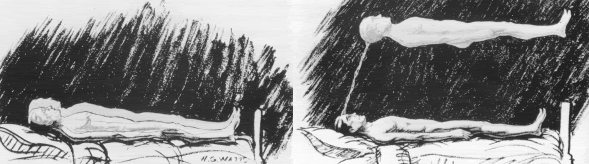
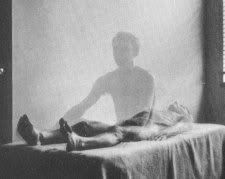
Zurfluh, as a child, was prone to Out of Body Experiences (OBEs), or what is also called astral projections, and he had many of them until he was a young adult. During his student years, he noted that due to the stress of intellectual work these experiences stopped and his internal experience became confined to "conventional" dreams. He resigned himself to the situation and later began occupying himself with Jungian interpretation of his dreams. With time, however, he came to the conclusion that this was the wrong way to go about things.


Zurfluh's main theme, in almost all of his published writing, emphasizes the importance of striving for personal experience of those states of mind called dreams (especially lucid dreams), astral projection, and OBEs. Because of his own background as a biology teacher and due to several years of study at the Carl Jung Institut in Switzerland, he spends a lot of his time arguing against the tenets of mainstream materialistic science and psychology, including depth psychology. He is critical of today's science because of its inability to work with, acknowledge, or even entertain the possibility of anything that cannot be measured with state-of-the-art instruments (in spite of the fact that "science" acknowledges all sorts of things now that could not be measured as recently as a decade ago), and he faults depth psychology for still falling into the Aristotelian trap of analysing and categorizing internal experiences in ways that kills them and makes them empty shells like so many mounted butterflies.


In his works he sites hundreds of pages of dream-, lucid dream- and OBE experiences that show a progression over time (many years, in fact). At first he utilized the standard sort of Jungian analysis on his dreams, and the symbols and sequences yielded exactly the type of results a Jungian analyst would expect. But with time, and by applying the lessons these experiences were teaching him, he began to understand that these "internal" experiences are, to a surprising extent, subject to the "observer effect". When he was expecting content that lent itself to Jungian analysis, that is exactly what he got.

But once he had spent more time simply observing, and putting his efforts into being as aware as possible in whatever state of consciousness he happened to be, the nature of his experiences changed dramatically, and he began to understand that these states are not just subjective (i.e. just going on in your head), nor purely objective (i.e. something you are perceiving which exists outside of you), but a subtle interaction of the two. Fact is, he says, sometimes the things one encounters in these experiences are astral beings. They might be other people journeying in those worlds, or other kinds of beings which have been called spirits, elementals, genies, djinn, demons, angels, fairies and many other things throughout the ages. It's not appropriate to treat these like some aspect of yourself, as many depth psychologists might advise, because then you will not really find out what they wish to communicate to you.

So, rather than torture the symbols of dreams for hidden meanings -- using the logic of the material world to analyze and interpret otherworldly experience -- he determined that it was more important to make every effort possible to maintain the continuity of ego (Kontinuierlichkeit des Ichs) while entering the "realms of the night," as he calls them. One must, as much as possible, maintain an awareness of one's own identity, as well as an awareness of the otherworldly nature of one's state of consciousness when one leaves the ordinary waking state. This seems paradoxical to those who have not had this experience: being "awake" while one is asleep. His techniques encompass both what is known as astral projection, and what dreamworkers refer to as working with hypnagogic imagery.

(Next: Werner Zurfluh on fairy tales)


February 11, 2008

Evolving a Relationship to Fairy Tales (Part IV)

It wasn't only Bettelheim who influenced me to read traditional fairy tales to my children. Once my children started going to Waldorf kindergarten and Waldorf school, I was made even more aware of the importance of fairy tale narratives in children's lives. Fairy tales are actually a major element of the Waldorf curriculum for the first several years. The teachers tell the children fairy tales -- by heart, so as to make it an oral/aural experience again. The children make drawings of scenes and characters from the tales. Sometimes they act the tales out in class. I knew that, being a "Waldorf parent", I was in contact with a state of mind much closer to what I'd longed for since my youth: a mystical and spiritual mode of relating to the tales. Waldorf pedagogy is based on a spiritual concept of the human race (in German: das Menschenbild). This conception involves not only who we are now, in this physical body, in the early 21st century, but also who we are in other dimensions of being (with our various other energy bodies), where we came from, what we are evolving into, and our relationship to other visible and invisible beings. What is taught in Waldorf schools never loses sight of this big picture, and it endeavours to nurture the entire human being, not just the rational intellect.


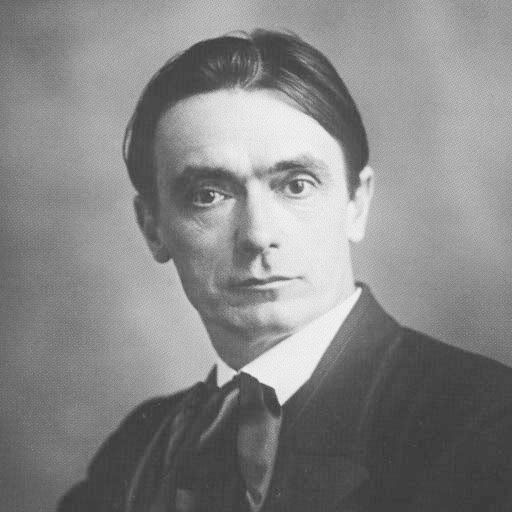
References to the nature of fairy tales and myths, and how to put them to use, are scattered throughout the voluminous works of Rudolf Steiner. You will notice that the ways the Waldorf schools use them in their curriculum avoid outright interpretation of meaning, or moralizing. The emphasis on using them instead of interpreting them is the same attitude advocates of dreamwork take toward dreams. The efficacy of the tales (as in Bettelheim's practice) is in experiencing them as deeply as possible.


In an essay on the methods of Rosicrucian initiation, Steiner speaks of the need to experience the symbols of esoteric teachings rather than intellectualize about them. He says:


"But now the pupils of this Master went further still; they learned to feel the inside, the inner nature, of the bones. Therewith they were able to experience a last example of what was practised in manifold ways in the ancient Mystery Schools, they learned to experience symbols by making their own organism into these symbols; for only so can symbols be really and truly experienced. Explanation and interpretation of symbols is really nonsense; so too is all theorising about symbols. The true attitude to symbols is to make them and actually experience them. It is the same as with fables and legends and fairy tales. — These should never be received merely abstractly, one must identify oneself with them. There is always something in man whereby he can enter into all the figures of the fairy tale, whereby he can make himself one with the fairy tale. And so it is with these true symbols of olden times, which come originally from spiritual knowledge..."


Steiner dismisses the notion that fairy tales are merely products of the imagination or the "folk fantasy" as the folklorists would call it. Like Jung, Steiner relates fairy tales to dreams, or more specifically to that more refined variety of "dream" called the psychic experience. According to Steiner, before the human race became what we are today -- that is, oriented toward a brain-centered awareness that focuses on a logical conception of the objective world through the five physical senses -- people experienced life with a natural clairvoyance that left them open to impressions coming from their other senses.* They experienced things that Jung would have called "archetypal." These experiences involved matters and themes that are more universal than the particular and specific experiences of the material world, which are tied to the conditions of time and space.


Steiner compares the conscious experience of hearing and experiencing a fairy tale (as opposed to the long-term process it effects on our deeper, subconscious level) to the pleasant tastes and sensations of eating nutritious food. Although they are a very important part of the process of properly feeding our bodies, they are only the obvious and superficial characteristics of food. It is only once the food is broken down, transformed and assimilated that we enjoy the full value of it. And all these things happen without our conscious awareness. Likewise, he says, it is only as we live with the tales and assimilate them into our beings on subconscious levels that we enjoy their full value.


Steiner points out a motif that can be found, in one form or another, in many, if not in the majority of fairy tales: the bewitched realm, person or object. The world is turned upside down. The prince appears to be a beast. The palace appears to be a humble cottage. This he says, reflects the illusory appearance of things in our waking state, where we are dominated by the veils of the material world. If we can view the same beings, objects and phenomena from another level of consciousness (i.e. while dreaming, or in a state of "astral" projection), then we will see that what we observe with our physical senses is not a clear or true perception. Bewitchment, then, is confinement to, or entrapment in, the material world. If the protagonist persists in doing what is right, which is achieved through following the dictates of the heart, then the spell is broken, and he/she gains the ability to see things as they really are, that is: to pierce the veil.


Another motif he points out is the "soul shepherd"; the old man, old woman, or other conspicuous stranger the protagonist meets who sends him/her on the quest. This contact, he says, awakens the deeper forces within the protagonist and makes the world take on its strange appearance.


Steiner's assertions present further arguments for why fairy tales can't be replaced by either fluffy-light children's literature or by the conspicuously and often ham-handedly didactic materials parents, schools and popular media present to children (often with the best of intentions, I acknowledge). Fairy tales embody truth. Truth, in this case, means an accurate reflection of the nature of being on the visible and invisible planes. They are appropriate for children, and for people of all ages, he says, because "they are able to combine the richest spiritual wisdom with the simplest manner of expression." This simple expression, clothed in the images of a simpler, pre-industrial life, interacting with our sublime inner realities, "brings the roots of human life together with those of cosmic life."


(*I am aware that some readers might find Steiner's claim that the human race once had clairvoyant abilities which have been lost to be an example of what Ken Wilber calls the "pre/trans fallacy." But I don't really think this applies here. He is not idealizing a previous state of the race, but acknowledging that certain developments in human consciousness came at the expense of other aspects of our beings. These abilities are merely suppressed and latent in the average person at this stage of our development, but will have to be recovered and integrated with our newly-won rational abilities before the race can advance to its next stage.)

February 9, 2008

Evolving a Relationship to Fairy Tales (Part III)

We can't move on from the subject of psychological interpretations of fairy tales before addressing Bruno Bettelheim. A controversial figure during his lifetime, and even more so afterwards, Bettleheim bucked the trend of the times when he published his book The Uses of Enchantment in 1976. The pacifism of the 1960s had made parents and teachers increasingly squeamish about the rough-edged dark side of fairy tales. All sorts of nasty, violent things happen in their narratives: people have eyes cut out, heads cut off, are burnt up alive in fires and are even cooked and eaten. The evil characters in these stories are truly heartless and despicable. Publishers put out sanitised and softened versions of the classic tales, leaving out such graphic details as the part of "Little Red Riding Hood" where the hunter cuts the wolf open with an ax and extracts a miraculously unscathed grandmother. I recall an illustrated version in which Granny is stuffed in the closet, and there isn't even a hunter. Many parents at the time thought it was kinder and more enlightened to spare their children these "primitive" and "barbaric" tales (meanwhile letting them watch the Vietnam war on the news every evening) in favor of what they thought to be more appropriate contemporary children's books. And children's books of the time also reflected the desire of the era to break from what people saw as oppressive paternal traditions. And as history has revealed, that era's legitimate desire to overthrow tradition and the status quo in the name of freedom and progress often resulted in the baby being thrown out with the bath water.

Bettelheim said, in no uncertain terms, that this trend was robbing children of the very thing they need. He saw the tales as a sort of safe laboratory in which children could confront the problems of life. Since they remain on the oral level, and the children aren’t force fed ready-made imagery as they would be by films or television. The children have the advantage of imagining the elements and occurrences of the tales in the manner and intensity their psyches are ready to handle. It's not like watching a movie in which the dragon is far scarier than the child is ready to deal with. And, of course, the story is told in a the safe environment of the home, in the presence of a trusted, protecting adult.

Bettelheim says the child gets the chance to "rehearse" challenging and threatening situations internally, and develop the strength to handle them when the situations arise later in their lives. The modern kind of fluffy children's literature, he says, doesn't have the genuine content for them to chew on, and adult literature (not to mention adult media) is too strong and too life-like to be of use to them.

Bettelheim also says you should never be so ham-handed as to explain a story to a child, since its impact on the child is through imagery and emotion, not intellect. He also says that one doesn't need to choose stories to read to children out of any intentional therapeutic design. One simply reads the stories at random, and the child itself knows when it has been affected by a story. If something is stirred inside the child (i.e. if something is an issue they need to deal with), it will want to hear it again. Sometimes it can request to hear the same story many times over while it is grappling with the problem. And then, suddenly, one day it doesn't want to hear it anymore, which means it’s gotten what it need and it's time to move on.

I've observed some of this in my own children, to whom I've read Grimm’s, and other traditional fairy tales every night (with the occasional other book thrown in here and there) for many years. Indeed, there are stories they want to hear several times, and you can see from the expressions on their faces that they are working through something as they listen. And sometimes the impact can be intense. I've witnessed fairy tale events make a child burst into tears. There's obviously something being worked out in that child's psyche! And this is where the anti-fairy tale contingent would say the child is being traumatized by the story. But, in my "unprofessional" opinion, I can see the benefit of this controlled, limited exposure to the problems and challenges of life.

And it hasn't only been the children who are affected by the tales I read. On more than one occasion I have felt myself mysteriously moved by one of the tales I was reading to the children, although I didn't know, on the rational level, why. Two that come to mind are "Jorinda and Joringel" and "Hans the Hedgehog." I have promised myself I will make them the subject of deep meditations some day. I know they will yield deep levels of self knowledge for me. And due to my knowledge of Western esoteric traditions, I can't help noticing that some stories are like alchemical formulas ("The Poor Miller's Boy and the Cat"), some are like initiation rituals, ("The Queen Bee"), and some seem to be metaphysical teachings in parable ("The Old Man Made Young Again").