Showing posts with label publishing. Show all posts

September 3, 2008

Getting Coaxed Out of Blog Sabbatical


Well, folks, I still don't feel like addressing the most immediate issues in my life, and I still don't feel comfortable blithely talking about other things either.

But there's a voice out there in Blogdom that won't let me sink into complete silence. Bless her.

In a recent posting, Hellibrarian placed me among the ranks of people she wished to thank for various things, referring to me as her "blogger conscience." I decided to talk a little about the history of our writing relationship, but when I sat down to the computer, I quickly checked my feed reader and discovered that she'd (quite synchronistically) already alluded to our early "writing buddy" days in her posting today. And she claims to not believe in "psychic dialoging."

Hell and I met back in the autumn of 1992, when Budapest was still "The Wild East". We were both on the founding staff of The Budapest Sun, and shared one of the most amazing experiences a beginning writer could ever have. We got paid peanuts, and had more fun than most people can possibly even imagine. There was something about the times and about the mix of characters who worked at that paper that made the experience nothing less than magical: every day we wondered what would happen next.

We both moved onto other jobs (her with Where Magazine, me with The Hungarian Press Agency) but we continued to support each others' creative endeavors, which can quickly get buried in the day-to-day spade work that makes up ninety-nine-percent of all journalism work.

Hell and I would meet at the Astoria Hotel (pictured on her blog), which has a cafe with the most amazing Art Nouveau interior, and for the longest time had very affordable coffee and pastries. And it was the kind of place where they didn't mind if you hung around for hours. We would get comfortable, order coffee and pastries, shoot the breeze for a while, and then get out the notebooks. We'd choose a topic and (Natalie Goldberg style) decide how long we'd write (anywhere from ten minutes to half an hour). And then we'd just let our pens race across the pages with no inhibitions. No talking. No pausing. Just writing. After the session was over, we'd read our essays to one another.

Ah! Fond memories.

In that spirit, when Hell has lagged in the maintenance of her blog, I've prodded her some, and reminded her that people with the writing bug just can't be happy unless they're doing a certain amount of writing. And now, when I'm lapsing into silence, Helen is there to remind me of the same.

Bless you.

August 27, 2008

Sorry Folks...

... but there are some things I just don't want to blog about, at least not while I'm in the middle of them. I'm going through some heavy times -- my life filled with life-and-death issues -- and I don't want to write about them in a superficial overly emotional fashion. When I was younger, I knew that writing about things when they were fresh -- sometimes even with pen in hand while they were happening -- gave things serious edginess. But now I realize that's sensation, and not an honest way to search for a deeper kind of truth. I don't want to turn what I'm going through into sensation. And at the same time, I don't want to blithely post about other things, as if everything was hunky dory. My heart wouldn't be in it.

I'll take a page out of The Third Eve's book. She recently wrote an article about something very trying, very demanding, and very emotionally overwhelming that happened to her a year ago. She didn't write about it then. She waited until it settled, and she could make sense of it; until the experience had ripened. It's more meaningful that way.

So I might wait a while to write about these things. That is, if I ever write about them.

July 30, 2008

You Call THAT Summer Reading?

Although four days ago I escaped the urban circus of Budapest for the idyllic peace of a farm house in southeastern Hungary, far, far from TV cables and internet connections and subway trains and all the other features of my harried life (which I love, but gets a bit much after a while), through the miracles of online technology this posting is being published on my appointed publishing day, thereby keeping my promise to grace the world with another dose of my prose every Wednesday. (Note to self: I should suggest to Google that they develop an application called iStiff, which sends an indistinguishable virtual image of a nine-to-five employee to the office through the internet every weekday morning, while the real employee stays home and putters around the house, blogs, meets friends at cafes, etc. Sounds like the Next Big Thing, huh?)

As this digital missive is being released into cyberspace, its flesh-and-blood author will have already spent days breathing fresh air, taking walks in the woods, watching his kids play with farm animals, cooking meals for ten (we'll be there with another family with children), watching the stars in a clear sky free of city lights, and... READING!

Now, being a corporate editor, reading on vacation is a bit like a busman's holiday, but as any professional reader (or college student) will tell you, there's a world of difference between reading what you have to, and reading what you want to.

Admittedly, being on vacation with that many children doesn't really allow for that much reading time, which is why I have to make every minute of it count. So... no mental-chewing-gum potboilers for me. Why waste that quality time away from the frenetic life, while my blood pressure is down and my brain waves smoothed out to gentle curves? No, I'm going to bring along two books that are definitely not what most folks would consider light beach reading.

The first is a novel. I don't read many novels anymore. First of all, I don't have time for them. I recall when I was younger, being very disdainful of people who say they don't have time to read. But, now I'm in that position. A full-time job, four kids and a commitment to spiritual exercises doesn't leave much time for other things. And the truth is, I do read. But shorter stuff I can squeeze in while commuting or eating lunch: articles on subjects I'm interested in, short stories (especially from my favorite speculative fiction site Strange Horizons). I read chapters from e-books on subjects I'm researching. But novels, no. You have to have long stretches of time to read novels. Reading a three-hundred page novel at a rate of four pages a day is very frustrating.

So, there's this six-hundred-page book I started,...uh,... a year ago on a bus ride to a company outing. I got one or two chapters read on the bus. Then I struggled for a few weeks at three or four pages a day and gave up. Around Christmas I took the time to plow through half of the book, and gave up when vacation was over. At this point I still have 170 pages of Gustav Meyrink's The Angel of the Western Window left.

Many of you will know the name Meyrink as the author of The Golem, but far fewer people know that Meyrink was actually an initiate of the western esoteric tradition, and that he wrote a number of esoterically significant novels. The plot of Angel takes place in two different time periods. One is the lifetime of Dr John Dee (1527-1608), and the other is the lifetime of the first-person narrator, a bachelor gentleman in Vienna in the early twentieth century. We slip into John Dee's time whenever the narrator reads Dee's diaries. I won't spoil the story for you (because you really should read it), but suffice it to say that the interaction between these two times and personalities becomes very bizarre and intricate.

Dr Dee was the Renaissance man's Renaissance man. There's hardly an art or science this man didn't dabble in, if not excel at or pioneer, including magic. And this novel is very much about the magical side of Dee. And the sweep of the novel is incredible: England and Wales, Emperor Rudolf's Prague (including Rudolf himself), Vienna, and more.

I've really worked myself up! I can't wait to get back to it.

The other book I'm taking along is a very thin, but very dense volume by Dr John Dee himself: The Hieroglyphic Monad. I've been wanting to delve into this book for some time now, but just haven't felt the time was right. This is the type of book Georg Kuhlewind would designate a "contemplative book". That means that, unlike a light novel, or an instruction book, or a magazine article, it is meant to be absorbed a few sentences at a time. The prime example of such a book, according to Kuhlewind, is the Gospel of John. One should, he says, read a sentence or two, and then deeply meditate on them to see what they evoke from deeper levels of consciousness. I'm certain this is how the Monad is meant to be read. It is divided up into 24 short theorems, each short enough to read in a few minutes. So, in the afternoons, after lunch has been served and the children are playing in the yard, or in the barn, I plan to drag a comfortable lawn chair out under a tree in the yard, sample a theorem, and then slowly sip my tea and contemplate.

Slowly. Patiently.

July 24, 2008

Stream of Consciousness on the Yugoslav Wars

At the end of my last posting, I wrote a short laundry list of dramatic ideological shifts: times that looked very different when those who lived through them looked back on them. The impetus for this exploration was the way the ideological purge of post-war Japan is portrayed in Ishiguro's An Artist of the Floating World.

Before I move on to the topics I planned to explore, I'd like to reflect on the Surprise that came in yesterday's news: that they'd finally arrested Radovan Karadzic. Talk about your anticlimaxes! How does this relate to my theme? Well, in an odd sort of way. Serbia is a country that hasn't really undergone the post-defeat purge. And so you have a small part of the population that feels repentant about what happened there in the 1990's, and a large part of the population that still feels defiant and justified for its ultranationalist atrocities.

This posting is going to be a bit "stream of consciousness" because I find that the recent news is dredging up lots of memories and sentiments, and I'm not sure what conclusions to draw from them yet, but I'd like to relate my second-hand relationship to the wars Serbia waged. You may recall that last week I wrote "As in another well-known Ishiguro novel - The Remains of the Day - the story of an intense era with reverberations well into our own time is not told on the grand scale of historic figures and events, but on the level of less prominent people and their personal lives. One gets the sense that the grand historical and political life of the world is made up of the sum of millions of personal lives." Indeed, these wars had their effects on my little life. And now that the war-criminal architects of those conflicts are finally being brought to justice, I find myself reflecting on how my life felt the echoes from their deeds, distantly, but distinctly.

I was planning, in the summer of 1991, to move to Europe for a while. I religiously read Die Zeit, every week in an effort to brush up my German, and to tune into the European news and media. German media was very keen on reporting the developments in the incipient Croatian War of Independence. Germany had, after all, made the controversial move of being the first country to recognize the newly declared Republic of Croatia. I recall sitting in a greasy-spoon diner in Knights Landing, California reading an article by a Croatian woman who described how unprepared she was when the war began. She called her mother and asked her what kind of supplies to buy, and drawing on her experience from the second world war her mother rattled off the list "oil, flour, salt, candles, potatoes, bacon, sausages, pasta, rice, tea, coffee, soap." I will say more about this article in a minute.

Part of my complicated motives for coming to Hungary sixteen years ago was to try my hand at making a living as a writer. I even imagined that once I'd established a base in Budapest, I might slip down to Croatia and do some reporting. It all seemed so interesting and "real" when I read about it in Die Zeit. It was the sort of stuff that would inspire a budding Hemmingway. But once I got comfortable here, I (sanely!) decided I wasn't meant to meddle in that world, especially when I heard the tales of the people who did venture down there to report about it.

I recall the young freelancer (who incidentally shares my not-all-that-common surname) who stayed in my apartment twice between jaunts down to Croatia. One evening he sat in my living room telling me how two nights before he'd spent in the cellar with a Croatian family while they endured the nightly shelling by the Serbian Army. No, I thought, not my cup of tea.

When I was working at the Budapest Sun, there was a freelancer named Julius Strauss who regularly did stints in the Balkans to report for the Telegraph. One evening at the watering hole around the corner from the Sun offices, Julius told us about driving up a Bosnian hillside toward the war front in a rented Jeep full of reporters, and being informed by the Bosnian Serb Army that their presence wasn't appreciated by raining shells around them. I was quite certain that was not an experience I needed in my life.

I was the book reviewer at the Budapest Sun, and one day a local English-language bookstore sent me a book called Balkan Express by a Croatian journalist named Slavenka Drakulic. Among the essays in that book I found the one I'd read in the rural California diner two years before in Die Zeit. I liked the book so much that I pestered some publishers to send me more of her books. I gave a glowing review to a darkly passionate novel of hers entitled Marble Skin. Not long after that I met her at a book festival in Budapest. I brought along copies of her books to sign. When I told her who I was, she gave me a big kiss. Her publisher had sent her a copy of my review, and she said it was one of the most flattering things she'd ever read about her writing (which is pretty amazing, considering some of the gushing reviews of her work I've read).

The apartment I rented in those days looked out over the Danube river toward Margaret Island (a locale I couldn't even dream of affording nowadays). Over time it occurred to me that the flags on the ships that passed by were always from countries north of Hungary. Due to the war, the river was unnavigable because of sunken boats and bombed bridges, for years. No boats from Serbia, Romania, Bulgaria. Perhaps a little thing to me. But once I noticed it, I thought about it every day when I watched the boats pass by my balcony window.

There was a photographer who briefly worked for the Budapest Sun in the early nineties who had fled from Vojvodina, the ethnic Hungarian region of northern Serbia. One day we were talking in a cafe. He reached over to get something out of his camera bag. I briefly caught sight of a nine millimeter automatic among his cameras. That's the only time in my sixteen years in Hungary I've seen a firearm anywhere besides on a policeman's belt. Though a dear man in most ways, he was paranoid and uptight. I could feel the war craziness in him.

My wife had a Serbian office mate at the advertising firm she worked at many years ago. She invited us to come over for a few drinks with her and her husband. Things were going quite smoothly until the subject of Kosovo came up. They had been living in Belgrade during that war. Addressing me as the only American in the room, his eyes suddenly got wild, and he shouted, "Why on earth did you have to bomb us?" I tried to politely say a few things about atrocities, but I could tell he hadn't been convinced yet that that wasn't all just Nato propaganda. "But why did you have to bomb us?"

It's hard to describe what it was like to live in a country at peace and in relative prosperity, knowing that barbarous butchery and cruel terror were transpiring less than a day's drive away. I think Hungarians tried to forget what was happening in the country next door. But there were always reminders.

There was an odd incident one Saturday morning in the early nineties. I was awoken in the first hour of daylight by the sound of an explosion. Turns out it had been many miles away at the St Matthias Church on Castle Hill. People got a bit nervous when news reports said the bomb site had been marked with Serbian nationalist symbols. But people realized soon that a) Serbia had enough on its hands without involving Hungary, and b) Hungary was quickly falling within the sphere of influence of the EU and Nato. Serbia wouldn't dare.

And so, you see, despite the fact that I didn't experience that war first hand, and that I have yet to go to the former Yugoslavia, my life was affected in many ways.

As I said before, the grand historical and political life of the world is made up of the sum of millions of personal lives
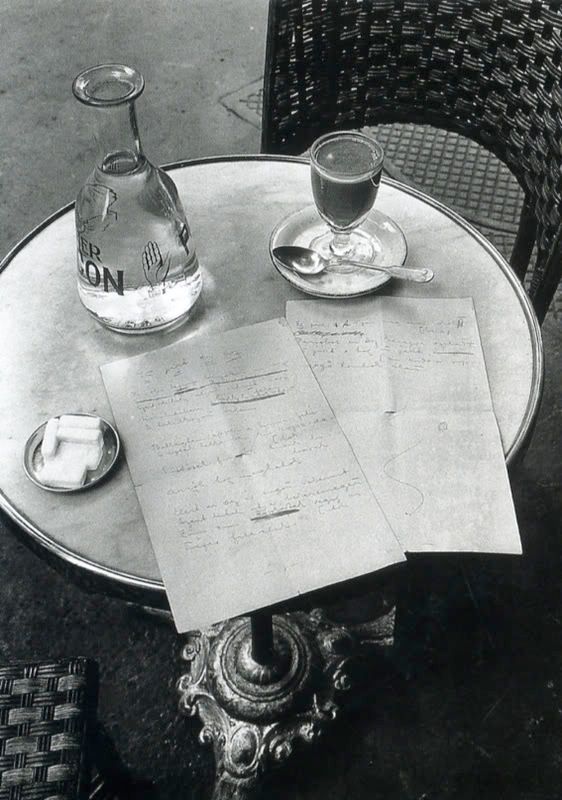
July 9, 2008

Announcement: Scribbler Goes Weekly!

That's right folks! The Scribbler had a serious talk with himself and decided a change was needed.

When I started this blog a little over a year ago, I declared that I wasn't really interested in your public diary sort of blog. Not to say that there isn't a call for that kind of blog. Lord knows I even read a few like that. It's a good way to keep up with family and friends who publish them. And just because a blog concentrates on such subject matter doesn't mean it can't be intellectually deep, or aesthetically dazzling.

But that's just not what I was aiming for. I wanted to concentrated on good writing; the sort of thing I used to write when I wrote columns for small newspapers. And, I said this was going to be a philosophical blog, which is still my aim.

To a certain extent, I have succeeded. I've been pleased with some of the essays I've published in this blog, and I've received good feedback. But something was missing. I couldn't put a finger on why it was so difficult for me to motivate myself to publish regularly, unlike my wife, who puts out new postings almost daily (sometimes even more than one a day!), and doesn't seem to ever run out of steam. She's my alphablogger. When she mentions my blog in her blog, my stats go through the roof for a day or two.

I tend to write long. (I can hear some people out there saying, "Tell us something we didn't know!") Years of habit make me think of ideas that take about 800 words to express; columns in other words. And it's just so hard to keep that up all the time when you're a nine-to-six working stiff.

And then it occurred to me: deadlines! I'm a deadline creature! Tell me an article is due on Tuesday at five, and you'll get it in the e-mail on Tuesday at 4:50.

I followed a blog once that published weekly. It was good. I always looked forward to publishing day (I think it was Monday), and his pieces were always worth reading. It worked.

So that's how it's going to work around here now. Starting today, A Touch of Pansophia will publish a posting -- think: column -- every week, and Wednesday will be publishing day. That doesn't mean I won't ever post in between, but Wednesday will be a deadline I commit myself to keep every week. I can already feel my creative juices responding to the deadline pressure.

Later today I'm going to cheat by publishing something I already have in the can. It's Wednesday: time to publish!

March 3, 2008

Developing a relationship to fairy tales - closing remarks

(Some observations about the arbitrariness of genre)

Although it's obvious that I think certain modes of dealing with fairy tales completely miss the boat at times, upon reflection, I can't truly assert that those approaches are either without value, or that they have not contributed something important to my understanding of fairy tales or to the understanding of fairy tales in general.To begin with, let's posit that there's something akin to dreamwork that applies to fairy tales; let's call it "fairy tale work." One of the central tenets of dreamwork is that one shouldn't rush jump straight to interpretation. One needs to absorb the tale, play with the tale, live the tale. Only when one has finally experienced the tale on several different levels should one venture to say what it "means." One thing that has to be kept in mind when talking about fairy tales (and when talking about all literature for that matter) is that all categorization of literature into genre and sub genres is arbitrary. To get a sense of just how arbitrary, indulge me in considering the following potted history of literature.

Story telling began around the campfire 150,000 years ago. After the tribe had sated itself on whatever beast they had roasted that night, Ogg, Igg and Oog would perform a dramatic re-enactment of catching a particularly worthy antelope: the world's first narrative. The story would have everything. There would be the foreshadowing of the place and time they found the magical creature through omens along the trail. There would be the enchanted moment when they beheld the beautiful animal, and it looked back at them, and consciousness beheld consciousness. There would be the tests of strength, endurance and courage the hunters underwent, as they chased the wounded prey across the landscape and almost got hopelessly lost (or they actually did get lost but magical beings and powers aided them in returning to the tribe).But was that the only kind of tale told around the fire? Well, no.

In succeeding generations Org, appointed by the elders to remember everything that happens to the tribe, as well as all the stories he was told by elders before they croak of, would give recitals of certain stories of particular importance to the tribe, including Ogg's famous story of stalking the enchanted antelope. Org's stories tended to be what we would call history, or legend nowadays.

Big Mama, Ogg's main woman (monogamy hadn't quite caught on just yet), would sometimes be called on to tell about the visits she got during the night from the Sky Mother, whose tits are the stars and whose womb is the waxing and waning moon. Sky mother would tell her which plants to use to cure various illnesses tribe members suffered from. Sky mother tended to talk in riddles, so the tribe would have to play around with Big Mama's dreams to figure out which plant Sky Mother meant and how they were supposed to prepare it. Very often the solution was a horrible pun that made the whole tribe groan and then giggle. Sky Mother has a strange sense of humor.

Then again, there were the tales told by Jackal, the tribe's shaman. These tales were always fantastic, and involve travelling to other worlds; some of them are like the world the tribe knew, and some were very different than their world, inhabited by gods, people and beings unlike anything they knew.In his tales there were heroes who leave their tribes to find women and treasures they have seen in their dreams. To triumph in his quest, the hero (or heroine) must bravely fight battles with creatures unlike any beasts the tribe knew from it's world, and the hero must perform tasks requiring great skill and cunning.Once Jackal told about visiting a world of people with white skin who live in square boxes and travel inside things that look like shiny turtles with clear ice on the sides they can see through. There were so many things in this story that no one could understand, like the giant seed pods these people hold to their ears to talk to other people who are far away. Jackal said he didn't understand this world either, but he went there and watched how people do things if he needed ideas for how to make better tools. He said he couldn't go there very often because it drained his spirit; although the people in this world are god-like, it was clear to him that most of them are lonely, and afraid of each other.

Oops. Got carried away there. But my point is this: although it's the shaman's tales that would most easily be classified as fairy tales, the historian's tales as "legend", Big Mama's tales as some sort of "religious" text, and the hunter's tales as something else, all of them would cross lines into one another. The hunter's tales have elements of the religious tales, the historian might relate an important ancestor's encounter with with a supernatural being, or his voyage to another world, which are more fairy tale-like.

The same goes for the collections of folk tales created in the 19th century. When some philologist doing field work found a peasant who was willing to offer up some of the yarns common people told each other around the hearth (a modernized form of the campfire, mind you!), there was no telling what she/he might tell the scholar. It might be a ghost story. It might be a local myth. It might be a legend connected to a local landmark. It might be a fable. And many times it was some mixture of these "genres." Many times it's not exactly clear what category a narrative fits into, but it has to be put into some pigeonhole or other.

And the picture is further muddled by the fact that various collectors attempted to edit and rewrite some tales. It is evident when reading some collections that editors made attempts to "prettify" some tales, and to make the language, plotting and other elements more consistent with the standards of the current literary (read: high culture) texts of the time.

(Next: to interpret or not to interpret)

February 13, 2008

Evolving a Relationship to Fairy Tales (Part V)


(Werner Zurfluh, Part I)

My research into the more mystical aspects of fairy tales led me to the work of Werner Zurfluh, an intriguing explorer of consciousness. The majority of his previously-published German-language works are available on the internet in html format (unfortunately little of it translated into English, and the translations are of substandard quality). Though he is very well-versed in the literature of mysticism, meditation and eastern philosophy, and despite the fact that his works are heavily annotated, the power of what he says in his writings comes from the fact that it is based on his own inner experiences, and does not rely on anyone else’s authority. A large portion of the text consists of extracts from his journals.


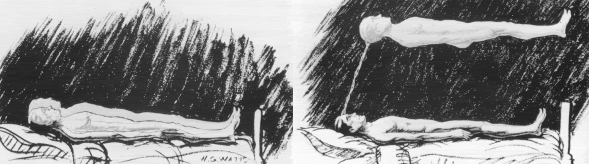
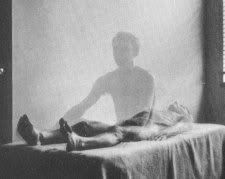
Zurfluh, as a child, was prone to Out of Body Experiences (OBEs), or what is also called astral projections, and he had many of them until he was a young adult. During his student years, he noted that due to the stress of intellectual work these experiences stopped and his internal experience became confined to "conventional" dreams. He resigned himself to the situation and later began occupying himself with Jungian interpretation of his dreams. With time, however, he came to the conclusion that this was the wrong way to go about things.


Zurfluh's main theme, in almost all of his published writing, emphasizes the importance of striving for personal experience of those states of mind called dreams (especially lucid dreams), astral projection, and OBEs. Because of his own background as a biology teacher and due to several years of study at the Carl Jung Institut in Switzerland, he spends a lot of his time arguing against the tenets of mainstream materialistic science and psychology, including depth psychology. He is critical of today's science because of its inability to work with, acknowledge, or even entertain the possibility of anything that cannot be measured with state-of-the-art instruments (in spite of the fact that "science" acknowledges all sorts of things now that could not be measured as recently as a decade ago), and he faults depth psychology for still falling into the Aristotelian trap of analysing and categorizing internal experiences in ways that kills them and makes them empty shells like so many mounted butterflies.


In his works he sites hundreds of pages of dream-, lucid dream- and OBE experiences that show a progression over time (many years, in fact). At first he utilized the standard sort of Jungian analysis on his dreams, and the symbols and sequences yielded exactly the type of results a Jungian analyst would expect. But with time, and by applying the lessons these experiences were teaching him, he began to understand that these "internal" experiences are, to a surprising extent, subject to the "observer effect". When he was expecting content that lent itself to Jungian analysis, that is exactly what he got.

But once he had spent more time simply observing, and putting his efforts into being as aware as possible in whatever state of consciousness he happened to be, the nature of his experiences changed dramatically, and he began to understand that these states are not just subjective (i.e. just going on in your head), nor purely objective (i.e. something you are perceiving which exists outside of you), but a subtle interaction of the two. Fact is, he says, sometimes the things one encounters in these experiences are astral beings. They might be other people journeying in those worlds, or other kinds of beings which have been called spirits, elementals, genies, djinn, demons, angels, fairies and many other things throughout the ages. It's not appropriate to treat these like some aspect of yourself, as many depth psychologists might advise, because then you will not really find out what they wish to communicate to you.

So, rather than torture the symbols of dreams for hidden meanings -- using the logic of the material world to analyze and interpret otherworldly experience -- he determined that it was more important to make every effort possible to maintain the continuity of ego (Kontinuierlichkeit des Ichs) while entering the "realms of the night," as he calls them. One must, as much as possible, maintain an awareness of one's own identity, as well as an awareness of the otherworldly nature of one's state of consciousness when one leaves the ordinary waking state. This seems paradoxical to those who have not had this experience: being "awake" while one is asleep. His techniques encompass both what is known as astral projection, and what dreamworkers refer to as working with hypnagogic imagery.

(Next: Werner Zurfluh on fairy tales)


February 9, 2008

Evolving a Relationship to Fairy Tales (Part III)

We can't move on from the subject of psychological interpretations of fairy tales before addressing Bruno Bettelheim. A controversial figure during his lifetime, and even more so afterwards, Bettleheim bucked the trend of the times when he published his book The Uses of Enchantment in 1976. The pacifism of the 1960s had made parents and teachers increasingly squeamish about the rough-edged dark side of fairy tales. All sorts of nasty, violent things happen in their narratives: people have eyes cut out, heads cut off, are burnt up alive in fires and are even cooked and eaten. The evil characters in these stories are truly heartless and despicable. Publishers put out sanitised and softened versions of the classic tales, leaving out such graphic details as the part of "Little Red Riding Hood" where the hunter cuts the wolf open with an ax and extracts a miraculously unscathed grandmother. I recall an illustrated version in which Granny is stuffed in the closet, and there isn't even a hunter. Many parents at the time thought it was kinder and more enlightened to spare their children these "primitive" and "barbaric" tales (meanwhile letting them watch the Vietnam war on the news every evening) in favor of what they thought to be more appropriate contemporary children's books. And children's books of the time also reflected the desire of the era to break from what people saw as oppressive paternal traditions. And as history has revealed, that era's legitimate desire to overthrow tradition and the status quo in the name of freedom and progress often resulted in the baby being thrown out with the bath water.

Bettelheim said, in no uncertain terms, that this trend was robbing children of the very thing they need. He saw the tales as a sort of safe laboratory in which children could confront the problems of life. Since they remain on the oral level, and the children aren’t force fed ready-made imagery as they would be by films or television. The children have the advantage of imagining the elements and occurrences of the tales in the manner and intensity their psyches are ready to handle. It's not like watching a movie in which the dragon is far scarier than the child is ready to deal with. And, of course, the story is told in a the safe environment of the home, in the presence of a trusted, protecting adult.

Bettelheim says the child gets the chance to "rehearse" challenging and threatening situations internally, and develop the strength to handle them when the situations arise later in their lives. The modern kind of fluffy children's literature, he says, doesn't have the genuine content for them to chew on, and adult literature (not to mention adult media) is too strong and too life-like to be of use to them.

Bettelheim also says you should never be so ham-handed as to explain a story to a child, since its impact on the child is through imagery and emotion, not intellect. He also says that one doesn't need to choose stories to read to children out of any intentional therapeutic design. One simply reads the stories at random, and the child itself knows when it has been affected by a story. If something is stirred inside the child (i.e. if something is an issue they need to deal with), it will want to hear it again. Sometimes it can request to hear the same story many times over while it is grappling with the problem. And then, suddenly, one day it doesn't want to hear it anymore, which means it’s gotten what it need and it's time to move on.

I've observed some of this in my own children, to whom I've read Grimm’s, and other traditional fairy tales every night (with the occasional other book thrown in here and there) for many years. Indeed, there are stories they want to hear several times, and you can see from the expressions on their faces that they are working through something as they listen. And sometimes the impact can be intense. I've witnessed fairy tale events make a child burst into tears. There's obviously something being worked out in that child's psyche! And this is where the anti-fairy tale contingent would say the child is being traumatized by the story. But, in my "unprofessional" opinion, I can see the benefit of this controlled, limited exposure to the problems and challenges of life.

And it hasn't only been the children who are affected by the tales I read. On more than one occasion I have felt myself mysteriously moved by one of the tales I was reading to the children, although I didn't know, on the rational level, why. Two that come to mind are "Jorinda and Joringel" and "Hans the Hedgehog." I have promised myself I will make them the subject of deep meditations some day. I know they will yield deep levels of self knowledge for me. And due to my knowledge of Western esoteric traditions, I can't help noticing that some stories are like alchemical formulas ("The Poor Miller's Boy and the Cat"), some are like initiation rituals, ("The Queen Bee"), and some seem to be metaphysical teachings in parable ("The Old Man Made Young Again").

January 30, 2008

Different Strokes...

I've had a change of heart. The Carradine DVD got me turned on to the idea of doing tai chi again (see previous post), and it was cool trying out some of the moves his sifu teaches. I even learned some nice warm-ups and stretches I never knew before.

But...

My years of being a dedicated martial arts student, although over a decade ago now, left an indelible imprint on me. As I tried to practice the form every morning, I kept coming up with more and more questions. "How do I get from this posture to that posture? Is that accompanied by an in-breath or an out-breath? Which way is the left foot pointed at that moment. How are the hands held when you do that motion." So, on the weekends I would pop the DVD into the computer and study what the sifu does as well as I could. And I got frustrated. Not enough clarity. I had an approximate idea of how it's done, but not close enough.

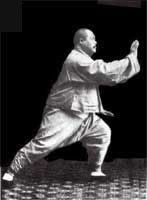
I kept looking at video clips on the internet of Chen style tai chi sets. Beautiful. Smooth. Stunning explosive strikes (fa jing) that erupt out of slow deliberate motions. I got some pointers, but... still not enough.

And I realized there were some things about Chen style that I just couldn't understand because they seemed to contradict what I'd learned in Yang Style.

Then one day I stumbled onto this video. And I was immediately drawn to this man. (First of all I love the Australian accent, since I had a close "mate" from Australia for several years. But that's beside the point.)

His name is Erle Montaigue, and once I looked into his background, it turns out he's a martial artist's martial artist. Mr. Montaigue is a proponent of teaching tai chi as a serious (and potentially deadly) martial art, as opposed to tai chi-as-new-agey-fitness workout. Now I have the greatest respect for Arnold Tayam. What he does on Carradine's DVDs shows that he is a serious martial artist, but once I started watching Montaigue, I realized that this was the genuine article, and the Carradine material was designed to tap a certain market, which doesn't necessarily consist of serious martial artists.

What I like about this video, as opposed to the Carradine video, is that it's so un-Hollywood. Just a guy standing in front of a camera carefully demonstrating martial arts moves and explaining vital details as he goes along. This is what sitting in a martial arts class is like. No slick production values like music and a pretty set. Nope. Just tai chi instruction. If that's what you're there for, that's what you get. And very precise instruction at that.

I started doing the Yang Cheng Fu set again, adding one move a day. It was a bizarre experience when I executed Push Left and then flowed into Ward off Right for the first time in twenty years. Synapses fired in places in my brain I forgot I had synapses. My body had that sensation of getting on a bicycle after not having ridden one for years: that odd but delightful feeling of familiarity.

I cruised on over to Erle's website. Can you believe he has over 300 instruction DVDs for sale? Not to mention free e-books. And an interesting marketing strategy. A great deal of his instruction DVDs are available on his website in Windows Media format. If you can't handle the small image and the compression distortion, then you can buy the DVDs for £ 33 each. That's steep, but you have to consider that he gives you the opportunity to see them for free if you want. They'll mail anyone all the clips (in Windows Media format) of the Yang Cheng Fu form for free, so I ordered it. (You can see the whole Yang Cheng Fu set on his website, too). I know very well that a year or two from now I'll want to shell out full price for the DVD of the Yang Lu-ch'an form (the older, more difficult Yang style), but that's fair enough. Good marketing strategy. And good karma, too, since he's not selling worthless trinkets.

I've learned something important about myself. If given the choice of how I want my tai chi, make mine a serious martial art.


January 9, 2008

Back to Business

Well folks! I like Christmas as much as the next guy; probably even more, actually, since being a Waldorf parent has taught me valuable lessons about how to seriously tone down the commercial aspects of the season and to tune into the spiritual dimensions of the "festival of light." I had a great time. Szilvi had a great time. The kids had a great time. But once the noise and indulgence of New Year's Eve has passed, and the tree and decorations are whisked away on Epiphany, I really enjoy the feeling of rolling up the ol' sleeves and getting back to business.

Don't get me wrong. I'm not a workaholic. When I say business, I'm not talking about professional life and what goes on in the office at The Firm (though that's part of it). I'm talking about the business of my life. The day-in day-out task of figuring out what my role is in this world and trying to be an effective player in the story of the human race. That business.

I've been observing how, despite the fact that I've generally become a calmer and more focused individual over time, reality still challenges me with little things like the traffic accident (fender bender) I had four days before Christmas, or the surly clerk I had to interact with at the post office today. There are just moments when I feel really uptight because I'm in a hurry and I have to get too many things done in too short a time and there's something in the back of mind that's bugging me and "Bzzzzzzzzzt!!!" something short-circuits and I yell, or I drop something in the kitchen and shatter it and scatter its contents all over the floor. I reflect on those moments and realize I still have a lot to learn about staying cool under pressure.

I'm much better about things I can prepare for nowadays. I can give a presentation at a meeting with minimal nervousness by meditating and visualizing. I can often recognize bad states of mind coming on and head them off in time. It's those sudden, unexpected challenges to my cool that still trip me up.

With that in mind, I'd like to give y'all a gander at a nice essay I read the other day. It's about maintaining stability in an unstable world. It was written by a raja yoga teacher who uploads material to ScribD. I have to admit that part of the reason I'm doing this is just to see what one of these things looks like on a blog when you embed it.

But I've been letting this stagnate long enough over the holidays. It's time to get back to business.

Enjoy!

November 4, 2007

Puttin' on the feed bag

(RSS feed, that is)

There are times I can be downright geeky. For several years, I was the one people came to at the Hungarian Press Agency's Econews when they had a problem with Microsoft Windows. But there are times I can be nearly Luddite in my resistance to adopting new technologies, especially if I suspect there's some evil, hidden capitalist agenda behind it. Only fools try something just because it's new.

And that's the way it was between me and RSS technology. For years now I've seen links on pages offering "feeds" of various content. "Sure," I thought, "like I need more stuff cluttering up my life. It probably involves getting lots of spam and getting placed on lists of idiots who do things like send in Reader's Digest contest entries."

I also knew it had something to do with what, in the golden era of Netscape (long ago, in a galaxy far, far away...) was referred to as "push technology." Wow, was that ever a flop. Another idea the world and the Scribbler just weren't ready for. "No thank you," I proudly said, "I can go looking for the stuff I want. I don't need to have it delivered to me."

And then I became a blogger.

When you configure your blog, among the settings are the settings for your feeds. I got to wondering what this was all about. Then I noticed the links on my blog for feeds. Hmmm. How does this work? I kept wondering what a reader would see and experience if they subscribed to a feed of my blog. For that matter, if it would even work.

And besides that, part of the blogging game (and I'm sure I'm not telling most of you anything new) involves reading other blogs. It makes sense. Novelists read novels. Journalists read newpapers and magazines, and bloggers read other blogs. It's just part of learning how to do it. And, of course, one needs to understand that blogging is a social activity, not just a solitary craft.

The long and the short of it: bloggers read (or should read) blogs.

So I went to a friend's blog and subscribed. Due to the fact that I've been a Google person ever since I got my first invitation to G-mail three years ago (I'm a Google whore: I use G-mail, Blogger, Page Creator, Analytics, Google Documents, Google Talk...), setting up the feed with Google Reader was absurdly easy. Hmmm. The research I'd read about RSS said it can save time for people who regularly check certain websites to see if there's new information. Hmmm.

So I subscribed to all the blogs I read. And you know what? I, er, have to admit. It's saving me time. I just open my feed reader, and it shows me which blogs have new postings, and I can read them right there. If I want to comment, one keystroke takes me to their blog. Amazing. No more clicking around on links and waiting for blogs to load, only to find out there's nothing new.

Now I still think you'd have to be crazy to subscribe to a feed of something like CNN. Your reader would be full-to-groaning with new stuff all the time. But for the conscientious blogger, I have to admit this is a good tool.

Not to say that it isn't a good thing to be a bit Luddite sometimes.

October 21, 2007

Goin' to the dogs - Part III

So The Scribbler posed lots of unanswered questions in the last "dogs" posting. And he's been digging to find the answers. As a matter of fact, he has even employed the formidable talents of Hellibrarian (hereinafter referred to affectionately as "Hell"), to help him dig.

This whole adventure presents much food for thought on the nature and reliability of information in the Internet age. For a while it seemed this posting would end up being a cautionary tale about the dangers of believing what you read on the Internet, and the virtues of checking facts in more "traditional media" such as newspapers, respectable journals, and long-established reference works. You see, I thought I'd found "the truth" in a newspaper article written by a plucky investigative reporter. But after checking her "facts", the twist is that this posting may as well have been entitled "Snarky journalist repeatedly shoots self in foot in major Axel Springer newspaper."

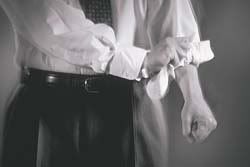
You just wouldn't believe how many websites there are out there dedicated to those five exercises originally called "the rites of rejuvenation" in the Kelder books, but which have eventually come to be known as "The Five Tibetans." Hours of Internet searches established that there are many dozens of them out there. It would be difficult to say exactly how many.

"Five Tibetan" sites mostly fall into two categories: what we'll call fan sites or propaganda sites, and commercial sites.

The propaganda sites are altruistic in spirit. They're put up by people who are so convinced the five "rites" are incredibly beneficial to anyone who will do them these inspired souls feel they must spread the word, and copyright be damned. Anything this important to mankind as a whole, they seem to think, can't possibly be proprietary. Many of the images are- and much of the text is plagiarized. And after browsing through a certain number of them, it becomes apparent that almost all of them reproduce the same diagrams, instructions and background material, and claims of miraculous effects; at times shamelessly cut and paste from one another.

And it also becomes obvious that site after site repeats the same "information" as fact and truth, when it is apparent their authority is another website, which may also have merely parroted another website.

The commercial sites are just as numerous as the propaganda sites. The amazing thing is that they also mostly just repeat the same things you can find on the propaganda sites, but they're using it to sell something (an e-book, a video, a training course). It's pretty amazing that anyone can create supplemental materials for something as simple and easy as five basic exercises to be performed every morning. And they really are basic. But where good health and longevity are being promised, you are bound to find some snake-oil salesmen hanging about.

That brings us to the article I mentioned earlier. The German version of the Wikipedia article on The Five Tibetans lists a link to a 1999 newspaper article that appeared in Die Welt, entitled "Suche nach dem Buch aus dem Nichts" (translation: Search for the book out of nowhere), by Susanna Schwager (article: part I, part II).

From the very first word of Ms Schwager's article, you can see that her viewpoint goes far beyond healthy skepticism. She has a chip on her shoulder. Admittedly, some of her targets are deserving. However one feels about the efficacy of the exercises themselves (she clearly doubts it), the publishing and promotional phenomenon that has come in the book's wake brings new meaning to the word exploitation. She takes Scherz-Verlag, the publisher of the German translation, to task for publishing a children's Tibetans, and a Five Tibetans cookbook for gourmets. But beyond the excesses of the Scherz-Verlag, among the exploiters of the phenomenon the real topper is the training course to become a "certified" teacher of the Five Tibetans for (hold your breath!) 700 Euros. Certified teacher of something anyone can learn in five minutes?

But Ms Schwager's venom is not just for these money changers in the temple, she's out to ridicule anything she perceives as New Age-y, and she's going to start by proving the book is a fraud. She goes to the Zurich Central library with the hypothesis that the book was all an invention of some clever conman in 1985, who falsely claimed to have found a miraculous book published earlier in the 20th century. She and the reference librarian dug (in real hardbound references) to find the 1939 and 1947 editions of this book.

They started with the National Union Catalogue of the Library of Congress. They could find neither a Peter Kelder nor a book called The Eye of Revelation up to 1975. They also looked in the bibliography of France's Bibliotheque Nationale. No dice. When the journalist asked the chief librarian, a Dr. Kohler, what it meant if you can't find a book in any bibliography, he answered, "It always means something isn't quite right (Etwas stimmt nicht). It's a very strong indication that the book was never published. Naturally there are rare cases in which a book just wasn't registered (in the bibliographies), but every book resurfaces sooner or later, especially if there's a new edition." The journalist reports that Dr. Kohler took an interest in the case and did his own research. After two days he gave up. He said he couldn't even find it in esoteric collections, which usually don't have any gaps in them. Nor could he find either Harry R. Gardener or the Midday Press in old listings of publishers. The first record of the book is the 1985 edition by Harbor Press.

By the end of the article, Schwager asserts: there was no Peter Kelder; there was no Colonel, there was no 1939 edition, and no expanded 1947 edition (on which the 1985 edition claims to be based), and the was no Mid-Day Press. The whole thing was an invented con. She also pokes fun at the idea that the 1945 edition was "lost" until 1985.

After reading this, The Scribbler was itching to publish this information for the first time in the English-speaking world, but then I thought perhaps he should do a bit of fact checking himself before relating data from a single source as fact. It's a good thing he did.

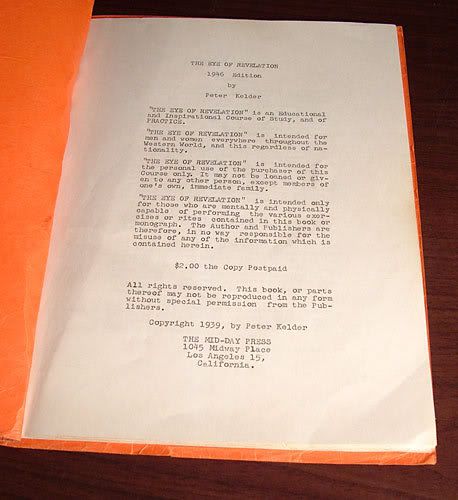
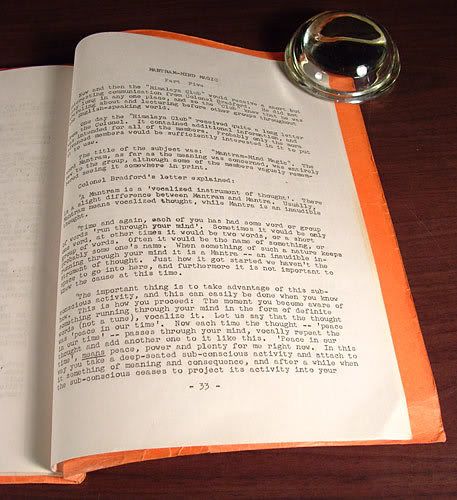
Shortly after contacting Hell, she said she found evidence that there really had been a Mid-Day Press in Los Angeles, because she found other books published by them. And then she found (why didn't I think of looking there?) a rare book seller on e-Bay -- Jerry's Rare Books -- selling what he purports to be the only exisiting copy of a 1946 edition of Peter Kelder's The Eye of Revelation.

Here's where the story get real juicy! If you look at the e-Bay offering, you'll see that he's asking (hold your breath again!) $97,500. He doesn't intend to sell it to the average punter, though, he's looking to sell it to an ambitious publisher! In the description, he says:
"As far as is known for certain, this is the only surviving copy of the 1946 edition of the Eye of Revelation! The first four sections of the 1946 edition are largely similar to the 1939 edition; however, section five is entirely new and contains information about:

* Tibetan Mind Magic
* Mantrams
* The Magic Quality of "Aum"
* and more.

The 1939 editions of the Eye of Revelation have earned millions for their publishers. This 1946 edition can do the same for whomever purchases it. It has been long, long sought after and--with the new, authentic, information--has every chance to outsell any previous edition many times over."
The pictures in his offering (pictures: 1, 2, 3) seem to be convincing evidence of it's authenticity. But I'd still take a documents expert and a lawyer with me before I coughed up $97,500!

He also mentions that the only known copy of the 1939 original is in the New York City Public Library. That was pretty easy to verify.

So, the very premise of the article in die Welt is in error. Ironically, it took Internet resources to check the facts from a traditional medium (a respected newspaper) which is supposed to be more reliable due to the presence of professional journalists and editors. And her facts came from what should be considered a reliable source: a senior librarian at a well-established major library.

But we still don't know who Peter Kelder was, who the English Colonel was, where these exercises come from, or how they really work (or do they?).

All of that is yet to come in "Dogs" - Part IV.

October 16, 2007

Moving in the old furniture

The Firm is in a state-of-the-art office building. With identical data outlet sockets in every room, modular office furniture, and an efficient office administration department supplied with plenty of hand trucks and burly workers, they can move a person's working space (including desk, files, computer, lamps, cabinets) from one room to another inside an hour. I recall the dizzy feeling of working in one room at nine in the morning, and being moved, and working somewhere else by eleven; phone working, computer on the network, cabinets and files set up. I'd never worked for a huge multi-national company before I came to The Firm, so I was unprepared for the psychological effects of being moved four times within my first year. At first I put up a fight and tried to ultimately personalize my space with art prints and interesting objects. Then each time I moved it took longer to unpack the boxes and get out "aesthetic" stuff. I've adopted a much plainer style of decorating my office.

Same goes for staking claim to a patch of cyberspace. I recall all the effort I went to creating my first websites: writing them in html, uploading them to my ISP's server with an FTP client, rewriting and uploading every time I wanted to make a change. Things are so much easier nowadays with Google and other on-line hosts. And there are other reasons I created pages. I was a very hands-on forum administrator for a few years, and I created pages of references for the members. And each time I changed ISPs or had to abandon a server for some reason, it would take a long time to motivate myself to upload my old pages and get them to work right again.

Blogging is a new medium to me. It took me some time to warm up to it. There were a few weeks I didn't think I wanted to keep doing it. There's a feeling associated with it that very much reminds me of the pressure of writing a weekly newspaper column. But there's a positive side to that pressure (which I realize nobody else but me is putting on myself), and that's the impetus to create.

So... I've decided I'm gonna be in this space for a while. I may as well unpack my boxes and decorate a little. You'll notice a new sidebar on the right containing links to some of the old html pages I mentioned above.

The first one, Resources for Dreamers, I created for a short-lived dreamwork forum I ran two years back. There's good stuff on that list. It took some digging on the Internet to find a lot of it. I actually have found more since I made that list, so I plan to update it sometime soon. Stay tuned!

The next one down, The Secret Archives, is one of the first websites I ever created, back in 2000. It's corny, and has that retro look to it. But I've decided to leave it as it is. It's a repository of my writing from the 1990s.

And the third link, Mystical and Occult Libraries and Text Archives, was something I created for a mysticism forum I moderated for several years. Those links also took some digging to collect. I've also found more to add to this list since I created it, so keep your eyes open for an update of that, too.

Phew! Unpacking and setting up house is hard work. But before I call it a day and crack open a beer, could somebody help me get this chest of drawers over to that corner over there?

October 10, 2007

Goin' to the dogs - Part II

What do Carlos Castaneda's The Teachings of Don Juan, the Golden Dawn's Cipher Manuscripts, and Peter Kelder's The Ancient Secret of the Fountain of Youth (the book on which the "Five Tibetans" phenomenon is based) have in common? They have all had a major impact on the lives of many people, and they have all been attacked by their detractors -- not without reason -- as being frauds.

Yours Truly has been wandering the highways and byways of the Internet, whacking around in the underbrush with several search engines, and he has discovered some interesting things. Interesting, indeed! All is not as it seems! Are you surprised?

Who was Peter Kelder?

What were the mysterious circumstances of "his" book's publication in 1939? The revision in 1947? 1975? The "updated" version of 1985?

Where the heck do these exercises actually come from?

All these questions will be explored in "Goin' to the dogs - Part III." Coming soon.

(Note: I am, however, still faithfully doing the exercises every morning. I'm up to nine reps of each rite every morning. And feeling great!)

October 7, 2007

A ritual is what it means to us

I was asked to write the following article for A Rózsakeresztes Tükör (The Rosicrucian Mirror), the official newsletter of the Rákoczy Atrium Group of Budapest, an affiliated body of the Hungarian Administration of the Rosicrucian Order, AMORC. It was translated into Hungarian for publication, but I thought a few English-speaking readers of this blog might be interested in reading it as well.

Since it was written with members of the Order in mind, it makes a few assumptions about previous knowledge of the readers that necessitate a brief introduction for the context of this blog.

First of all, AMORC has only existed in Hungary since 1994, since such non-socialist, international organizations were forbidden before 1990, and all forms of spiritual practice were discouraged (to put it lightly). AMORC has had its hands full with translating the vast volumes of correspondence lessons and with all the other administrative tasks involved in trying to establish and grow a large and sophisticated organization. Translating and organizing some of the more "minor" rituals and activities have been on the back burner for a long while.

Szilvi and I knew the Appelation Rite existed and was performed in other jurisdictions, and we asked if it would be possible to perform it for our youngest child. It took the better part of a year to arrange it.

The references to all the AMORC rituals I have seen is relevant in this country, where the overwhelming majority have not seen many of these rituals. It would be no big deal in North America, or even in Francophone Africa, where the order has been operating for a long time, and twenty-five-year-plus members are not a rarity.

Tata is a little city where the AMORC administration is located, and the only working temple in Hungary.

And with that introduction, let us proceed to the article.

A child, a family, a community is initiated

By Theo Huffman

With the exception of a Rosicrucian funeral -- and naturally all the initiations I haven't received yet -- I've seen just about every ritual performed by AMORC. I've helped perform the pyramid ceremony. I've seen installations of officers. I've seen the sanctifying of a temple. I've even seen a Rosicrucian wedding. But I'd never seen the appellation rite. I'd often wondered what it would be like.

I'll confess that I was just a little skeptical. Let me see if I can explain why.

The first thing you need to know is that I was raised a devout Catholic, and every Catholic knows there are seven sacraments (baptism, communion, confession, confirmation, marriage, holy orders and last rights).

The second is that The Rosicrucian Order AMORC hasn't always had the stable, highly-developed form it has today. When H. Spencer Lewis[1] accepted the task of creating a visible Order in the physical world to embody the work of an invisible fraternity which has existed for thousands of years, it was the ultimate creative challenge. Carrying out this work in a world totally transformed by mankind's technologies since the days of the Fama Fraternitatis was only possible for someone who had the courage to experiment with new ways of bringing esoteric knowledge to those who wanted and needed it.

And H. S. Lewis was a real experimenter. Many of those experiments developed into the teachings and ritual we know today as our traditional Order. But many of the experimental projects, such as the creation of a "universal Rosicrucian language" (sort of like Esperanto) were found to be unworkable, and consequently abandoned. And among these abandoned projects was the creation, in the late 1920s, of a Rosicrucian church, called "The Pristine Church of the Rose Cross." Dr. Lewis served as the bishop of this church. The church only lasted a few years, the Order's first years at Rosicrucian park. After this, it was decided that the energies spent on the church would be better invested on other aspects of the Order.

So, I suspected the appellation rite might be a legacy of the early AMORC's experimentation of trying to create a church, which necessitated it to have its versions of the seven sacraments. I have to smile a little when I think of one of our Rosicrucian friends calling it a "Rozsakeresztelo~"[2].

But I was pleasantly surprised.

When we arrived at the administration in Tata, and as the enthusiastic members arrived, as well as our two invited guests, Timothy was quite shy, and clung to me. I think he was well aware that all this commotion centered on him. And the energy was especially intense, since this was the first time the ritual would ever be performed in Hungary.

Szilvi and I were asked to wait alone in a room with our son Timothy while everyone else entered the temple and prepared for the ritual. When the door opened and the Outer Guardian[3] asked us to come with him, I got my first hint that this was an initiation.

Although the appellation rite is open to non-members who are invited by the parents, (unlike most other AMORC rituals) I still feel it would not be right to describe something that happens in the temple in too much detail. It is something to be experienced in the temple, not something to be described to people in the mundane world, or "the outer darkness" as we call it when we are in the temple.

Timothy continued to be very apprehensive as we entered the temple and took our seats. I'll confine my remarks about the ritual to a few observations. It bears no resemblance to a baptism at all. It is truly a Rosicrucian initiation. The child is initiated by means of a symbolic journey through three stations of the temple, which to my mind is an allegory of birth. Timothy cried at the first station, since we had to put him down to sit on his own. And this seems appropriate. There is always crying at birth, isn't there? At the second station, among other wonderful events, the child gets a kiss on the cheek from the Colombe.[4] Timothy was so surprised, and so delighted, his eyes lit up like candles as he watched her walk away. Is there anything sweeter than an encounter with the Inner Self?

Finally, it really emphasizes the point that this is an initiation when, at the third station, the parents are asked to take an oath. What did we promise? You'll have to come to the next appellation rite to find out!

The mood afterwards was very joyous and light. Timothy was suddenly more open and social, and like everyone else, he was very happy to be able to indulge in cake and cookies. And perhaps this was a moment that was somewhat "church-like." The community had gathered to observe a milestone in the lives of one of its families. That's a point I shouldn't miss. This ritual was very important to our other three children. To see Timothy acknowledged by the Rosicrucian community, and to see their parents take a vow regarding Timothy, was surely an important spiritual experience for them, too.

Szilvi and I were both convinced that Timothy was "different" after the ritual; somehow more aware, more present in the world. And this I take as one more confirmation that the appellation rite is not just a pseudo-baptism. It is a true Rosicrucian initiation.

1. H. Spencer Lewis (1883–1939) was the founder and first Imperator (supreme officer) of AMORC.

2. A subtle play on words in Hungarian. Keresztelő in Hungarian means baptism. Rózsakereszt means rosy cross. Put them together and you have a "rosy baptisim".

3. A traditional ritual officer

4. A role played in ritual by a girl in white robes and headdress. Her name comes from the Latin columba, meaning: dove.

July 8, 2007

A Long Time Coming

I've been resisting this for a long time. People have been telling me for years, "You're a writer. So you should be writing a blog." Well, yes, I can appreciate that this is the medium du jour nowadays for the written word. I realize this is the publishing venue that puts people out in the public eye now. And I do want to write material for publication (it's been year since I've done it), but... but...

Let's go back to the "old days" (the 1980s) when most of my writing was either scribbling my journal with a pen in a notebook, or composing letters on a typewriter. I did this for years before I ever got ambitious enough to write anything for publication. And at first what got published was very infrequent.

Then came the early nineties, and I was writing on a hand-me-down Zenith computer (double floppy drive!), and the majority of my writing was a weekly book review column for The Budapest Sun. It was an interesting experience having a weekly column in a paper with 20,000 readers. For two years most everyone in the expatriate community knew my name, and I even had the occasion to hear myself talked about at parties. People would stop me and comment on my latest column, telling me if they disagreed with my opinion, or found fault with my arguments, and occasionally praising a job well done.

I observed that one sits down to the keyboard with a distinctly different state of mind when one is just going to noodle around in one's journal, and when one is preparing to write a column. When I wrote the column, there were 20,000 invisible people in the room with me, and it had a profound effect on the way I wrote. Very profound. This was the most important lesson in voice I've ever had: how you write depends on who you think is reading it.

I also observed that the desire to be what one nowadays calls "edgy" made me wax confessional. One colleague of mine at the press agency said he'd never dare write about such personal things as I did, knowing it would be read by so many people. I said that was because he wasn't a writer. In the meantime, I feel like I've become much more private than I was in my early thirties. I'm not so much into the confessional anymore. My wife has been writing a blog for about a year and a half. It's a moderately popular blog, with regular readership of about 200, which is pretty good for a blog written in Hungarian. Our children and I get mentioned regularly. I don't even have to do confessional for myself anymore.

Since my days at The Sun, on the professional level I have written a few freelance articles and columns, but have mostly retired to the business of copy editing (ten years at the Hungarian Press Agency MTI) and in-house corporate editing (name withheld to protect against the litigious). And I've written a handful of short stories (got one published!). Before our home and my life got filled up with a bunch of kids, and before I got a full-time corporate job, I wrote a daily journal for several years. That was my second major lesson in voice: a very different sort of writing comes out when you are writing strictly for yourself.

There's one more consideration. My priorities have changed drastically. My ambitions were very literary when I used to write alot. I took a break from writing for several years, and in the meantime, the focus of my life has become spiritual again. Although I feel the compulsion to write -- and even publish -- again, much of my life centers around internal experiences, and much of what I occupy myself with is esoteric in nature. I'm a bit reluctant to write about some of this stuff. It was one thing to be confessional about more mundane sides of my life, but it's something altogether different to start getting loose-lipped about mysticism. We'll see.

And the other thing I can't get over is what I regard as the ultimate question regarding blogging and bloggers. What makes me think anyone cares?

Okay. For better or worse, I've taken the first step. I have become a blogger. God save my soul.

So, I come late to this medium. And I'm not sure how I feel about it.